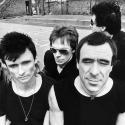
Manic Street Preachers’ earnest and literate pretentiousness is both their Achilles Heel and their superpower. Their greatest songs are amped by full investment in whatever awkward path they’ve cussedly marched down. At these times, their ever-vaunted love of fist-pumping classic rock lives up to itself.
Such qualities have occasionally made them magnificent. On the other hand, when the songs can’t match the lyrical or conceptual ambitions, the whiff of bombast and stadium dirge is pungent. Critical Thinking, unfortunately, too often falls into this category.
This is, says bassist-vocalist Nicky Wire “a record of opposites colliding - of dialectics trying to find a path of resolution.” The songs “are microcosms of meaninglessness in a world so brutal and divided”. Business as usual, then, in Manics-world. But, once the gigantic production is stripped away, these 12 numbers veer between the passable and the also-ran. Sometimes, as on “Brush Strokes of Reunion” the enormous sonic splash is even the problem, overwhelming a likeable song.
“Dear Stephen” is a Smiths pastiche paean to Morrissey, asking him “to come back to us”. It's an interesting idea and the lyrics well-tuned: "I believe in repentance and forgiveness/It’s so easy to hate, it takes guts to be kind/ To paraphrase one of your heartbreak lines". However, unlike their similarly contrarian ode to America’s last legally crooked president, 2004’s “The Love of Richard Nixon” it is no gorgeous classic. The album opens and closes, respectively, with the title track and “One Man Militia”, songs that wordily, cantankerously attack the hollowness of contemporary solipsism – “It’s OK to not be OK!” – which would be vital and welcome were the accompanying music not so lacking potency.
There are moments where they catch at least some of their usual tailwind, a bit of take-off. James Dean Bradfield retains a voice that has urgent human power, after all, and the single “People Ruin Paintings” showcases it well, while “Deleted Scenes” is sufficiently contagious and exultant. In short, though, when the band reaches its 40th anniversary next year, and all those Top 10 Manics Albums You Must Hear lists appear, this one will not be on it.
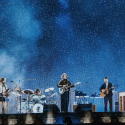
Below: watch the video for "Brushstrokes of Reunion" by Manic Street Preachers