

A young woman (Laure Calamy; Call my Agent!; Full Time; Her Way) is trying to pluck up the courage to call her father, who she’s tracked down and has never met. Her voice trembles, she can barely speak, she has to hang up. But finally she manages it. This is Stéphane, she murmurs. May I speak to Serge?
Written and directed by Sébastien Marnier (Faultless; School’s Out), this thriller has an excellent cast and looks wonderful, although the plot-line is somewhat preposterous and soap-opera-esque. Nevertheless, it’s stylish and gripping, and it’s not until half-way through that we realise that the seductive, jittery Stéphane is not quite what she seems. But let us have no spoilers here.
There’s no denying that she’s down on her luck, though perhaps she always is. She works in a fish plant packing anchovies – the smell follows her and she’s always washing her underarms with a flannel. She’s in a complicated, sometimes violent relationship with a prisoner (Suzanne Clément), who may have killed a previous girlfriend. She visits her frequently, and it’s often hard to tell the difference between the prison and the plant. Then she’s suddenly made homeless when her landlady (perhaps they’re also having an affair) needs her room. Time to make that phone call.
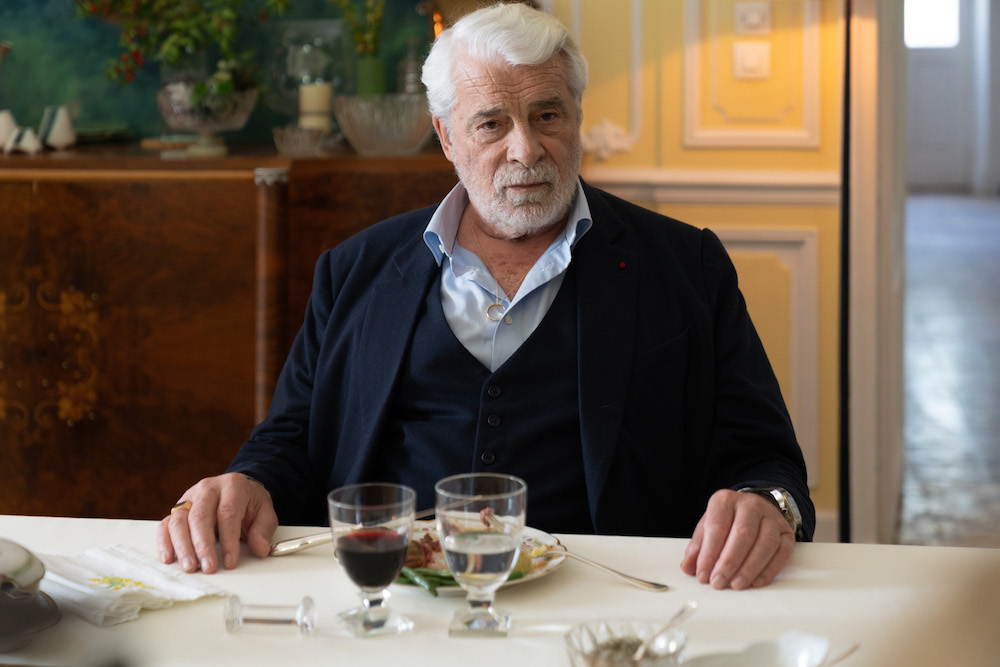 Serge (a powerful Jacques Weber, pictured above) waits for her at the harbour on the island of Porquerolles, a beautiful spot off the Côte d’Azur where Godard’s Pierrot le Fou was partly filmed. He is a bulky, imposing chap with a fine head of white hair, though frail after a stroke (shades of Succession). He seems strangely welcoming and unquestioning about this new daughter – he’s always been a womaniser – and invites her to lunch. It soon transpires that he is immensely rich, owning restaurants, hotels and golf courses.
The family home is packed to the gills with extraordinary objects – lots of taxidermy, trailing plants, leopard print and bizarre lamps, as well as piles of cardboard boxes - mainly as a result of his wife Louise’s obsessive spendaholic habit. She (Dominique Blanc) is gloriously eccentric, vain and glam and has an enormous, pointless collection of videotapes. George, their daughter (Doria Tillier), is glacial and suspicious, while her teenage daughter Jeanne (Céleste Brunnquell) prowls about silently taking photographs of everyone.“Family is like poison. It makes you sick,” Jeanne tells Stéphane in a rare moment of intimacy. "It's the worst thing in the world." They’re only here temporarily and on sufferance, supporting Louise after Serge’s stroke. A stuffed wolf looks on balefully.
Stéphane is suitably overawed by these surroundings, smiling nervously and offering to help Agnes, the grim maid (Véronique Ruggia Saura), who’s been with the family for decades. But, when George asks about her job, she says without hesitation that she owns the fish plant and has 40 employees. So lying comes easily to her, it seems, and we can’t help feeling that George is right to tell her to never come back.
 But Serge is determined to use Stéphane to protect him from the machinations of his wife and daughter, who are trying to take over his business and to prove in court that he’s unfit to run it. He wants her to testify in his favour and ruin their guardianship scheme. At first, Stéphane, who comes to stay in spite of George’s misgivings (she demands to see Stéphane’s identity card, as if that would solve everything. Has no one here heard of a DNA test?) is full of sympathy. But Serge is perhaps not the charming, put-upon pater familias that he appears. In fact maybe he’s a monster.
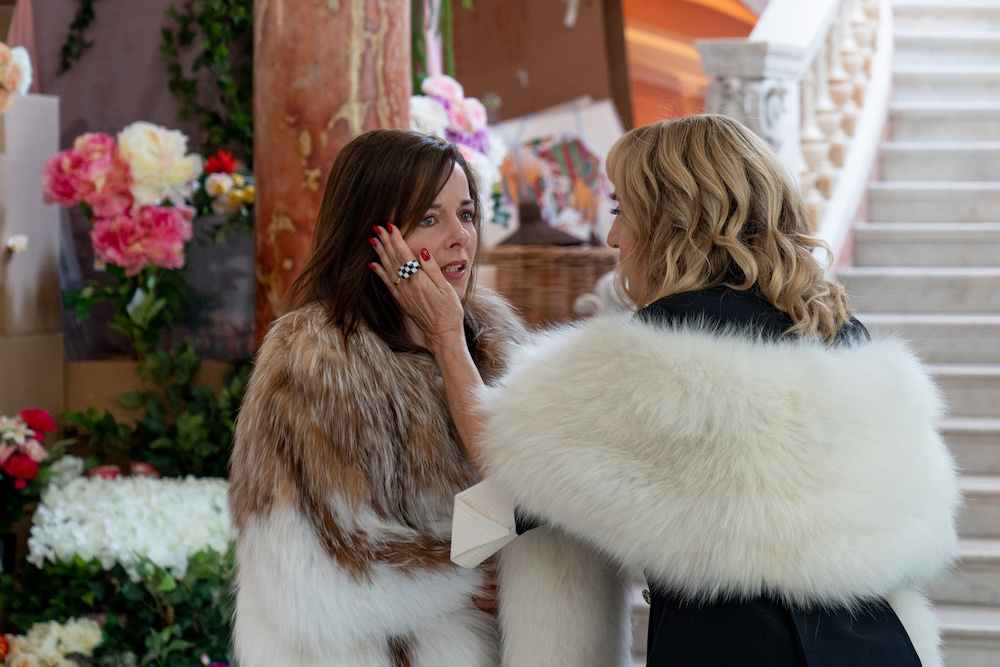
Alliances shift. Stéphane ignores her despairing girlfriend’s calls, though their destinies are deeply entwined. Louise, as well as Serge, wants Stéphane to stick around, finding her “wholesome” and taking pleasure in correcting her grammar, as well as hoping she can fill the loneliness that will descend when George and Jeanne go back to Australia. She even gives her a fox-fur coat (pictured above).
The tension mounts, as does the violence; so do the split screens. There are hints that Stéphane might end up as a skivvy, in spite of the bevy of women seeming to welcome her towards the end. The smell of poverty and prison, as well as fish, follows her. Calamy’s performance is central, and, as she makes mistake after fatal mistake, her character becomes more and more ambiguous – and fascinating.












Add comment