

People who live in glass castles might be wary of throwing stones. That clearly was not the case with American magazine journalist Jeannette Walls, who made of her often harrowing childhood a best-selling memoir that has found its inevitable way to the screen. A would-be Daddy Dearest with a hefty dollop of Captain Fantastic thrown into the mix, what would seem to be a star vehicle for recent Oscar winner Brie Larson is in fact pretty much dominated by Woody Harrelson as the fearsome paterfamilias who lashes out and loves in equal measure. Or does the first as a perverse way of expressing the second.
I actually knew Walls slightly during her formidable tenure at New York Magazine, where she was a gossip columnist on the rise and I was a journalism intern. Warm, engaging, and glamorous to a fault, the Walls with whom I intersected one long-ago summer gave no evidence of having been born into the nomadic, artistically minded but also largely dysfunctional family portrayed here. Director Destin Daniel Cretton's film may insist upon a glutinous ending, but the reality of events in the Walls household – or, more likely, the journey, as they set out once again on the road – was clearly far rougher and messier than so tidy-seeming a celluloid adaptation is prepared to acknowledge. 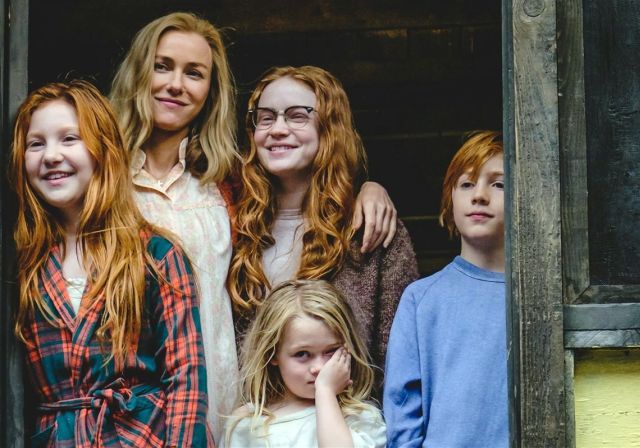 There's nothing safe or reined-in about Harrelson's unbridled portrait of a man facing down personal demons, starting with drink, and clearly wanting to do right by his artist-wife (Naomi Watts, above left) and their numerous children, of whom young Jeannette would appear to be the most ambitious. There's tough love and then there's parenting that finds mum Rose Mary more interested in her latest canvas than in feeding her burgeoning family, who at one point take to dining on a mixture of butter and sugar in order to survive.
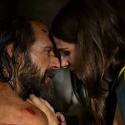
Harrelson's Rex, meanwhile, is an inventor and philosophe who spouts life-enhancing maxims – "You learn from living, everything else is a damn lie" – when he isn't teaching a young and terrified Jeannette to swim by dropping her this way and that into a pool. In thrall to a temper one sense frightens even himself, Rex justifies his actions as planting a fire in his daughter's belly, and if ever there were a case of success being borne out of rebellion, that scenario is on view here. Harrelson to his unceasing credit never soft-pedals behaviour that simply won't be confined. But just when the audience is putting its head in their collective hands alongside the onscreen Jeannette, Rex pulls himself up by his occasionally gallant rhetorical bootstraps, and you find glimpses of the visionary he might very well have been.
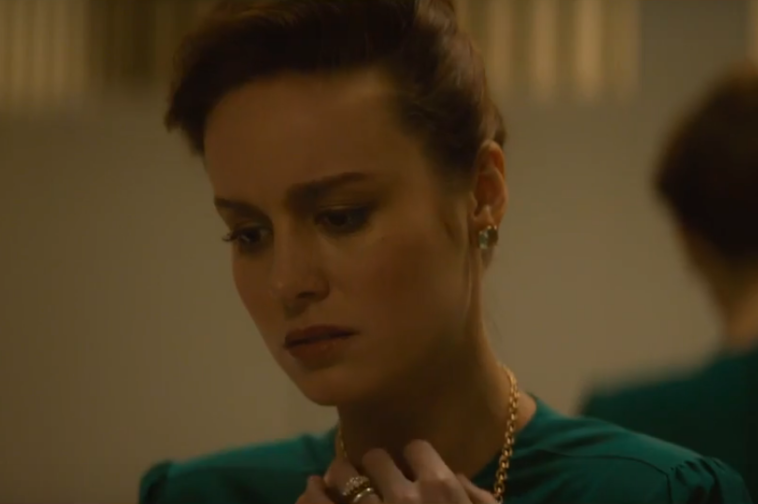 The flashbacks to the child-woman that is Jeannette, glimpsed alongside the parental bohemians who will in time join the ranks of New York's homeless, score pretty strongly throughout, leaving the contemporary sequences involving Jeannette's occupancy of 1980s New York society to land with a thud. We first encounter an indrawn Larson (pictured above) as the adult Jeannette fibbing her way through an important dinner alongside a boyfriend (Max Greenfield) who seems hardly worth the fuss (his arm-wrestling encounter with Rex seems too stagey by half), and it's surprising that so little is made of Jeannette in the hardscrabble magazine world workplace – an environment, one assumes, for which life with father might well have prepared her in its way.
From torment to triumph, or so Jeannette's life reads, at least in material terms. The truth, one imagines, is far more knotted, as family ties so often are.
Overleaf: watch the trailer for The Glass Castle







Add comment