

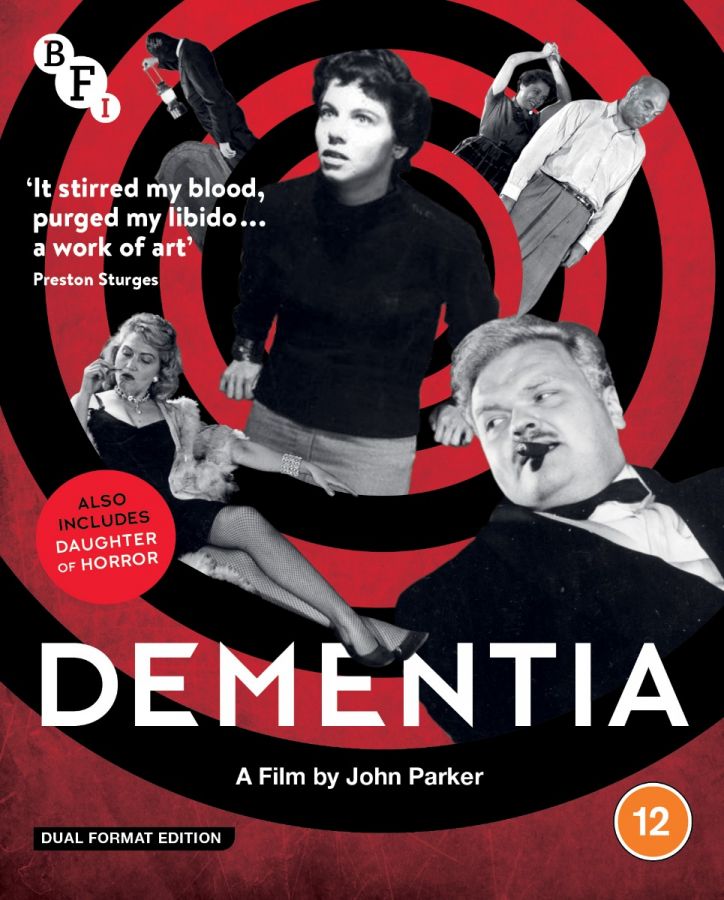
The cheaply made experimental exploitation indie Dementia (1955) is one of those footnotes in movie history that makes cultists salivate. And with good reason – it’s a wry blend of film noir and horror that makes you wonder if it was a touchstone for Orson Welles’s Touch of Evil (1957) and David Lynch’s Lost Highway (1997) and Mulholland Dr. (2001).
The 61-minute movie – which features sound effects but no dialogue – unfolds in real time. In her room in a seedy Hollywood hotel, a psychotic woman (Adrienne Barrett) – called "The Gamin" in the credits – clenches her sheets as she lies in bed dreaming. Waking (perhaps) and finding a flick knife in a drawer, she sneaks downstairs, ignoring a toddler who offers her a toy and avoiding a Chandleresque huddle in which a woman is showing her bruises to a cop. Gusts of wind blow a news sheet headlined “Mysterious Stabbing” after The Gamin as she ventures along Skid Row, before an obese bigwig (Bruno VeSota) takes her on an impromptu tour of sleazy nitespots with catastrophic results.
 In a migraine flashback, she relives trauma that leads her eventually to commit a murder and an atrocity – or is it all a dream? Though it’s hard to tell if Dementia’s heavy-duty Freudian imagery and invoking of the Electra Complex are serious or jokey, its nightmarishness isn’t easily dismissed. It would make an enjoyably disturbing double bill with Herk Harvey’s Carnival of Souls (1962). Ben Roseman, Dementia’s production designer, has an intriguing dual role as the cop who makes The Gamin laugh when he pulverises a wino who harassed her and as her murderous father in the flashback.
Dementia apparently originated in a dream that the secretary Barrett described to her boss, John Parker, who decided to write and direct a film about it starring her (neither have any other credits). Though scholarship on the film is scant, some commentators believe the prolific character actor VeSota, who was himself a writer and director, helped create it; his wife, Jebbie, plays a flower girl in it.
Parker got his mother Hazel, head of Oregon’s JJ Parker Theater chain, to finance Dementia, which was filmed in Venice Beach and on Hollywood sound stages (and backlots, by the look of it) in 1953. Many of cinematographer William C Thompson's compositions are appropriately disorienting, especially those that compress figures in cramped spaces or juxtapose little and large elements in single frames; the movie’s graveyard sequence, though, is more reminiscent of his conventional set-ups for Ed Wood’s films. The wonderfully woozy score by avant-garde composer George Antheil combines the haunting voice of the Hollywood “ghost” singer Marni Nixon (West Side Story, My Fair Lady) with what sounds like a theremin.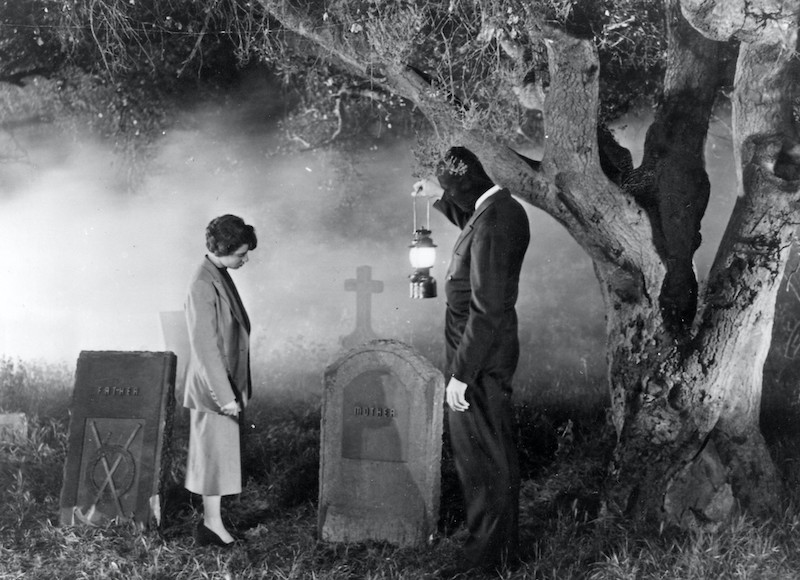
What Parker couldn’t do was get a proper release for Dementia, despite getting the florid endorsement for it from Preston Sturges that precedes its opening shot of a minimally star-spattered sky above Los Angeles. Initially deemed “inhuman, indecent, and the quintessence of gruesomeness” by the New York State Film Board, it finally opened in Manhattan (alongside a Picasso documentary) just before Christmas 1955 after four key cuts had been made. The producer Jack H Harris then acquired the picture, added a creepy voiceover narration (spoken by TV personality Ed McMahon, who allegedly acted in footage shot in Philadelphia and added to the graveyard section), and in 1957 re-released it, unsuccessfully, as Daughter of Horror. The following year Harris excerpted it in his sci-fi opus The Blob. (Pictured above: Adrienne Barrett as "The Gamin" with a ghoul in the graveyard sequence)
Daughter of Horror is included on the BFI’s Dementia disc, to which the critic Kat Ellinger has contributed an engagingly offbeat audio commentary that questions another scholar’s feminist reading of the movie. Also included is a rare British film of the period directed by a woman. In 1958, the BFI Experimental Film Fund backed poet Nazli Nour's ambitious project Alone with the Monsters, a quasi-surrealistic short – analogous to Dementia – about a paranoid old woman (Molly Terry) driven by her demons to commit suicide; Nour herself played the woman’s younger self and unvanquishable inner spirit. It warrants the same kind of archaeological investigation that Dementia has received.






Add comment