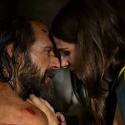
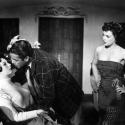
Looking back over his life, Szindbád admits, “I’ve never loved anybody but my vanity.” After drifting through liaison after liaison, ritualised meal after ritualised meal, he’s come to the end of the road. Zoltán Huszárik's extraordinary Szindbád is an elegiac evocation of a life spent pursuing gratification at the expense of forming any real bonds. It’s also a magical film that was barely heard of outside Hungary until the last decade.
Huszárik completed just one other feature, 1980’s Csonataváry. Szindbád premiered in 1971. Huszárik died, consumed by depression and alcohol, in 1981. He had been an assistant director throughout the Sixties and also worked in film as an art director, as well as painting. His works were exhibited in 1969. Born in 1931, he’d entered Budapest’s Academy of Theatre and Film Art in 1949. After being chucked out in 1952 for being ideologically unsound, he found his way back into film in 1957 as a set manger.
The film sews together the short, semi-autobiographical stories of Gyula Krúdy, with Zoltán Latinovits as Szindbád. Krúdy died penniless under the threat of eviction in 1933. Latinovits died after falling under a train in 1976. Mournfulness cloaks Szindbád.
Szindbád is informed by Huszárik’s fragmented path and multi-disciplinary outlook. On a journey - like his namesake Sinbad – Szindbád fills the empty spaces in middle-class women’s lives, listening to their dreams, their unfulfilled wishes and their notions of early death. Beginning with his death, the film is a fragmented, non-linear reminiscence of his life, a low-key Rake’s Progress. Women and food are central. His only confidante is a brothel’s madam, who serves him chicken soup that he fusses with endlessly before spoon hits bowl. Dialogue and voiceover bleed into each other. Extreme close-ups of images that trigger the memories appear suddenly: fat on the surface of soup, leaves, food. Colours are unreal, but not garish. The abstract, dreamlike and hyper-real coalesce without overshadowing the narrative.
The lush palette parallels Paradjanov, sudden jumps prefigure Don’t Look Now, while the unreal atmosphere of the whole is Maya Deren-esque. Parts could have been directed by Stan Brakhage. Yet this adaptation of popular stories was intended for a mass audience. Accessible, watchable and captivating, it’s also an unexpectedly wonderful surprise.
 Find Szindbád on Amazon
Watch Szindbád dining