Akinola Davies Jr.’s semi-autobiographical feature debut plunges two young country brothers into Nineties Lagos’s joyous energy and febrile politics, as they seize a unique chance to bond with their loving but largely absent dad. Often shot at the low angles of a child’s worldview and in intimate close-ups only dimly apprehending the full picture, it is a requiem for both Nigerian hope as the 1993 election is stolen and fleeting paternal ties, and a fervent celebration of Lagos and fatherhood.
We first meet 11-year-old Remi (Chibuike Marvellous Egbo) playing with 8-year-old Aki (real brother Godwin Egbo) in the yard of their rural home. Mum (only ever glimpsed as a silent spirit from the future or past) is out. Rustling trees signal a coming storm, and inside a dusty room looks embalmed, as if already a memory. The brothers are startled to discover their charismatic, authoritative dad Folarin (Sope Dirisu) on a rare visit back from Lagos work which financially supports his family but leaves him a spectral, insufficient mystery in their lives. On a whim he lets the boys return with him to Lagos for the day, in a life-changing adventure.
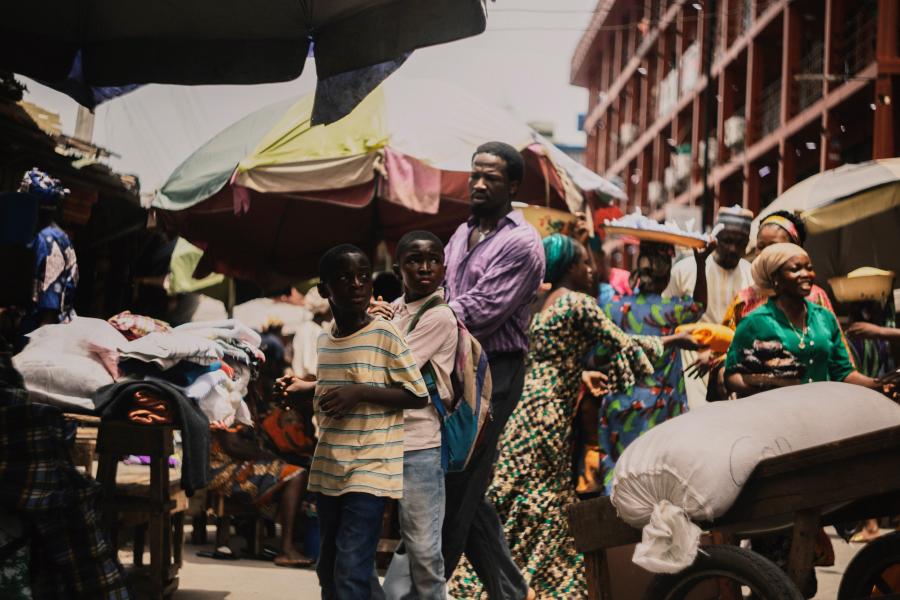
Radio and newspapers give ambient Army denials of a massacre and fuel shortages strand the Lagos bus in a further sign of crisis. But as the family cross the mighty Third Mainland Bridge, Jermaine Edwards’ camera rides an almost motorik groove into the chaotic mega-city, a place of sensory assault and ready kindness filmed with heady pride. The sound design’s ominous throb, though, accompanies soldiers who watch with cold menace.
While Davies Jr. has joined Briton Dirisu in Nigeria’s diaspora, the latter’s brother and co-writer Wale remains a Lagos fixture, and Folarin explores real locations to show his children places steeped in nostalgia, not least the National Theatre their drama-mad mum haunted as a student, site of his besotted courtship. He’s accosted in the street as a respected, politically engaged figure as the brothers watch agog, but is humiliatingly owed six month’s pay. He dances to palm wine guitar in a bar, relaxing despite himself, but this swirling, disorienting adult world also reveals his Lagos mistress. Shot on rich 16mm, the camera is sometimes too close to see clearly, truth smudged in an onslaught of memory and revelation only half-grasped by the boys, whose enigmatic parent becomes more flawed and noble on sustained acquaintance.
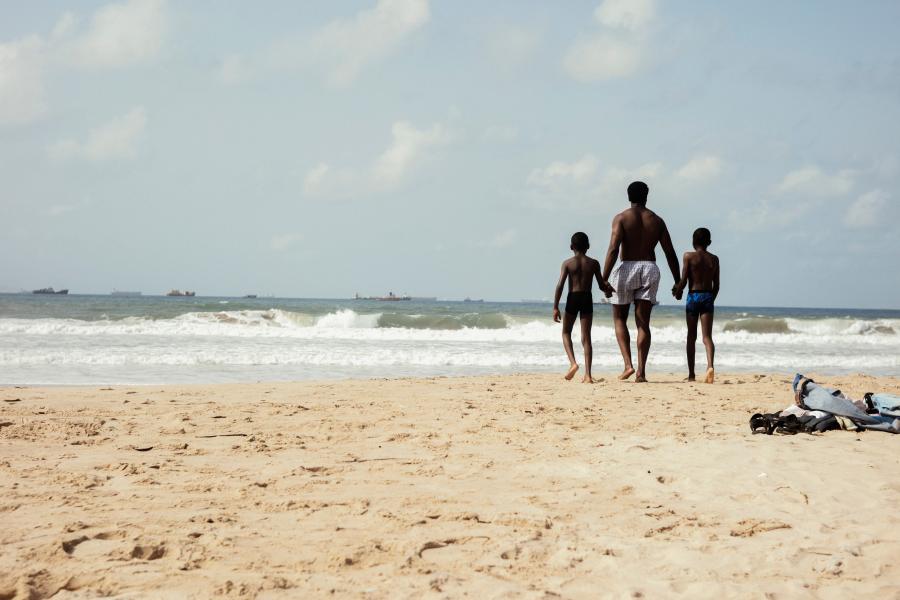
All the while the first democratic election result in a decade promises tantalising change, only for a landslide reformist win to be blandly annulled on TV. “You will spoil this thing!” Folarin cries out as if stabbed, feeling the future roughly aborted.
The national tragedy is the resonant backdrop to the miracle of Folarin’s day out with his sons. Paternal authority becomes less arbitrary under aggrieved questioning by Aki, capable of self-reflection, even apology. Family dynamics heal even as a terrifying army crackdown begins, personal and political equally vivid on a transformative day. My Father’s Shadow finally pays tribute to fatherhood, celebrating the strong back and arms which hoist the boys safely onward.