

The last few years have seen the much-needed positivity of the #MeToo movement followed by a raft of ethical confrontations, whether it’s differences over the feminist generation gap, or those for and against cancel culture.
Luca Guadagnino’s new campus drama wades enthusiastically into these murky waters, perhaps intending to spark new debate and to ruffle some feathers, but instead sinking beneath them. It’s a perplexing, slowly infuriating affair.
That said, Julia Roberts gives one of her very best performances as Alma Imhoff, a philosophy professor at Yale University, who becomes trapped in the middle of an accusation of sexual assault involving a colleague and one of their shared students.
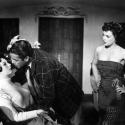
The colleague is Hank Gibson (Andrew Garfield), an assistant prof who, with Alma, is looking forward to receiving tenure at the university. The film opens with a department drinks hosted by Alma and her husband, psychotherapist Frederick (Michael Stuhlberg) at their tasteful and well-appointed apartment. It’s the kind of do that would appeal to some, appal many, as staff and students swap philosophical bon mots over the hors d'oeuvres, everyone trying to prove just how clever they are. But Hank is as smugly vile as he is smart. And it’s excruciating to watch as he keeps grabbing the thigh of student Maggie Resnick (Ayo Edibiri, pictured above with Roberts), while purportedly encouraging her to trumpet her talents. “Everyone in your generation is so tight,” he declares, while wondering, “When did offending someone become a cardinal sin?”
The two leave the party together; the next day, a distraught Maggie returns, to tell Alma that, after a nightcap, Hank had assaulted her. Much to the younger woman’s surprise, Alma’s sympathies are far less than fulsome.
And thus it begins. Hank vociferously denies. Maggie goes public. Alma, whose resurgent career is so tied to his, finds herself caught in the middle. The dean confides in her how his job is all about “optics”.
This could have been played straight, as a drama founded on this one battle of “he said, she said”, with the novel addition of a woman torn between believing another woman (the appropriate default position) and her own career prospects. That’s not to say it would have been a better film, but it would have been more effective. Instead, Guadagnino and writer Nora Garrett aim higher, or wider, or greyer.
Hank may well be innocent of attacking Maggie, but be a beast in any case; Maggie could have made the whole thing up (and be a plagiarising student to boot), but that doesn’t justify Alma’s initial reluctance to rush to her side; however poor her judgement, there can be no justification for the student body’s wholesale attack on Alma herself, in what could be seen as a knee-jerk, collective act of cancellation that attests to what Hank refers to as “this shallow cultural moment”. (Pictured below, Garfield and Roberts) These conundrums could have been enticingly provocative, and the ethical muddle even part of the point, had there not been so much else going on – secrets and lies and intrigues, affairs and suspicions, misdemeanours that have nothing to do with the issues at hand – to the point that the muddle really is just that.
The much commented upon borrowing of Woody Allen’s famous, white on black title cards, to a jazzy accompaniment, is a case in point. Is this an homage to the sort of erudite, elegant, uptown worlds that Allen likes to portray, or a snide allusion to his own cancellation after accusations of abuse (which he denies), or both? The ambuity of intention isn't helpful, and actually feels in bad taste.
Roberts, though, is sensational, as a woman who at first beams an image of icy cool, basking in the worship of colleagues and students alike, but whose demeanour slowly becomes pinched and fearful as the ethical traps and personal demons snap at her heels. Her co-stars also perform admirably, particularly Stuhlberg, offering Guadagnino another bear-like intellectual to go with his professor in Call Me By My Name (though Fred has a bit more edge and pain to him), and Garfield, in a darker role than he's usually afforded.
Incidentally, it’s worth another hats off to Eva Victor’s Sorry, Baby, released in August, which also addressed campus abuse but in a way that was clear-eyed, unpretentious yet wholly original, at once devastating and movingly humane.











Add comment