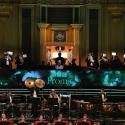
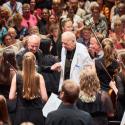
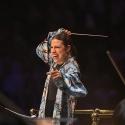
Just as the most impeccably aristocratic families have the shabbiest homes, so the oldest and most prestigious orchestras frequently deliver the most scrappy performances. Trying too hard is so arriviste. King of this insouciant shabby chic are the Vienna Philharmonic. It's almost as if at some point the orchestra got bored of playing well. One hundred and sixty years at the top delivering the world's warmest, plushest, most sophisticated sound must get repetitive.
That's not to say that we didn't get some glorious Viennese cream. We did. But we also got a deliberate untidiness that could only be described as a kind of musical sprezzatura. This was most in evidence in the Brahms Three that opened the evening. The development stormed in on a slack opening and built to a thrilling but unstable climax, the strings pushing their syncopations to the very limits of what was healthy for a steady tread. After an Andante full of local interest, a lackadaisical quality returned in the Poco Allegretto, the pulse of the middle section sounding more like a man creeping downstairs in the middle of the night to fetch some milk than the palpitations of a troubled interior. The fourth ushered in a big, generous, romantic sound, albeit with jazzy pizzicatos from the double basses.
The fin-de-siècle, psychosexual claustrophobia of the Webern was an extraordinary contrast to the Schumann
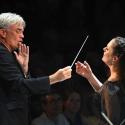
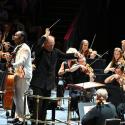
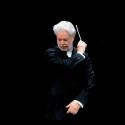
The Vienna Phil has a tendency to conduct their conductors. The amount of inter-sectional one-upmanship in the Brahms meant that it was hard if not impossible for Sir Simon Rattle to make much of an impression. Few of Rattle's qualities - clarity, vertical cleverness, colour - came through, which meant that the performance ultimately lacked sophistication, though it had enough fresh ingredients to still momentarily seduce.
The Webern was more interesting. Conventional wisdom would have thought that placing Webern, one of the very greatest orchestrators of all time, next to Schumann and Brahms was a bit unfair. In fact Rattle's deft handling of the Rhenish Symphony in the second half meant the Schumann held up well next to the adventurous Six Pieces. We were given Webern's 1928 revision of the work. This version robs us of the primordial tunelessness that starts the 1909 version of the third movement, but it's perhaps clearer otherwise. The soft-edges of the orchestral sound, however, didn't do Rattle (or Webern) many favours. He couldn't turn the screw when required. Tartness was absent from the second. A sufficiently deafening climax never quite came about in the third, though the rest of the evocation was powerful.
The fin-de-siècle, psychosexual claustrophobia of the Webern, particularly the choked opening sound of the last Langsam - in which oboe accompanies violin trills sul ponticello - was an extraordinary contrast to the Schumann. The start of the Rhenish felt like a fresh spring wind had suddenly rushed in through the Barbican doors. It was the most satisfying performance of the night. Rattle etched each scenario sharply and freshly. He introduced contours to the usually monolithic sounding opening Lebhaft, and let the horns blaze forth gloriously. The river activity of the second movement was maddeningly gloopy by comparison. Still, with the fourth we were back on track with a searing search for Schumann's enigmatic fiery darkness. And we ended as we had begun, in a delightfully airy and carefree spirit.
The Vienna Phil's increasingly blasé manner can be annoying. Why would a top orchestra choose to be so wilfull? Well they're finally teaching us why. There's much to be gained from a studied insouciance. And isn't it nice that at least one orchestra in the world isn't chasing a shiny perfection and is instead ploughing a richer more interestingly characterful furrow? Besides, whenever one found the lack of unified purpose annoying, one was always able to bathe in the creamy sounds. One couldn't really complain.