Oliver Knussen and the Royal Academy of Music Symphony Orchestra here took us on a whistle-stop tour of Stravinsky, early and late. Few composers changed so in style so dramatically over the course of their career, so there was plenty of variety here. And just for good measure, a work by Stravinsky’s teacher Rimsky-Korsakov was included too, his Russian Easter Festival Overture. Both composers were excellent orchestrators, and Knussen’s programme proved ideal for showcasing the players’ talents. Excellent readings from Knussen, too, a conductor long associated with Stravinsky’s music, communicated well his many insights to the young players.
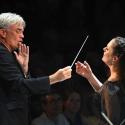
The Academy Symphony Orchestra is an impressively unified ensemble, and it’s only in the smallest details that you hear anything below professional standard. The string ensemble is almost faultless, and the flexibility and nimbleness of the string playing is also very impressive. The woodwinds and brass can be a little less precise in ensemble and tuning, but every section fields a dazzling soloist, especially the upper woodwinds. Knussen (pictured below, by Mark Allen/BBC) gave clear indications throughout, but with modest gestures, giving an air of gentle guidance rather than imposed authority.
The Russian Easter Festival Overture was an imposing opener. Knussen’s tempos were steady, and the many quotations from Orthodox chant were intoned as weighty declamations. Some shaky ensemble from the lower woodwinds made for an uncertain start, but they soon found their form. There were excellent solos here too, from the agile violin turns of leader Eriko Nagayama to the suitably stentorian trombone of Alberto Belzunegui Moreno.
Stravinsky’s 1908 Funeral Song is a natural companion to the Rimsky-Korsakov, being dedicated to the older composer and very much in his style. It has been doing the rounds since the score was rediscovered in 2015, and is now becoming established as one of the finest works of Stravinsky’s early period. The piece is based on a short motif, which is passed around the orchestra, so it is another good showcase for the various sections. Again, Knussen took a steady pace, and the wind players rose to the challenge, supporting well the long, exposed lines. That range of colour from the stings was also put to good use, with Stravinsky’s shimmering accompaniment textures subtly varied from one section to the next.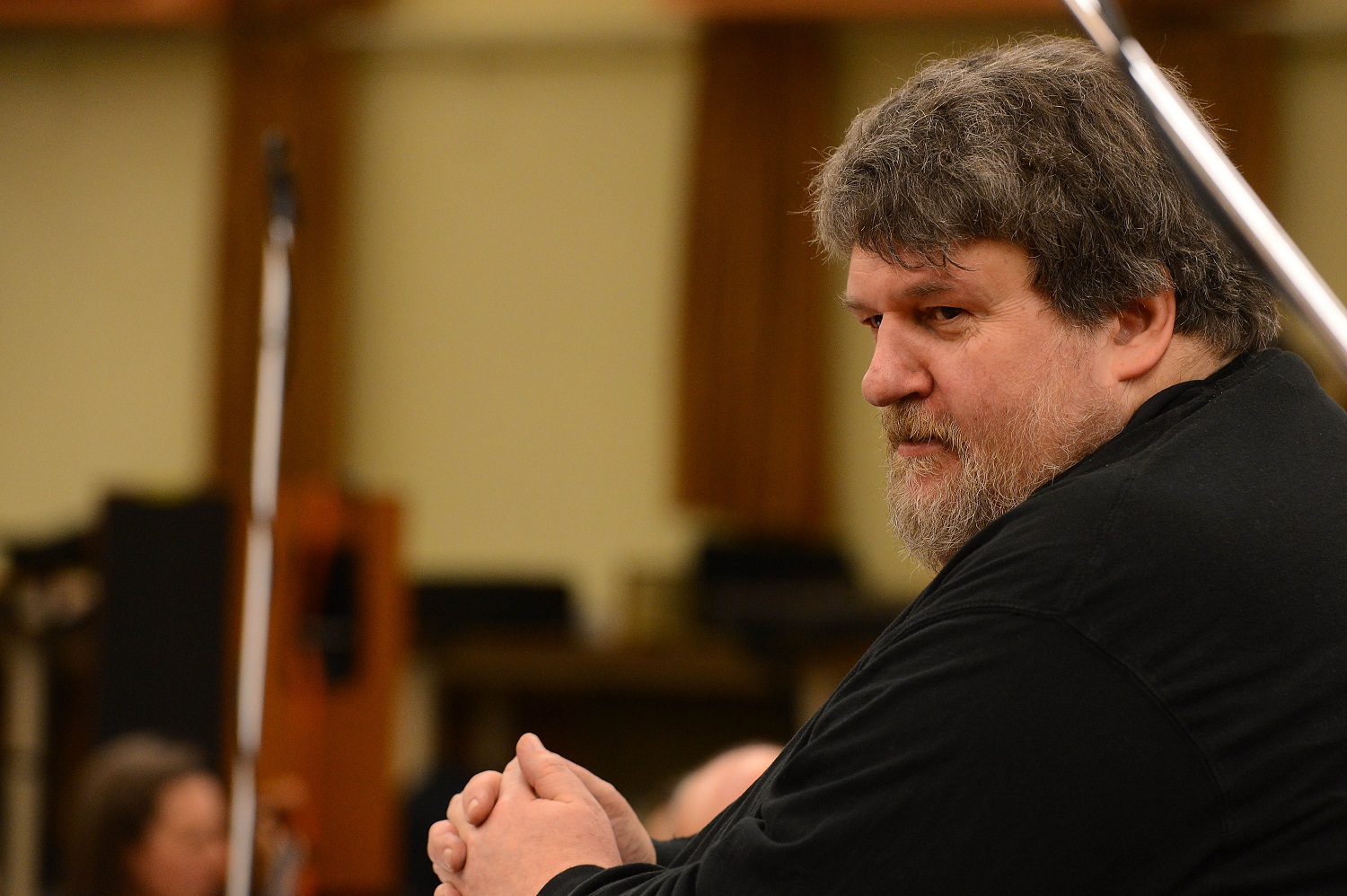 Variations: Aldous Huxley in memoriam shot us to the far end of Stravinsky’s career, to 1964. Like many of Stravinsky’s late scores, this one is short and terse, but it’s colourful and varied too, the master orchestrator yet again finding ingenious ways to spotlight every corner of the ensemble. Knussen led an agile and brightly coloured reading, full of rhythmic zest and light, clean accents. As is customary with this short work, it was immediately encored, though it sounded crisper the first time round.
The Firebird (here in the 1945 Suite version) made for a grand climax to the evening. Programming it with Funeral Song, which was written just a year before, invited revealing comparisons. The soft cello arpeggios that open the Firebird have a clear precedent in the Funeral Song, as do the many brief lower woodwind solos later on, and the doleful horn in the finale. Knussen pushed the players here, with faster tempos and louder dynamics, and for the most part they rose to the challenge. The brass lacked tonal control in Infernal Dance, and the strings weren’t quiet enough under the bassoon solo in the Berceuse. But all were back on form for the suitably expansive Final Hymn. All solos were well taken, with special mentions to Nagayama (again), cello Charlotte Kaslin, oboe Eleanor Sullivan and horn Ben Hulme. One last laurel too for Oliver Knussen, who is Professor of Composition at the Royal Academy, as of 2016. Here’s hoping that appointment will lead to more conducting, as his appearances with professional orchestras these days are all too rare.