

You know what they say about men with big hands. Christian Thielemann has them, that’s for sure. Massive, meat-cleaving clappers, carving through the air. They give a pretty heavy upbeat too, and a generalissimo’s point and jab for a cue. If you’re a back-desk violinist in the Dresden Staatskapelle, you know when you’ve been Thielemanned.
Those hands were also joined in a sweaty fanboy’s applause for Nikolaj Znaider at the end of Beethoven’s Violin Concerto. The violinist returned the love by dedicating his Bach encore to the conductor and orchestra. Such a concerto does not play itself, he remarked, and from the opening drumtaps there was much more evident accord on stage than in the previous night’s Mozart concerto. Thielemann has the habit in Classical repertoire of easing arthritically into cadences and second themes like a whiskered colonel into his bath-chair, but the pulse remained largely steady in a molto moderato sort of account.
Znaider joined him in phrasing over very long spans, true to the concerto’s outward countenance of serene humour. Authoritative, technically impeccable, glowing with the orchestra’s reassuringly expensive tone, it was a performance you could put on a record and charge full price for. It was also completely featureless. One of Beethoven’s most uninterruptedly diatonic works needs little encouragement to sound placid and untroubled, but the first movement’s long excursion into G minor is a stretch of profound self-examination, or it was with Veronika Eberle and Sir Simon Rattle. Last night, such providential and spiritual paths went unexplored.
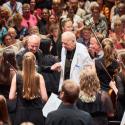
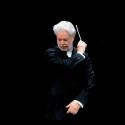
 Sunny and carefree are also keynote qualities of the Mozart theme on which Max Reger lavished a set of nine increasingly elaborate, resolutely anachronistic (in 1914) variations. Or they would have been, had Thielemann (pictured left) not conducted in a fussy six what is plainly a theme with two beats to the bar. When he does less, he gets more, as he did on Wednesday in a sublime Bruckner Third and here again in the hunting-style Fourth variation, a spectral Fifth haunted by ghosts from Der Freischütz and with the pay-off reference to Till Eulenspiegel (written 20 years earlier, though you’d be forgiven for thinking it should be the other way around) coming over loud and clear, before an effortlessly lovely Adagietto Sixth. Even so, some of the easy-going charm which distinguishes Karl Bohm’s classic recording would have made a more persuasive case for music which is still so unfamiliar to an English audience that it applauded a movement early, forcing a quick acknowledgment from the conductor before he ploughed on with the final fugue; an awkward moment perhaps avoidable through the simple expedient of printing the list of variations in the programme booklet.
The Prom, and the week’s mini-festival of great German orchestras, finished with the Dresden players on home soil and top form: Till Eulenspiegel proper and Lohengrin’s Third-Act Prelude for an encore. Despite some occasional, exaggerated cossettings of line and phrase, they surged with animal energy, the Strauss especially, which was tigerish in a playful, almost wanton exhibition of mastery from composer, conductor and players alike.



Add comment