Conductor Marin Alsop was welcomed like Britannia herself at last night’s concert, an astute partnership of John Adams’ vivacious hybridism and Gustav Mahler’s colourful patchwork quilt of a symphony. Alsop won the Prommers’ hearts with her successful navigation through the choppy waters of last year’s Last Night, but the ecstatic ovation greeting the conclusion of this performance was for something quite different: she directed the BBC Symphony Orchestra in lean, energetic and for the most part precise accounts of seemingly very different works, which she juxtaposed intelligently.
John Adams’ Short Ride in a Fast Machine is a maniacally vivid, helter-skelter journey of scrabbling orchestration and skeletal percussion, as if the vehicle in question is struggling for traction on the skidpan of skittish rhythms Adams creates. The suspicion that neither Adams piece had received quite the rehearsal it needed was betrayed by moments of sketchy articulation in some of the inside wind and strings. In this piece, it could just about be said to contribute to the breakneck atmosphere; in the second, it smudged the detail.
The composer’s Saxophone Concerto, only composed last year, and here receiving its UK premiere, offers a quite different kind of experiment, in this case in tone and instrumentation, as Adams, a lifelong jazz fan, explores the saxophone’s orchestral role. Rhythmically and harmonically it was typical Adams, swaying hypnotically in the moderato sections, agitatedly syncopated in the molto vivo. Yet the alto saxophone has an utterly distinctive tone, so like the human voice in range and expression, but with a uniquely smothered, melancholy lyricism of its own. There was lovely dialogue with the clarinets, the instruments like long-lost siblings scrutinising one another for family resemblances.
Mahler’s First Symphony has been called many things, not least by the composer himself
With a full orchestral score, we are, of course, some way from the spontaneous interactivity of jazz, but in this new piece Adams has created a compelling demonstration of the instrument’s unique orchestral potential. Alto saxophonist Timothy McAllister was superb, his technical command of the score impeccable, yet with a tone of molten amber, his saxophone bubbling like a hookah pipe with intoxication, his playing gave the piece its originality.
Mahler’s First Symphony has been called many things, not least by the composer himself, who, partly to assuage critics, and partly because he wasn’t, it seems, entirely sure what he’d given birth to, referred to it as a symphonic poem, then a tone poem (briefly with the title “Titan”), and didn’t settle for “Symphony” until 1898, nine years after the premiere. Though Mahler was nearly thirty at that first performance, with its uncertain form and giddy variations in mood, tone and theme, it has the feel of a slightly immature piece, as if the composer was still searching for his voice.
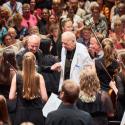
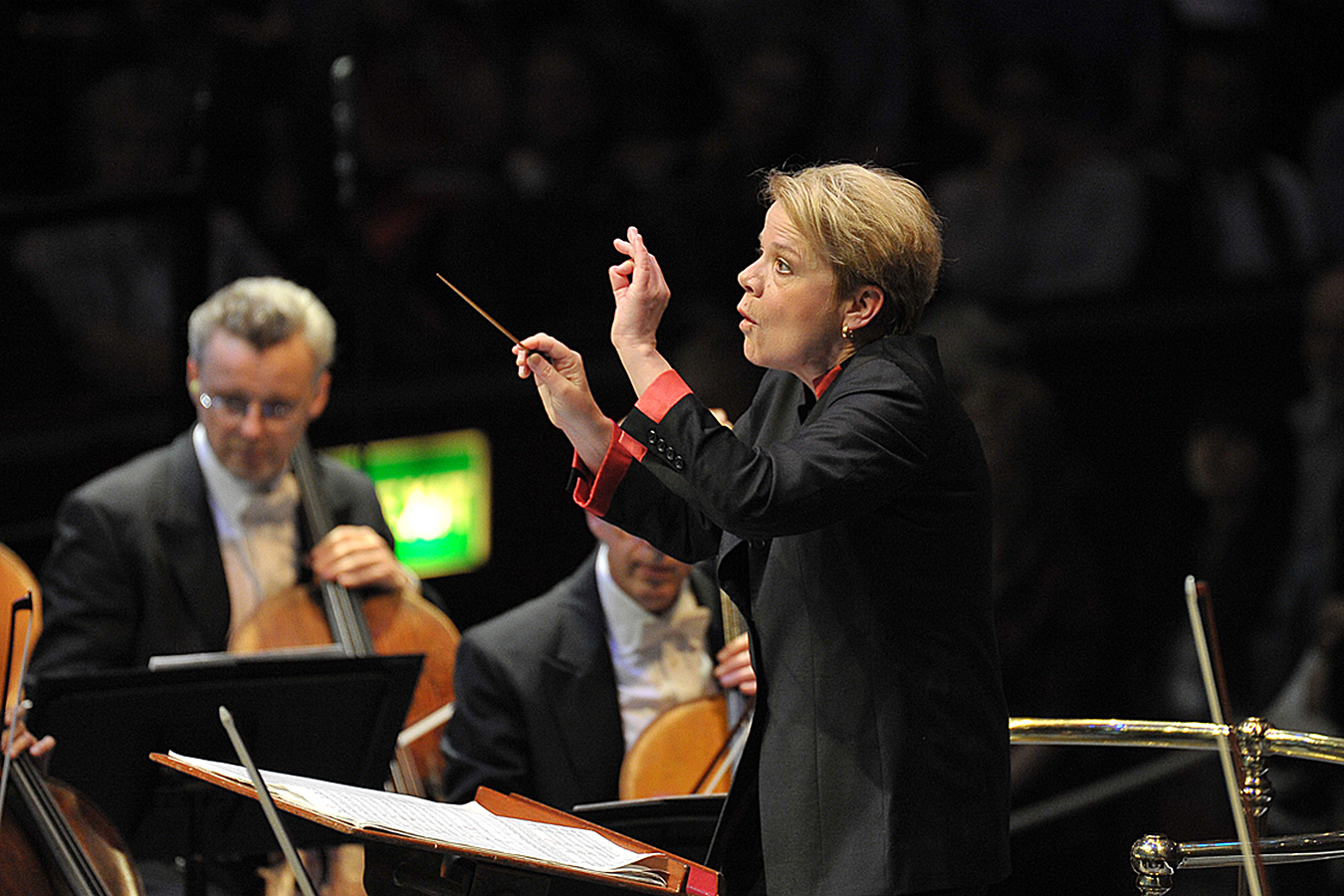 What you lose in overall coherence, however, you gain in colour and variety. Spread over four movements, the symphony includes pastoral, dance, a funeral march, parody, touches of folk and klezmer music as well as, in the final movement especially, sincere passion and romance. Alsop (pictured left) extracted maximum colour from these shifts of mood and tone, her control deft and effortless throughout, in an understated manner refreshingly devoid of podium histrionics. This ability to switch from sincerity to mockery, and from comedy to seeming tragedy, gave the score's youthful passion a particularly convincing reading. On more familiar territory than with the Adams, the orchestra was generally fluent and precise, and made the most of the many opportunities for sectional display, be it the muted trumpets’ mockery, the horns’ final standing fanfare, or the sublime double bass solo, string harmonics and the tuba’s fecund bottom F in the first movement.
Alsop was presented with Honorary Membership of the Royal Philharmonic Society last night, her citation including a reference to her programming skill. In drawing out the similarities of vernacular colour, influence and ambitious orchestration in such ostensibly contrasting works, she not only entertained, but also justified her award magnificently.