

Nothing has resonated through the unfolding First World War commemorations more than the poetry of Wilfred Owen; and in terms of its grim immediacy and enduring heartbreak nothing ever could. Benjamin Britten knew that when he set down his War Requiem for posterity, counterpointing religious posturing with Owen’s indisputable truths. One fought, the other chose not to, but both proffered conscientious objections, and both came at the reality - "the pity of war, the pity war distilled" - from essentially the same place. The truly astonishing thing about War Requiem - and this has been true from the moment it was first heard - is its directness, its ability to be at once uncompromising and instantly accessible. The message - Owen’s and Britten’s - needed to be clear; and is. When Owen’s comrades in war "walked quite friendly up to Death" they did so "knowing that better men would come/And greater wars."
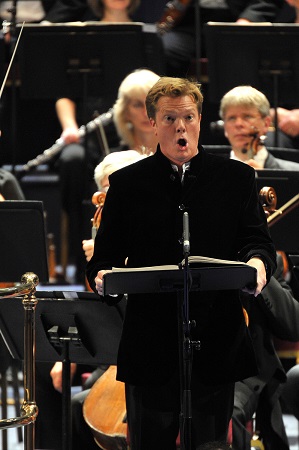
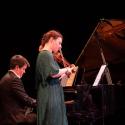
That line sticks in the throat. Owen knew it, Britten knew it, we all know it, but even as we sat in stunned silence at the close of Andris Nelsons’ Prom performance the pity was so little had changed: "I am the enemy you killed, my friend." The bartitone Hanno Müller-Brachmann voiced that heartbreaking contradiction with painful clarity. In his performance was all the fierceness, defiance and compassion one could wish for, beautifully complementing Toby Spence’s aching tenor (pictured, below right) whose rendition of "Move him into the sun" was the more emotional for not sounding so. There are one or two passages in War Requiem where the simplicity but rightness of Britten’s inspiration takes the breath away. The "Lacrimosa" is one. It’s not just the juxtaposition of Latin text and the Owen poem but the way in which Britten foreshortens each appearance of the Lacrimosa - "Full of tears that day shall be" - so that the more personal nature of Owen’s words are pulled to the fore.
Was there ever a more withering conscientious objection than that?
Britten’s way with words serves only to enhance their message and in his setting of Owen’s shocking twist on the Abraham and Isaac fable nothing turns the stomach quite like the cloying close harmony of both male voices (so beautifully one here) as the angel out of heaven intervenes to stop Abraham’s human sacrifice of his son. But, of course, with consummate irony - in both words and music - the boy is slain "and half the seed of Europe, one by one". Was there ever a more withering conscientious objection than that?
It occurred to me during this finely focused reading from the City of Birmingham Symphony Orchestra and BBC Proms Youth Choir how thrillingly receptive to the piece the Albert Hall is. Britten’s clearly defined "planes of sound" could hardly be more atmospherically realised: the CBSO Children’s Chorus celestially "removed" from on high, Susan Gritton’s soprano with its wonderfully intense shining top "among" the chorus, at the helm, as it were, of all its implorations, and the immediacy of the chamber orchestra intimately shrouding Owen’s words.
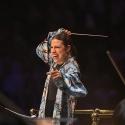
 Nelsons was often very emphatic with the piece, menacingly deliberate in the "Dies irae" and the remorseless start of the "Libera me", stretching and baring the harmony of both, the former oppressively weighty, the latter dragging a terrible burden. The climax of the "Libera me" remains indescribable, a gathering of negative energy - like a nuclear fission - until that organ-buttressed G minor moment where all the terrors of man’s inhumanity to man seem to have been compressed into one apocalyptic chord.
As all the participants came together "In paradisum" at the close and the hall was filled with the enveloping sound of peaceful deliverance, Nelsons followed the final choral benediction - "May they rest in peace. Amen" - with an attempt, I think, to honour a traditional two minutes silence; for reflection. We may not quite have made it to two minutes but the point was eloquently taken.



Add comment