

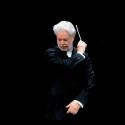
He’s a decidedly cool customer is Pletnev, whether at the keyboard or, where we’re more likely to find him these days, on the podium. He has the air of containment and you don’t always see what you hear – not in terms of emotional engagement anyway. But in this concert with the Philharmonia Orchestra – a continuation of their Rachmaninov series – his level of engagement was sometimes more interventionary than was comfortable.
He certainly knew his place in the first Piano Concerto in F sharp minor where he was joined by an equally cool customer, Nikolai Lugansky. But never be fooled by appearances. From the Grieg-like flourish of the opening page through to the flamboyant pay-off, the immaculate Lugansky may not have broken sweat but he had the razzle-dazzle elements of the piece well and truly licked. The big tolling cadenza with its huge hand-spans took us on quite a journey quickly revealing that whilst Rachmaninov was little more than a boy when he wrote the piece his troubled heart was already betraying a deep and abiding sadness. Lugansky and Pletnev were right to maintain a degree of detachment from the melancholy – the highly chromatic themes were less cloying for it. But what other composer, aged 18, would choose the bassoon to offer consolation to his soloist in the opening measures of the slow movement?
Rachmaninov’s magnificent 2nd Symphony was the evening’s main event and Pletnev presided over the long and lugubrious introduction like an undertaker, his features, rather like the music, impassively fixed. So keen was he to establish the brooding nature of these opening pages that the notes didn’t really begin to flow until well into the first subject group and even then with a degree of halting circumspection. The second subject was rather awkwardly shaped, the rubatos decidedly sticky, the ripe horn counterpoints rather muted. By then it clear that Pletnev’s fussy, rather mannered, way with this music was denying it that all-important sense of finding its own space.
In the scherzo the solo clarinet bridge into the ravishing second theme inexplicably ground almost to a halt while the theme itself was horribly disfigured by Pletnev’s elastic phrasings. This is too accomplished a symphony to toy with. One was inwardly urging Pletnev to let the music go. It’s interesting that a musician who can achieve such subtle and sensitive rubatos at the keyboard can be found so wanting in the shaping of an orchestra. The Philharmonia were impressive, the conducting was not. Not surprisingly the most unaffected and telling music making of the evening came from Barnaby Robson’s eloquent clarinet solo in the slow movement. Suddenly Pletnev took a step back, Rachmaninov a step forward.
- Check out what's on in the 2010 Edinburgh International Festival - Pletnev is billed to conduct.



Add comment