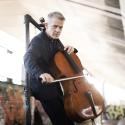
The cello is so deeply engrained in my fingers, my imagination, it’s part of my being – my life would feel amputated without it. You fall in love with the instrument, the music, and then you embark on the life-long task of trying to get closer to that beguiling musical ideal. That’s the drug, the contract you sign with the devil. Every day I think how lucky I am that I can dive into a score and work at it physically.
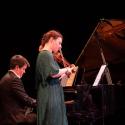
In Cello Unwrapped, a year-long festival of the instrument at Kings Place which opens on Saturday 7 January with two performances by Alban Gerhardt, I’m performing in three concerts which reflect different strands of my musical life and friendships. The first is Duo Dances in May, with the wonderful Hungarian violinist Barnabas Kelemén. We’ll be playing Ravel’s austerely beautiful Duo Sonata and Kodály’s lesser-known duo, another masterpiece. Written during the First World War, it’s infused with nostalgia. Kodály, like Bartók, had been collecting folk music and was trying to hold on to a culture which he could see disappearing around him. There was so much colour, texture and excitement in that culture, and his sense of loss is a powerful element. The combination of violin and cello can be orchestrally rich, and joining forces with someone like Barnabas, with such facility and brilliance, you lose a little fear. It’s like playing with a well-matched tennis partner who raises your game.
It’s a cliché, but true, to say that the cello is close to the human voice
I’m fascinated – obsessed – by the production of sound. What’s the secret of each individual’s vibrato and how does that relate to their use of the bow? If the left hand brings colour, the right hand is concerned with speaking, articulation. I think of the bow as my breath, and so working with singers has always been important to me. In September I’ll join soprano Ruby Hughes and pianist Julius Drake in a programme we’ve devised called Tre Voci, from Bach arias to John Tavener’s Akhmatova Songs.
It’s liberating to make music with a singer who’s not tied down by any physical manipulation outside of themselves. It’s a cliché, but true, to say that the cello is close to the human voice, so interweaving the two is natural. I also love working with words, and it’s good to be reminded that we must sing on the instrument, even if they are songs without words. Performing Schubert’s Auf dem Strom, the drama of the poem, with its images of cutting loose from land and heading out to sea, is a point of inspiration for me.
I remember the pianist Paul Lewis was once asked if he got lonely playing a recital of Schubert sonatas. His answer was, "I’m never alone, I’ve got Schubert!" I feel the same: playing solo you engage in an intimate dialogue with a composer in which you become both listener and performer. For modern cellists, Bach’s Cello Suites mark our beginning. In November I’ll be playing the Fourth and Fifth in Bach Through Time. The Fourth, in E flat, is mystical and enigmatic, the dark horse of the set, beginning with an architectural simplicity, then gathering an inevitable momentum. It’s so technically demanding it makes you wonder whether there was an incredible cellist at the court of Cöthen who inspired Bach.
In the Fifth Suite in C minor you tune down the A string to G (scordatura) which makes the C string resonate in a profoundly C minor way, giving it great darkness and depth. It’s the most monumental of all the Suites, opening with a French Overture and a great fugue, in which Bach creates the sense of a whole choir singing a passion. I’ve recently discovered and recorded Ernst Bloch’s solo Suites, the first of which I’m pairing with the Bach. Written at the end of his life, they represent a moment of reflection and introspection.
When composers want to dazzle or seduce, they choose the violin, but I think when they want to express their most heartfelt thoughts they choose the cello.