Before Mozart, there was Pergolesi. The 18th century couldn't get enough of the Neapolitan prodigy. He was the first great tragic musical wünderkind of the Enlightenment, prefiguring what Mozart would become for the 19th century. Like Mozart, Pergolesi died prematurely aged just 26. Like Mozart, Pergolesi was a musical simplifier and distiller, a divine and revolutionary sieve. Like Mozart, Pergolesi's popularity spawned an industry dedicated to mythologising his life and misattributing the music of contemporaries to him. Yet we celebrate Pergolesi's 300th anniversary this year, quite unlike we would Mozart's, with just one piece: the Stabat mater.
There have been many decent performances of the work throughout the year. The latest at the Barbican last night boasted the Italian Baroque dream team of Sara Mingardo and Anna Caterina Antonacci. Sadly, the resurrection of those dramatic Opus 111 recordings of the early 2000s with Rinaldo Alessandrini wasn't to be. Antonacci called in sick. So we got Susan Gritton instead. Not a bad swap at all, it turned out to be.
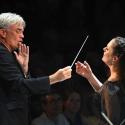
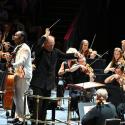
We endured only one other switch in the programme: Handel's Concerto Grosso in G minor, Op 6, No 7, for Popora's Salve Regina. And I wasn't complaining. The English Concert under Harry Bicket did a beautiful job veiling the audience in a maudlin gauze during the opening Largo. The fugato Tempo giusto second movement then offered a delicious melodic subsidence, which gave way to a lush valley of strings in the Musette that quickly divided itself into refreshing watery tributaries. The orchestra were quietly sensitive throughout, as good at delivering pastoral balm as they were scuttling off and about jig-like and at pace.
A low-key thoughtfulness carried through into Vivaldi's Nisi dominus, for which we had the velvety tones of Sara Mingardo's contralto voice to thank. With her glasses perched on the end of her pretty nose - which was in turn perched on the end of a very pretty face - a scholarly feel emanated from her divine exhortations. No bad thing. It was a small joy to come back to the intellectual and edifying rigours of this intriguing religious text after months drowning in the immoral philosophical bogs of late Romanticism.
A curious marriage of Protestant fatalism and Catholic guidance inflects the message of the Nisi dominus. Don't think you can build a house, guard a city, go to sleep or even wake up when you wish. God has it all in hand already - for better or for worse. Most curiously, lying in seems to receive divine sanction, for which, three cheers. Mingardo's voice is so holistically fine - milky and rich in the lower register, clean and full in the upper - that she could have explored the melodic and harmonic drama more in places. But the musical drama of vocal and dynamic control and release was fascinating enough.
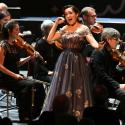
And anyway the fizz came with the Stabat mater. Much of this was down to last-minute saviour Susan Gritton. While Mingardo continued to perfom with immense stylishness, Gritton was perhaps more direct and affecting. Was this down to a fresher relationship to the text? It's easy, I imagine, to take for granted the emotional and intellectual demands of this work when performing it day in day out and to focus instead on delivering musical good manners.
Whatever was the case, I have never heard the Cujus animam wail so sincerely, freely or shockingly as it did from Gritton's lungs. For Gritton it seemed the musical element was only there to serve the meaning of the text. Both delivered fine vocal performances, however, and they were perfectly in balance when duetting. The orchestra and Bicket added a beautifully contoured accompaniment throughout, leaving us as they began, veiled in a melancholic shroud, as bracingly cold as the frosty evening air I was about to walk out into.