Reviewing, they say, never gets easier. How can one possibly describe chamber music playing as good, as stupendously memorable, as last night’s all-Brahms programme from Dutch violinist Janine Jansen, English violist Timothy Ridout, Swedish cellist Daniel Blendulf and Russian-born pianist Denis Kozhukhin? (Clue: skip to the end for a three-word version.)
Kozhukhin, at the centre of everything, was just fabulous. He really does have some very special qualities indeed to bring to Brahms.
First, the listener has the assurance that every possible element of technique is completely in place. There really are no barriers, which brings a tremendous sense of ease and flow rather than of effort. And then there is his sense of pacing and of “give”, which are astonishingly assured and imaginative.
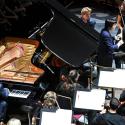
But there is more. Perhaps above all he has a wonderful lightness, an ability to defy what is often referred to as the “weightiness” of Brahms. At a practical level, that means in the first instance that there is never a moment when he fails to meet the challenge of making the balance in the ensemble work. 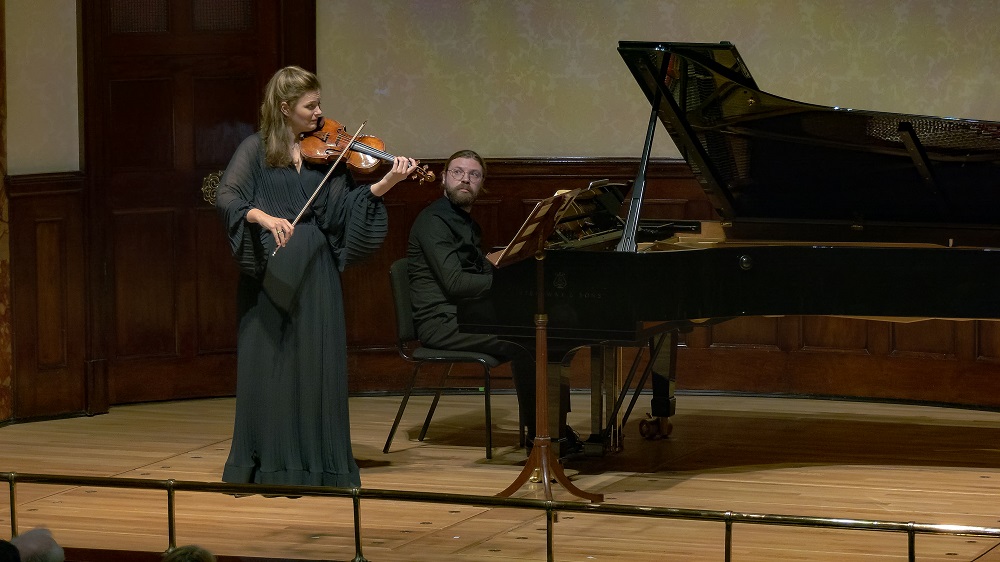 And that is no mean feat. Take an episode like the very brief B major section which marks the first climax in the opening movement of Brahms’s C minor trio. The pianist, armed with a Steinway with the lid up, also has Brahms’s invitation to play both “ff” and “marcato”. He could so effortlessly overpower. It takes a particular kind of sensitivity and a desire to play as one of the team to make a moment like that work. And yet that is precisely what Kozhukhin has and does. I came away from last night with a sense of amazement. It cannot just be lightness of playing, this surely goes deeper in his whole being. What a truly remarkable musician, and at 37 possibly approaching his prime?
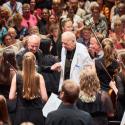
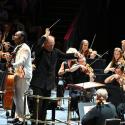
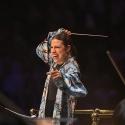
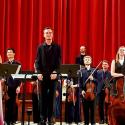
Kozhukhin and Janine Jansen (pictured above) give a lot of concerts together, and his playing aligns superbly with her quick-fire imagination, inventiveness, sense of shaping a line in a different way she plays it. The unhurried spaciousness of the beginning of the A major Violin Sonata set a tone for the evening. Seeking the antidote to Oxford Street crowds on the last Thursday before Christmas? Too right.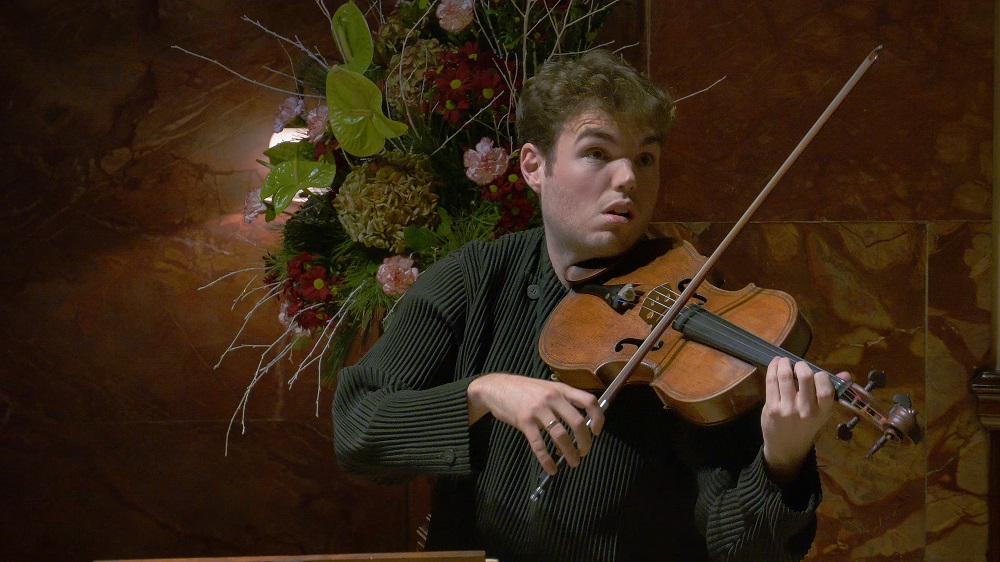 It was a joy to hear Timothy Ridout (pictured above) in this A team. He plays with such wonderful poise and assuredness, this is where he belongs. And yet he also has such glorious, almost puppyish enthusiasm. In the middle movement of the Viola Sonata he was getting so carried away with the dance and the rhythmic springiness of Kozhukhin’s playing, he had the briefest of concentration lapses, but that was a moment which I will remember for its charm and humanity, rather like that famous time in 1957 in Salzburg when Irmgard Seefried fluffed the words of “Heidenröslein”, apologised, and earned the biggest applause of the evening.
Look for a highlight and it could be the jaw-dropping unanimity in the passages in the C minor Quartet when all three string players shape and blend Brahms’s deliciously long phrases together as one. Thinking about moments like that make me hope that there will be a recording.
There really can’t be a level of chamber music playing higher than this. The Wigmore audience gave the performance both the rapt attention it needed and the very loud applause it deserved.
Short version: in place of this review, one could, of course, just remember Max Boyce’s sentence when Llanelli beat the All Blacks in 1972, and note, with the very deepest of possible pleasure, that...
...“I was there.”