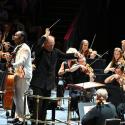
With Peter Gynt, the National Theatre’s “reboot” of Ibsen’s Peer Gynt, topping the drama bill at the Edinburgh Festival hotfoot from London, it was almost obligatory to find a space somewhere in the music programme for Grieg’s famous incidental music from 1876. But what would you put in the rest of the programme? A safe choice might have been more Nordic sweetmeats such as the Grieg concerto or a Sibelius symphony, but few could have expected Peer Gynt to be paired with Sofia Gubaidulina’s mesmerising Glorious Percussion – a concerto composed in 2008 for an ensemble of five percussionists and orchestra.
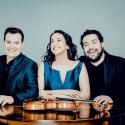
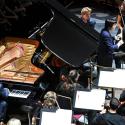
This was a 40 minute musical and theatrical spectacle. There were more things on stage you can hit, rattle, or shake than I have ever seen before, even in the early percussion-heavy scores by James MacMillan. Two complete sets of tuned gongs, bongos, every possible incarnation of the glockenspiel-marimba family, bodhrans, woodblocks, and in front of it all five huge bass drums. Not content with that, Gubaidulina’s score demands a large orchestra with its own comprehensive percussion section, with two harps and a celeste thrown in for good measure. 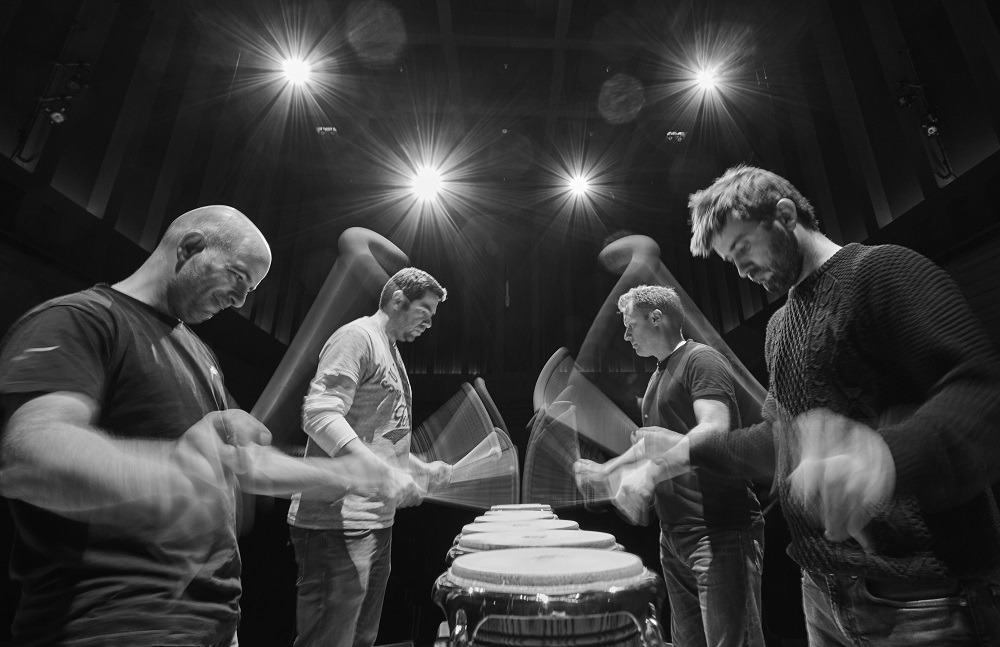 This is theatrical music-making. Conductor Thomas Dausgaard seemed almost irrelevant as the Colin Currie Group (pictured above) stole the show, darting from instrument to instrument, weaving under gongs, slipping silently into each new position, exchanging mischievous glances, responding to each other’s cues with practised synergy. Large amounts of the piece are improvisatory. In these sections, led by Currie, you could see motifs evolve and blossom. In one striking passage Currie has a tuned bongo that seems to challenge a double bass to maintain a musical conversation.
It is equally a cornucopia of exotic sound such as you might hear in a film soundtrack as our hero delves deep into a hostile jungle: primaeval footsteps, unearthly rattles and eerie glissandi. Something I have never seen (or heard) before is the strangely pitchless but penetrating reverberation produced by dragging what looked like a pink lollipop across the skin of a drum.
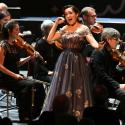
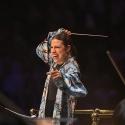
It’s all very well creating a sonic and choreographic spectacle, but Gubaidulina’s achievement is to weave this cabinet of curiosities into an orchestral tapestry with a sense of both meaning and progression. Her gestures are spare – a rich and luscious intervention from the strings is barely two notes but hints at more, the great climax with the five bass drums filling the hall rests on a simple ascending motif. The effect is an extraordinary but satisfying experience that is a great deal more than the sum of its parts. 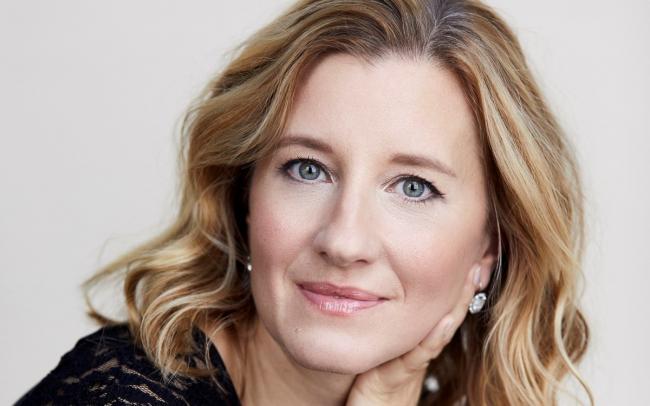 If you turn the question around, what would have been the best piece to partner Glorious Percussion? Some crazy Schnittke perhaps, or a late Shostakovich symphony, so the reversion after the interval to the mellifluous world of Grieg’s Peer Gynt was bound to be something of an anti-climax, for all its popularity. That said, it was exquisitely played. In its own way it is also a bit of an orchestral showcase, with glittering percussion and gorgeous woodwind solos. The BBC Scottish Symphony strings have never sounded better in the Death of Ase. In Solveig’s Song the soprano Malin Christensson (pictured above) was radiantly clear but just a little too penetrating – her demeanour not unlike an over eager hostess pressing her guest to another canapé.
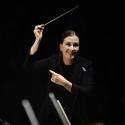
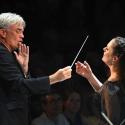
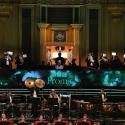
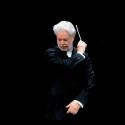
The following evening found the Usher Hall in a very different mood. Where Grieg and Gubaidulina drew, by festival standards, a thin audience, the lure of Joyce DiDonato singing Berlioz with the National Youth Orchestra of the USA was enough to fill the hall to near capacity. Like other youth orchestras, NYO-USA re-invents itself annually, with a surprisingly young age range (16-19). Dressed in vibrant red pants (as they say over the pond) and identical trainers, it looks and feels young, dynamic, and very large (pictured below with Antonio Pappano at the BBC Prom two days later). 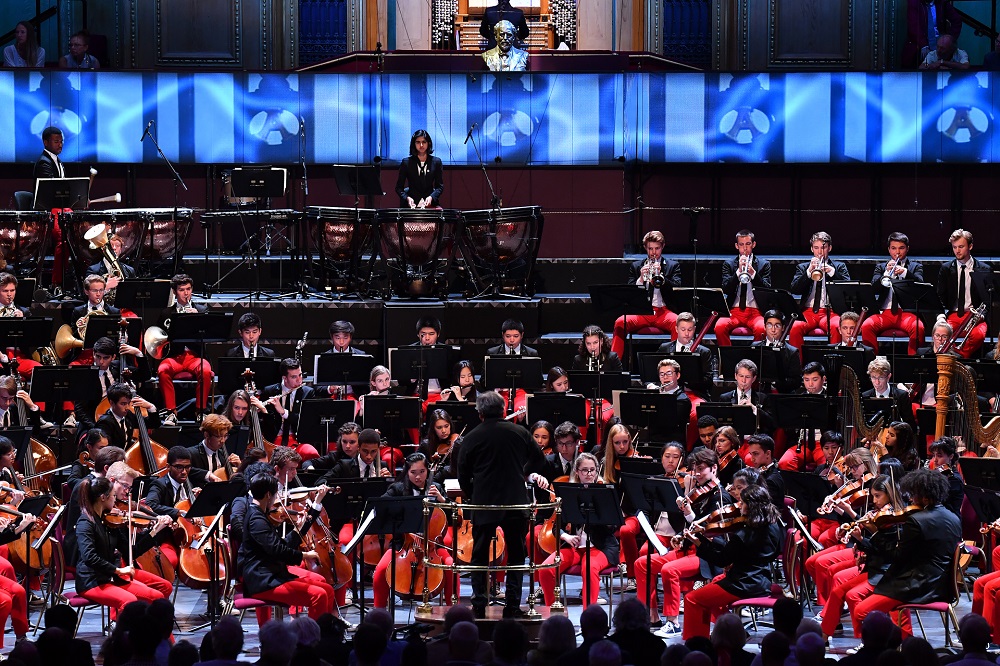 Under the skilled direction of Antonio Pappano (pictured above), they began with a muscular piece celebrating the 30th anniversary of the fall of the Berlin wall by the 18 year old Tyson J. Davis, the forthright and confident writing rather belying the title Delicate Tension (from Kandinsky’s painting Spannung). The programme note, at least, was clear in its reference to “shapes and angles that connect our time to the Cold War eras.
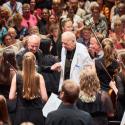
The orchestra halved in size for Berlioz's ultra-romantic song cycle Les nuits d’été. Joyce DiDonato (pictured below) belongs to the pantheon of superstars that even in the festival is something of a rarity in Edinburgh, and she did not for a moment disappoint. We were spellbound from the first note to the last, each song exquisitely framed both psychologically and emotionally, her gestures, facial expression, and tone perfectly matched to Berlioz’s sumptuous settings. She has a trick of throwing her head to the side, casting the voice into the wings, so that it seems to fill the hall several times over – masterful and extremely effective. Don’t miss her at the Proms on Sunday. 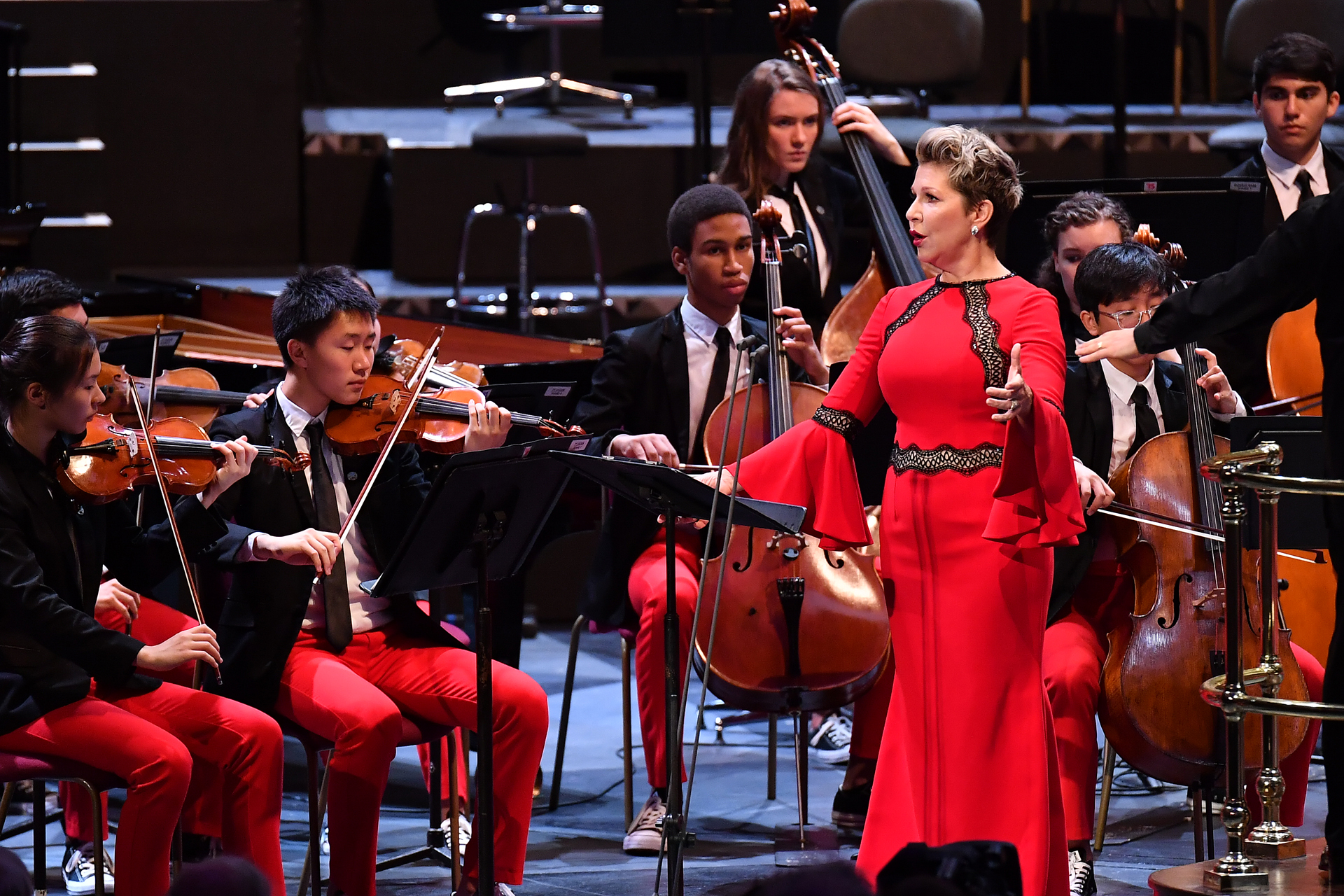 It is a credit to Pappano and his young orchestra, back to full size, that they managed to bring us back from this dreamworld to the harsh realities of Prokofiev’s Fifth Symphony. His focus was more on the big noises (and there are plenty of them) rather than nuance, such that we were quelled and then knocked sideways by a great welter of sound. Huge and prolonged applause squeezed out an encore in the form of Glinka’s Overture to Ruslan and Lyudmila, played at breakneck speed.