For the Scottish Chamber Orchestra the transition from its home in the Queen’s Hall to the much larger spaces of Usher Hall is not always a happy one. Earlier this season an experimental performance of Mahler’s fourth symphony lacked heft in the larger Edinburgh venue, for this listener at least, but would have swamped the smaller. Many disagreed.
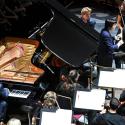
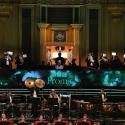
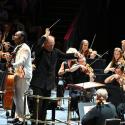
But no such worries with this joyful performance of Haydn’s The Creation. Although the orchestra of about 50 looked quite spare on the large stage, and the chorus a compact bunch in the middle of the choir stalls, the sound filled the space comfortably. The light and shade of Haydn’s music seemed to demand, and relish, the room to breathe.
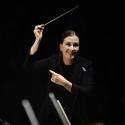
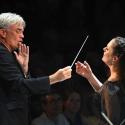
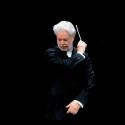
Harry Christophers, more familiar at the helm of The Sixteen, conducted, replacing the late Christopher Hogwood who died last September. The orchestra was what one might call semi-period, with natural horns and trumpets, narrow bore trombones, and small timpani. Strings, for the most part, played without vibrato, producing a steely, glacial sound that was particularly noticeable in the dramatic opening phrases of the Overture. Later, after God creates light, the radiantly beautiful chromaticism of the slow sunrise (or star-rise) music was exquisitely played, its spine-tingling air of expectancy predating by a century or more the hushed nature music of Mahler’s symphonies.
Matthew Brook rather stole the show with his wonderfully expressive face and keen sense of humourThe use of natural brass is so often a mixed blessing. The two trumpeters at the edge of the stage seemed to be running a small instrument workshop throughout the performance, for ever fitting, removing and peering at little bits of brass tubing. But the sound produced was wonderfully crisp and nutty. It helped that Christophers’ relaxed, even pacing allowed these instruments the space and time they need to sound their best.
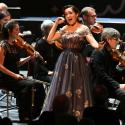
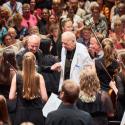
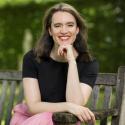
Of the three soloists, the baritone Matthew Brook (Raphael and Adam) rather stole the show with his wonderfully expressive face and keen sense of humour. He relished all his words, delivering every one with a twinkle in his eye, but for his caricatures of the many animals of God’s creation, particularly the worm, he reduced the audience to laughter. Tenor Andrew Staples (Uriel) had a good, clean, Evangelist voice, well suited to the role, while soprano Sophie Bevan (Gabriel and Eve) produced luscious flowing lines but rather lacked diction compared to the men. That said, her “fragrant bloom” in her final duet with Adam, was beautifully placed in the orchestral accompaniment – just one of many instances throughout the performance of deliberate, careful word placing which spoke of meticulous rehearsal and attention to detail.
Needless to say, the chorus enjoyed themselves terrifically – for a choral singer you just can’t go wrong with Haydn. “The heavens are telling” is just one of several favourite choruses delivered with aplomb and a volume that belied the relatively small numbers.
Haydn produced English and German versions of The Creation. For a work based on Milton’s Paradise Lost no special pleading is required for a performance such as this one, in English, particularly when the words, for the most part, were so well conveyed. Those following the libretto in the programme would have noticed that the printed words differed in many instances from those sung – just one small niggle in what proved to be a hugely enjoyable performance.