

"We all live here in peace and friendship," notes Telegin (David Ahmad), otherwise known as Waffles, early in Uncle Vanya, to which one is tempted to respond, "yeah, right."
As casually bruising a play as I know, Chekhov's wounding yet also brutally funny masterwork exists to explode Telegin's remark across four acts, and adaptor-director Trevor Nunn's terrific in-the-round production for west London's Orange Tree Theatre sees all the characters in the round: you're aware of their dual ability to be fantasists one minute, ruthless about themselves the next.
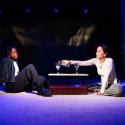
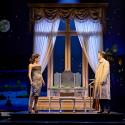
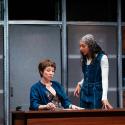
By way of example, barely has Astrov (Andrew Richardson), the charismatic if intensely self-critical doctor, arrived on the scene before he confesses an inability to love which bodes ill given the ripple effect he will send out towards the two central women in the play. Those are Yelena (Lily Sacofsky, pictured below with Richardson), the ringleted young bride of the ageing, gout-afflicted professor (Wiliam Chubb), and the ever-patient, indrawn Sonya (Madeleine Gray), the 22-year-old niece to the eponymous uncle (Ted Lasso Emmy nominee James Lance) who might well take his own life – if only he could get his gun to work. 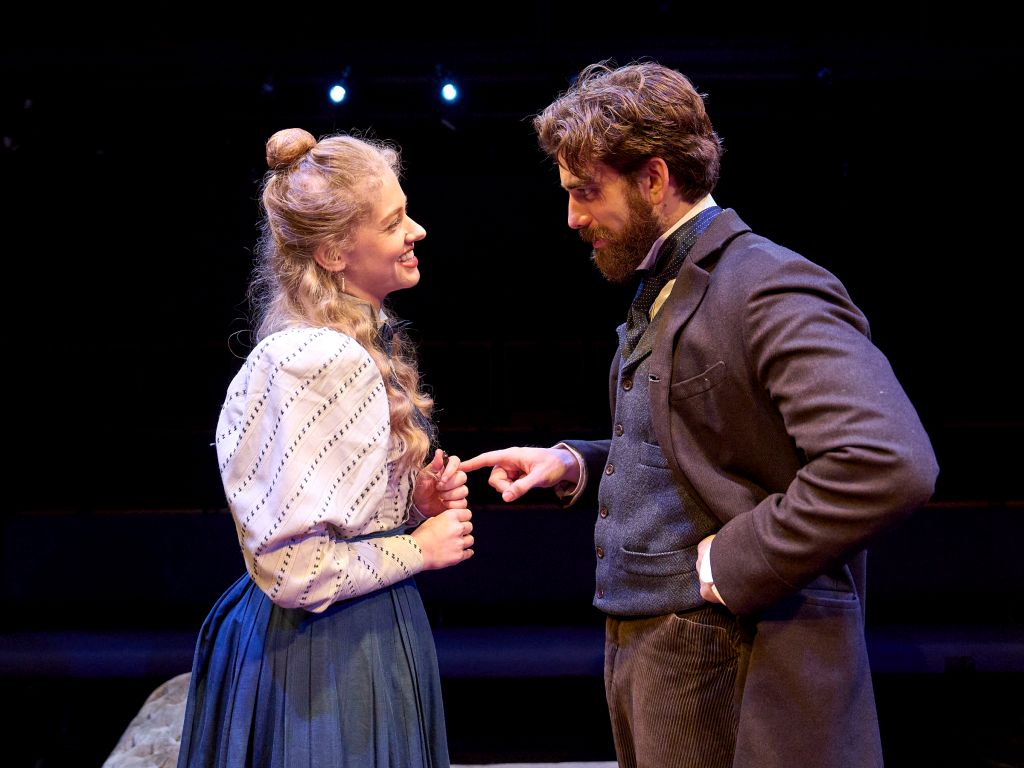 One of the few plays I never tire of, the London and New York theatres seem obsessed with Vanya at the moment. Andrew Scott had a sellout West End run last autumn with a tricksy solo version, and a starry revival is on tap across the Atlantic at Lincoln Center, bringing together such names as Alfred Molina, Anika Noni Rose and, making his Broadway debut, Steve Carell.
Nunn recently turned 84 and has made no secret of ticking off the entire Shakespeare canon throughout his storied career. Vanya, in turn, is the last of Chekhov's four plays to come his way, and one feels the appropriateness of an age-obsessed text to a theatre veteran at that very time in his life when such thoughts must loom large. "No one feels sorry for you when you're old," notes Marina (Juliet Garricks), the observant housekeeper, her lack of sentimentality characteristic of a play that wrings tears honestly. Few other plays so deftly map out the cat's cradle of missed connections and disappointment that characterises many a life, while allowing its characters' interplay to be informed by moments of soliloquising that surprise even themselves.
Chekhov at the same time shows the extent to which his characters collude in their sense of loss. Astrov may fret about the forests in which this eco-activist takes an interest, but that's as nothing compared to the blunted emotions that even the alluring Yelena can't fully enflame. Vanya lets rip about the great mind he was never to be, seemingly unaware of the absurdity of grandiose comparisons that manage to be ludicrous and touching at the same time.
The tendency towards Chekhov is to strip away the traditional trappings, and some may be surprised to find a samovar centre-stage of Simon Daw's set (pictured below). But Nunn, working from his own fresh take on the script, works the play's emotional minefield like the master that, at his best, he is. I've often wondered in recent years if this director's heart was really in assignments like a musical version of The Third Man. But there's no doubting his depth of connection to a play in which he's even cast a leading man, in Lance, whose shaggy coiffeur resembles no one so much as this director's younger self. 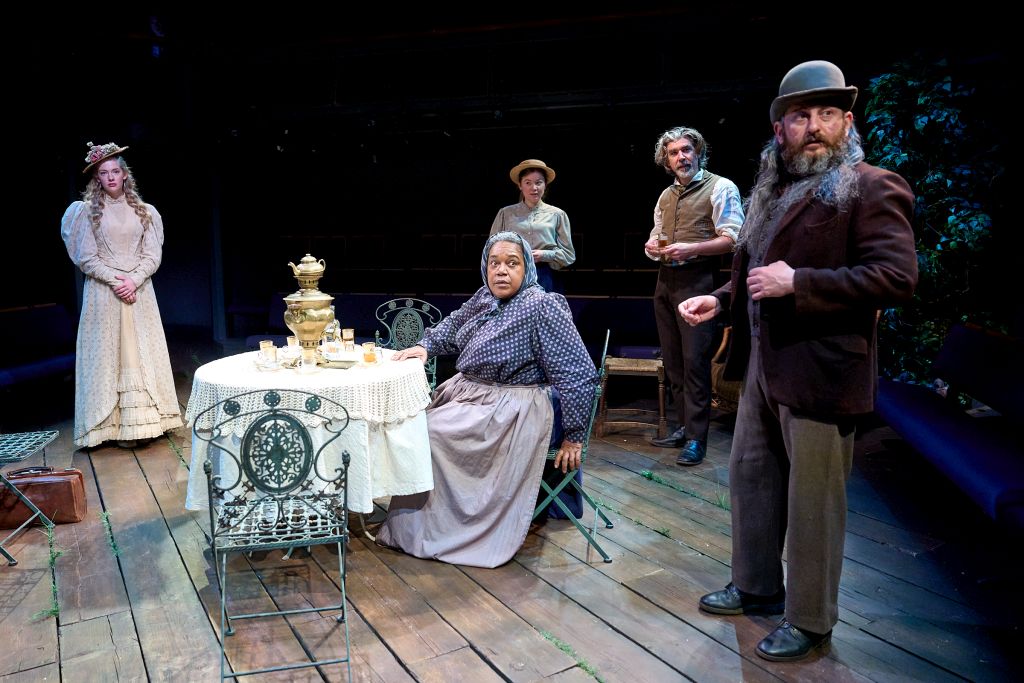 The fierce-eyed actor responds with a hyper-adrenalised, sweary occupancy of a man cursed by equal measure longing and self-doubt, and he finds an equal in Richardson's entirely splendid Astrov: a briefly bare-chested bounder (much like the Guys and Dolls gambler that brought this actor to attention this time last year at the Bridge) who clocks all too fully the psychic rot that has set in, No wonder Yelena regards as a "disaster" a home whose very provinciality is anathema to a husband she doesn't love. Chubb, in turn, rescues the professor from terminal proggishness, revealing a man lucky to have snared a trophy wife – unlucky to know just how repellent he is to her in turn. (It seems telling, too, that Serebryakov has so little hair amidst the luxuriant male locks not just of this Vanya but of Astrov and Telegin, too.)
Telling details abound, as one might expect from a director who decades ago invested Shakespeare's All's Well That Ends Well with a Chekhovian ache I remember to this day. Amidst the pile-up of emotion near the end, it's touching to see Yelena and Sonya clasping one another in friendship and support. Sacofsky rightly locates the excitability beneath this inadvertent sex bomb's apparent languor, whilst Gray's sweetly impassioned Sonya falters only in the final scene with Vanya that, somewhat surprisingly, doesn't tear at the heart the way the pair's shared commitment to endurance sometimes can.
Still, all praise to a Vanya that ranks with such differing iterations over time as Lucy Bailey's intimate version for the Print Room of old, with Iain Glen, or Rob Icke's scorching account for the Almeida, with Paul Rhys as a Vanya very much on the verge. In keeping with this wisest of plays, pain exists never far from the surface. But as is the oxymoronic way of such things, that makes it one of the most pleasurable evenings in town.

Add comment