theartsdesk Olympics: Athletes at the opera

The Olympic Games are responsible for the most popular operatic libretto of all time

share this article

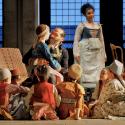
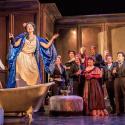
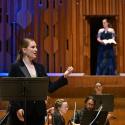
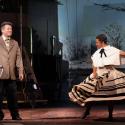
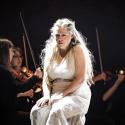
Vivaldi's Games get the contemporary treatment in Garsington Opera's 2012 production

Triumph, despair, glory and struggle: the Olympic Games might technically be a sporting event, but in spirit and essence they are pure drama. Film-makers may have shouted loudest about this discovery, generating hit after Olympic-themed hit throughout the 20th century, but composers also know a thing or two about sporting thrills, with almost 300 years of Olympic action in the opera house.

If there were a gold medal for operatic contributions to the Olympics it would unquestionably go to Pietro Metastasio. In 1733 this 18th century poet and librettist produced L’Olimpiade – a libretto set in Ancient Greece, taking the Olympic Games as the context for some gender-bending, identity-switching love intrigues.

But being opera, sport comes a poor second to romance; while the plot hinges on the outcome of the games, Metastasio never gives us much by way of actual running, throwing or jumping on stage. Far better that character muse lengthily (and with plenty of contemplative repeats) on the philosophy of rivalry and competition.

Although originally written for composer Antonio Caldara, the libretto proved so popular that it was subsequently taken up by some 60 composers over the next century including Vivaldi, whose own opera appeared just a year later, and Pergolesi a year after that. Soon bastardised pasticcio versions were doing the rounds of Europe – patchwork operas stitching roughly together favourite arias from different versions and composers – and even J.C. Bach and latterly Donizetti produced a version of what must surely be the most popular libretto of all time.

Listen to Gemma Bertagnolli perform 'Lo seguitai Felice' from L'Olimpiade with Ensemble Cordia conducted by Stefano Veggetti 


Add comment

The content of this field is kept private and will not be shown publicly.
Name that you would like to appear as the author of the comment
But being opera, sport comes a poor second to romance

rating

0

explore topics

share this article

Help secure the future of arts journalism

In this era of algorithmic recommendation, opaquely sponsored content and AI slop, theartsdesk’s mission to preserve real journalistic and critical values has never been more important.

If you like what you see here, please join us 
in this mission.

Subscribing to the site will help us in our coming 
redesign and expansion.


If you do this before the 31st August this will be at our guaranteed founder’s rate: 
your subs will never increase again.

Subscribe now for £5 per month. 
or yearly for just £40.

Or if you simply want to support us with a one-off donation, you can do so here.

more opera

Two tales of magic and mystery - as TV reality show and environmental parable
Quality take on Verdi and a pure comedy re-imagining of Léhar
Turbocharged orchestra, sometimes too much so, various approaches from the singers
Richard Jones tries hard with Bellini's vehicle for lyric madness; Lisette Oropesa dazzles
Paula Murrihy is a majestic Persian king, though the orchestra is more flouncy than fiery
William Kentridge's vision subtly blends his political experiences with mythology
Fine music-making illuminates Debussy's sinister blend of realism and romance
In concert, Mozart's farewell opera burns bright
Not a huge number of laughs, but plenty of vocal charm from tenor and soprano
Niamh O'Sullivan is the perfect Knight of the Rose in classy revival