

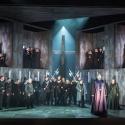
Considering the doubtfulness of its underlying idea, James Macdonald’s production of Rigoletto has shown remarkable staying power since its Cardiff début 17 years ago. It’s true that this particular opera - which, unlike one or two others of Verdi’s, was premiered in its correct Mantuan setting - does to some extent lend itself to relocation in time and place, as Jonathan Miller’s famous mafioso production for ENO once showed. But Kennedy’s White House remains tricky, involving absurdities beyond even those (not inconsiderable) in the original.
So why does it survive? I’d hate to think it was at all because the behaviour of Kennedy’s cortigiani suggested anything in the more recent activities of our own noble politicians (the mind boggles). But perhaps there is something in Macdonald’s Capitol and Oval Office scenes that makes somewhat twisted sense in Robert Innes Hopkins’s clever designs and with the brilliant WNO chorus smartly stage managed by the revival director Caroline Chaney, even if Monterone’s curse and everything to do with Sparafucile and Gilda’s incarceration remain simply impossible for sixties Washington.
But the main thing is that WNO have in my experience always been careful to cast the work with an ear to its vocal demands, and this revival is no exception. Verdi was no longer writing pure bel canto, but as Clare Merivale’s interesting programme note explains he was using the old Italian conventions in a new way that begins to approach the modern idea of vocal music drama. In fact the critic Gabriele Baldini once argued that, by the time of Rigoletto, Verdi’s drama was primarily a musical matter, with the plot more or less secondary. So maybe Macdonald’s concept is irrelevant and simply passes us all by.
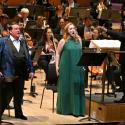
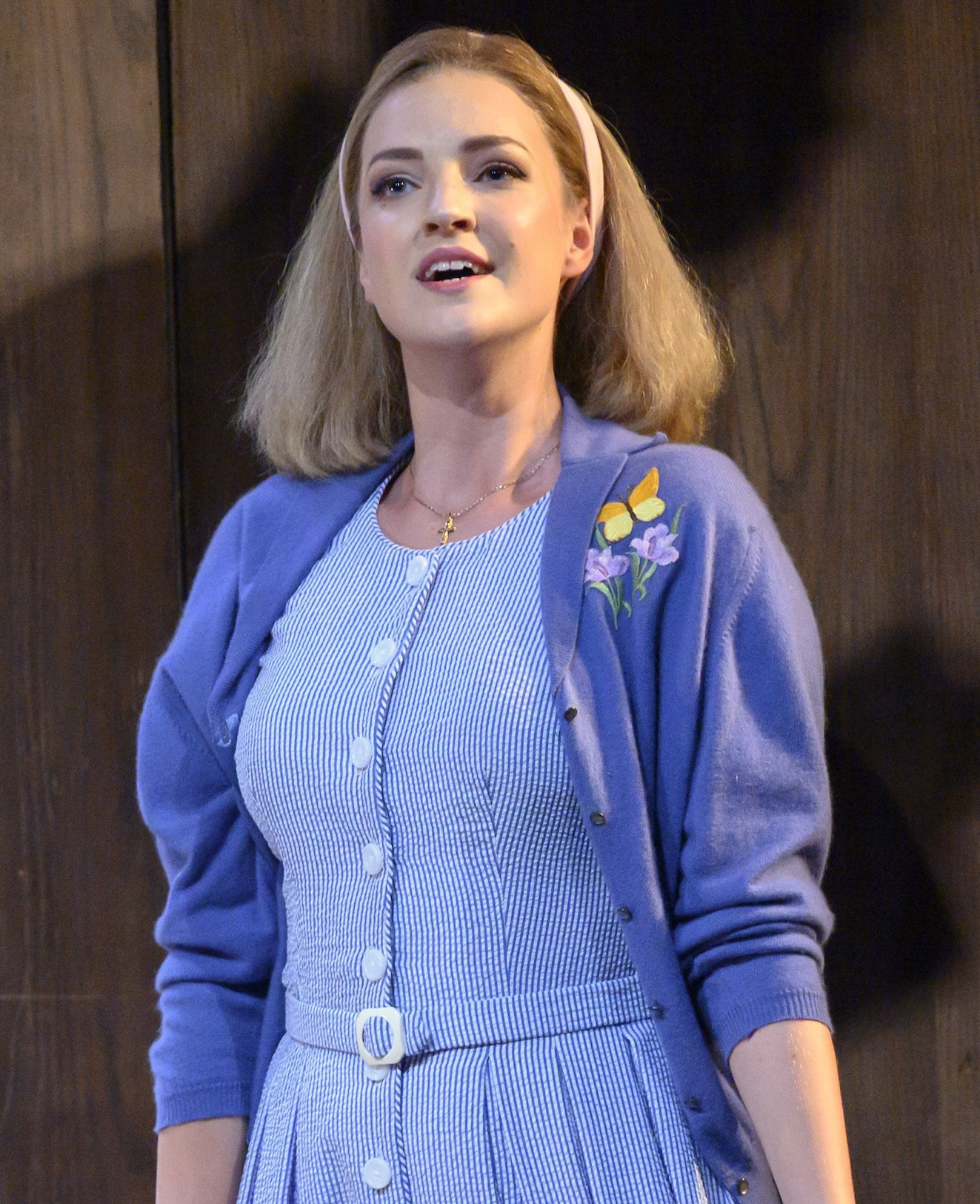 In any case its revival here is sustained by some very fine solo and choral singing and stylish, skilfully paced orchestral playing under Alexander Joel - a new name to me. The star of the evening, beyond much question, is Marina Monzò (pictured right), a fresh-faced, firm-voiced Gilda with a beautifully focused, light-toned top, but also expressive warmth in the lower register of, for instance,“Tutte le feste”. In fact her agility rather showed up the Rigoletto Mark S Doss’s comparative shortage of that quality in their second-scene duet, though elsewhere he was in majestic voice, superb in his denunciation then wheedling of the courtiers in the Oval Office (Act 2) and genuinely touching in the final scene with Gilda in the sack.
As for Kennedy himself, the stately Korean tenor David Junghoon Kim dispatches his difficult but well-trodden music with considerable brilliance, while managing to look a very plausible US President, if not much of a Mantuan Duke. At first, in “Questa o quella”, I found his occasional tendency to thin his tone slightly disconcerting, but once tuned into the voice I never looked back and enjoyed very much his ease of delivery and flexibility of tone.
As usual with this company, the minor parts are no less strongly cast. Eddie Wade’s Monterone overcomes the improbability of this particular character in this particular place and time (everything being explained in Act 2, where he is removed to an asylum rather than the scaffold). James Platt is not the darkest Sparafucile ever, but a convincing enough murderer, and Emma Carrington plays just the right, vulgar, slightly overdone sister such a man might have.
Joel is very much on top of this marvellous score, so full of orchestral detail for which Verdi rarely gets the credit he deserves. Suddenly his writing for strings and brass has a richness and thrust quite the equal of Wagner’s at this time (the Wagner of Lohengrin). The Welsh play it superbly, fully convinced, as ever, that Verdi was born in Tonypandy, as no doubt he was.
Add comment