

Adam Gorb’s The Path to Heaven, with libretto by Ben Kaye, is his longest work to date (almost two hours’ running time without interval) and on a story that could hardly be more tragic – the Holocaust. Its premiere at the Royal Northern College of Music was conducted by Mark Heron and given by members of Psappha with singers and musicians from the RNCM, directed by Stefan Janski.
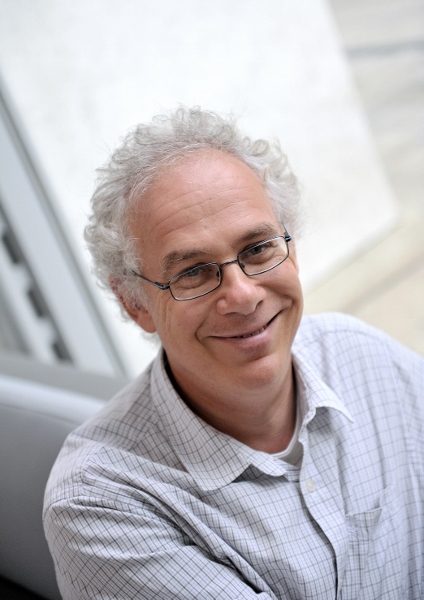
This was the culmination of a two-day festival of the music of Anthony Gilbert and Adam Gorb (pictured below), the first and present Heads of Composition of the RNCM respectively. It’s really a kind of opera documentary: Kaye has been Gorb’s collaborator on a number of previous projects, in particular Anya 17, their 2012 opera on human trafficking which could fairly claim to have helped change UK law, and the project has been one of passion and commitment from the start.
They wanted to capture the reality of the experience of Holocaust survivors, of whom there are ever fewer still living, and their research gave birth to a storyline that is essentially true, albeit with some elements from different sources mixed together. Hanna and Sara are sisters who have been brought up by their aunt and uncle – Hanna has a baby, Sara a boyfriend called Dieter – and after a party for Sara’s 18th birthday they find they are to be rounded up and sent to camps, along with their cousin Magda, on account of their Jewish heritage.
 We follow their story as they go through the transit camp at Terezin and then to an extermination camp, where they suffer the horror of Uncle Rudi’s "selections" and the betrayals and merciless cruelty of the killing machine. Dieter, meanwhile, became a soldier and is made a guard at the same camp – he is able to get some fresh bread to Sara, and the denouement of the tale comes when Hanna steals a stale crust from another prisoner to save her baby. Sara says she was the thief and produces the fresh bread, thereby ensuring (since the complainant will prefer to get the fresh loaf "back" rather than what he really lost, and thus sustain her fiction) that she herself will be killed and her sister, the baby and Dieter may survive another day.
It’s a terrible story, full of irony (Dieter’s attempt to help effectively signed Sara’s death warrant) and building to a dramatic high point. In the event, only Magda lives to tell the tale, but in face of this tragedy the opera has not just its moments of comedy but an optimistic ending, as Gorb underlines the fact that the sacrifice Sara made is what finally lives on, defeating all the Nazis’ intentions of destroying a people, its culture and its hope. In the end, though not overtly religious, it is a very faith-filled work.
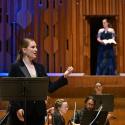
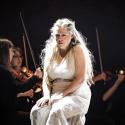
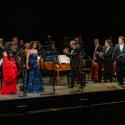
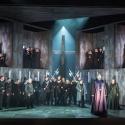
The opera is beautifully constructed, framed by a solo singer named Esther (Lorna Day), who sings a Hebrew lullaby. It was given in semi-staged form in the RNCM concert hall, no doubt a necessity for a big work with six other acting roles and 15 in the orchestra (12 wind and brass, piano and two percussion). But inevitably that meant limitations for the presentation of the story, although the singers and Janski’s direction made something amazing out of slim resources, and the on-stage band, despite the skill of Gorb’s word setting, was sometimes in danger of overwhelming the voices’ audibility (the text was printed in the programme booklet, which helped me, at any rate, keep up).
 If there is a downside to the conscientious accuracy of the text-writing of the piece, it lies in what seem at times to be verbatim transcriptions of the recollections of those who must now be elderly, recalling a long-ago childhood, as speeches in the present. The depth of the words and metaphors they use can hardly be absorbed in a single hearing … but then, no really great work can be taken in at one go, and this demands to be heard more than once.
The music, though, is of extraordinary skill, passion and beauty. Gorb has written exhilaratingly in klezmer style on a number of occasions before, and he gets that vernacular into his score to splendid effect. He’s also a master of pastiche of what he calls "bad music" – slimy 1930s populist stuff – and even has a go at sending up a staid Lutheran chorale (I'm not quite sure what that symbolises in this context). Above all, he lets himself go with expressions of the horror and outrageousness of the truth he’s telling, and leaves you in no doubt about his feelings and his passion for a truth to be told.
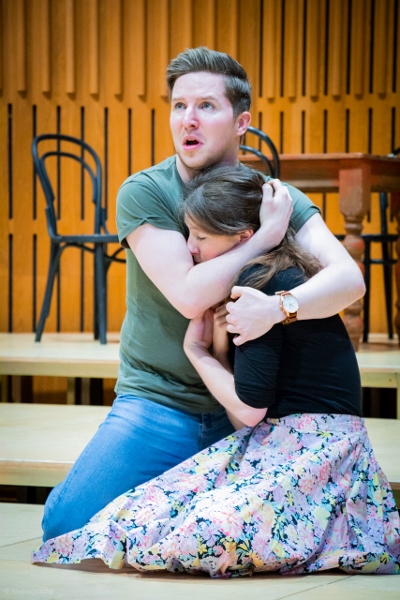
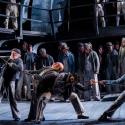
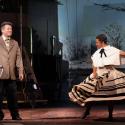
The acting singers – Lucy Vallis as Magda, who narrates much of the story, Fiona Finsbury as Hanna, Caroline Taylor as Sara, Michael Jones as Dieter (Taylor and Jones pictured above), and David Cane taking the two roles of Hans (the girls’ brother, met in the opening scene) and a mad rabbi in the later extermination camp episode, along with Einar Stefánsson in the equally repellent two roles of the "selections" camp doctor and a monster of a camp guard – were highly effective in character portrayal and excellent in sound.
And the title? "The path to heaven" is a mocking phrase first used by the guards on a cattle-truck transit train taking the innocents to the slaughter: later it is used by Sara to express her sacrifice: “Sometimes the path to heaven can bestow strange, wonderful gifts.”
Add comment