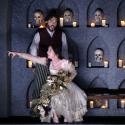
Donizetti's L'elisir d'amore must be the only opera from whose central lesson one can actually learn something. Its message - drink, chill out, back off and the girl will be yours - is as good a moral guide to life as any. But it was still surprising to leave Glyndebourne last night satisfied. Beforehand, I couldn't imagine a way in which last year's brashly inventive Americana production of the opera by Jonathan Miller for the ENO could be bettered. But it almost was.
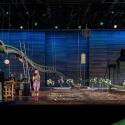
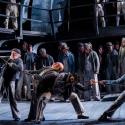
Not by the visuals, mind. Lez Brotherston's sets and Annabel Arden's direction followed a tried, tested and yawn-inducing 1950s route. Is there now a UN resolution mandating opera directors to update buffa to this easy, breezy, black-and-white, flat-packed decade? Because, for the third time in as many weeks, here we were again: this time in a quaint, rustic 1950s square, with water pump, fairy lights and (drum roll) a pylon - and if I tell you that that was the most exciting prop of the night, you'll understand the fun we had with the rest of it.
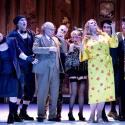
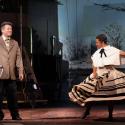
But wandering amid the intermittent clutter, mundanity and irritations was as fine a cast as you could wish for. The central quartet etched out their relations and respective psychologies economically and swiftly. Stephen Costello (whose Royal Opera House debut impressed our Edward Seckerson last year) was a revelation as the lovestruck electrician Nemorino, thumbs hooked into his dungarees, his tousled head digging into his chest. His many attempts to get into Adina's knickers (first by actually trying to get into her knickers, then by trying not to) elicited tip-top deliveries, sweetly phrased and powerfully sung.
I even succumbed to the delights of Danielle de Niese, who plays the object of Costello's at first unrequited affections. Her Adina, delivered with unfailingly attractive bunny-eyed coquettishness, seemed only to be short of things to throw when things don't quite go her way. She was controlling her coloratura better than ever, nailing every one of her showstoppers, which meant one could almost completely overlook the occasional moments when her cantabile lines were swamped by her wild fire of a vibrato.
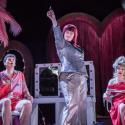
Rodion Pogossov's Sergeant Belcore - Nemorino's jackbooted love rival - was a joy. He had a familiarly Italian swagger that frequently went up in a puff of pomposity. Paolo Gavanelli's Dulcamara, the quack doctor whose quack potions sets the drama in motion, couldn't have offered a sweeter tone but might have offered a livelier go at fraudstering. As recompense, we were given a zany, silent sidekick - I peronally preferred the pylon. The choir were a fine crowd of plank-brained peasants. Conductor Enrique Mazzola and the London Philharmonic Orchestra offered a lightly authentic performance (there was a fortepiano) and kept an energetic but clean ship. Our eyes may have remained hungry, but our ears feasted well.
- Glyndebourne's L'elisir d'amore continues until 4 August