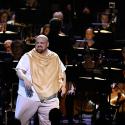
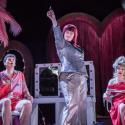
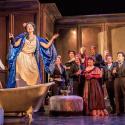
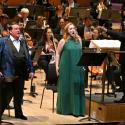
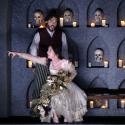
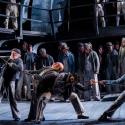
I didn't know whether to sigh or to yawn. Another opera. Another 50s set. At least it started well. In an obsessively wood-panelled hunting lodge, fat Falstaff (Ambrogio Maestri) lies in his bed in filthy long johns amid a sea of empty silver platters, working out a way to pay his bills and satisfy his lust. Not a 50s cliché in sight - yet. The banter between him and his helpers - Pistol and Bardolph - is focused and easy. And the singing from Maestri is effortless and clear and delivered in a parlando manner of exquisite style and grace. My, you could almost see beyond the grime and the gut and begin to understand what his two targets, Meg Page (Kai Ruutel) and Alice Ford (the splendid Ana Maria Martinez, pictured below with Maestri), see in the man.
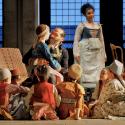
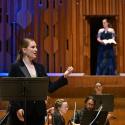
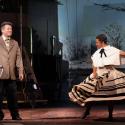
The next scene, in which the women appear, is even better. The music at this point is fantastic, with as much interesting vocal scene-setting as orchestral. Both the central quartet of ladies, and conductor Daniele Gatti, relish all the colour and sotto voces Verdi throws at them. The girls' back-and-forth over lunch, joking at the expense of their catches as if we were with Carrie, Samantha, Charlotte and Miranda, is a delight, helped by some beautiful character acting from the bouncy Marie-Nicole Lemieux (Mistress Quickly). This scene also sees director Robert Carsen looking back to Hollywood when suspending time for a stolen kiss between Nannetta (the radiant Amanda Forsythe) and Fenton (Joel Prietro - consistently vocally sharp).
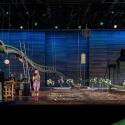
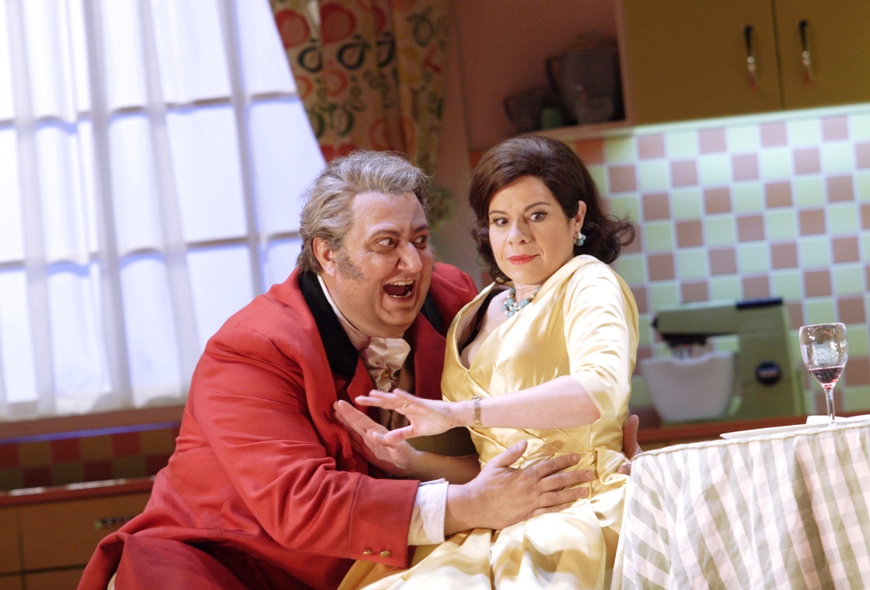 With this early, but effectively final, flourish, Carsen appears to run out of steam. In fact he seems to disappear almost completely. From Act Two Scene Two on, we get nothing but Richard Jones - brightness and madcappery in Fifties outfits - but without the Jones bite. Lovers of Kirstie Allsopp-land will have rejoiced. But for those of us that don't melt at the mere sight of a baby-blue Roberts radio, Carsen needed to do more. He's way too uninterested, for example, in making any honest sense of the unrealistic and plodding confusions of the where's-Falstaff scene (Is he in this drawer? Is he in this fruit bowl? Is he under this spoon?)
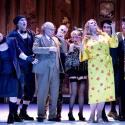
That the Royal Opera have a horse (Rupert) who had better comic timing than much of the rest of the show doesn't help. And the way the huge, creaky wood-panelling of the first scene maintains its presence into the kitchen scene, the stable and the hunt feels kind of cheap. The strange final scene, however, shows up Carsen the most. Having the whole cast trussed up as a bunch of tally-ho toffs doesn't kindle the kind of feelings of warmth in one's fellow man I think Verdi had in mind here. And the final philosophical pan-out comes across (as ever) as a bit of a mess. Then again, ending with a huntsman's feast went down a treat last night in the auditorium. A home from home for some. A vision of hell for me.