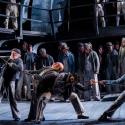
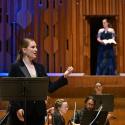
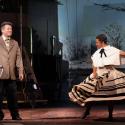
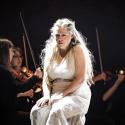
We critics often find ourselves "embarrassed by historical facts", as Craig Raine once put it. Raine was trying to explain why so many people still value Wilfred Owen's poetry - to him, the most overrated corpus of the 20th century. "[Owen's] life and death as a soldier make literary criticism seem invalid and pedantic," he argued, before proceeding to a very validly pedantic demolition job. Music has its own Wilfred Owens. Viktor Ullmann is one. His reputation (which was showcased last night in a rare staging of his only opera, The Emperor of Atlantis, at the Arcola Theatre) seems to survive solely on the back of his death at Auschwitz. It's a good reason to honour his memory, but not a good reason - alone - to listen to his music.
Of course there is something noble about the desire that many of us have to find greatness in those who've suffered so much. It's our secular way of providing some sort of compensation, however hopelessly post factum. It's the least we can do for those who have been so brutalised: to honour their names, respect their lives, revere their fruits. And thus, worthy-sounding set-ups like the JMI International Centre for Suppressed Music are founded. They sponsored last night's production.
But the problem with such initiatives, well meant as they are, is, to put it crudely, that not all suppressed music is necessarily any good and not all of those artists who died in the Holocaust necessarily had any talent. Ullmann and his opera is a case in point. In its neo-1920s parade of popularly inflected suites, The Emperor of Atlantis indicates a creator with only one talent: the knack for pastiche. Without the horrific backdrop in which it was written (Theresienstadt, 1943-44), the work would have been forgotten as quickly as its sonic imprint had evaporated from my head over night.
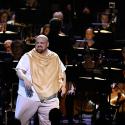
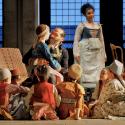
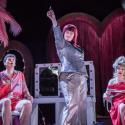
I doubt the orchestral simplicities and filchings (an amalgam of bad Hindemith and worse Weill) would have got any better with a tighter performance from conductor John Murton and his small orchestra, Dioneo. The singing from the females was stronger than from the males, most of whom had intonation problems. Kate Howden's gutsy entry as the warrior Emperor's Drummer provided a rare passage of sustained musical and dramatic interest. Christina Petrou delivered some lovely clean high lines as the Girl.
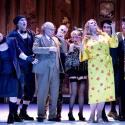
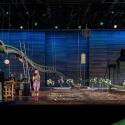
The strange, delirious story (clear enough of a satire on the Third Reich that it was banned), on the other hand, would have benefited greatly from clearer, less theatrical direction from Max Hoehn. Peter Kien's libretto is explicit and haunted enough to leave well alone. It lurches between extremes: black parables that should feel merely absurdist but in fact were reality and a desperate nostalgic thirsting for the past. Many of the work's ups and downs are written as if the creators were trying to evade the attentions of a regular Nazi patrol during its eventual performance. Having said that, one thing no one could have missed is the feeling of fear; even Death is haunted and harried by the Emperor.
The words are resonant. "The living have forgotten how to live; the dying have forgotten how to die". Lines like these need no cheap theatre to be understood. The libretto, therefore, worked hard carrying the twin dead weights: of the music and the fussy theatricality buzzing around it. Unsurprisingly it didn't prove strong enough. But then anyone who expects anything of value to come from artists working in camp conditions is crazy. That the libretto resonates at all is a miracle. That the music is eminently forgettable should not surprise. Ullmann's survival until late 1944 - when he was finally carted off to the Auschwitz ovens - was a heroic enough achievement.
- The Emperor of Atlantis continues at the Grimeborn festival at the Arcola Theatre tonight