It’s hard to believe that in 1824 there were no fewer than six productions of Weber’s Der Freischütz in London alone. Since then this colourful piece of German Romanticism hasn’t fared nearly so well, disappearing from the UK’s opera houses not just for years but decades at a time.
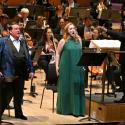
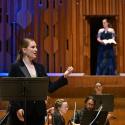
Fortunately concert halls (in London at any rate) have stepped enthusiastically into the breach, and after last night’s latest concert outing – an imported performance by Laurence Equilbey’s Paris-based Insula Orchestra (pictured below) and Accentus choir – you have to wonder whether maybe this isn’t for the best.
If you like your devils sub-Cocteau, then you might have felt cheated of the full staging here
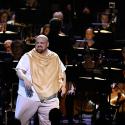
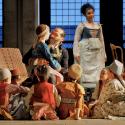
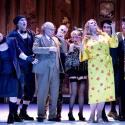
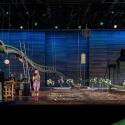
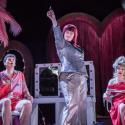
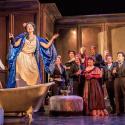
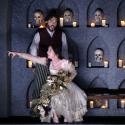
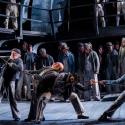
There’s something about Weber’s clash of earthy, beer-swilling, foot-stamping, deer-hunting peasants and gothic fantasy that seems to bring contemporary directors out in a conceptual rash. Better by far to leave the storytelling to the score. Traces of Raphael Navarro’s original direction and Clément Debailleul’s designs still lingered around the corners of this concert adaptation of their production from Paris’s Theatre des Champs-Elysees, mostly in the form of actor, dancer, circus-performer Clement Dazin’s Samiel.
If you like your devils sub-Cocteau – all black polo-necks and bohemian trousers, writhing, tumbling and juggling their way around the stage with an enigmatic smile – then you might have felt cheated of the full staging here. For anyone else this performance could easily have shed this distracting piece of pseudery without obvious loss.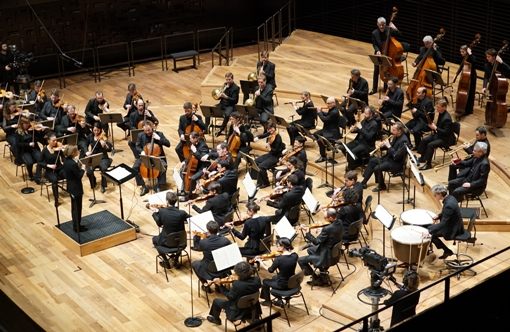 Equilbey’s period-instrument band spread out a canvas pitted and textured with detail, from the horns’ muffled, irradiating glow to piccolos dancing like fireflies in the orchestral gloom, violins bracken-crisp and bassoons a pungent and dank musical forest floor. Rooted firmly in the earth of the score, relishing the drinking and hunting songs and the heavy-footed weight of the ländler-style waltz, Equilbey pulled off some brilliant musical misdirection. The more rustic the brass and matter-of-fact the strings, the more startling the opera’s supernatural elements became. The Wolf’s Glen episode juddered and trembled with strange electricity, finding a sour gleam to its lightning flashes quite different to the warmth we heard elsewhere.
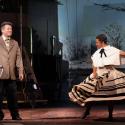
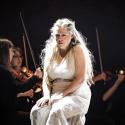
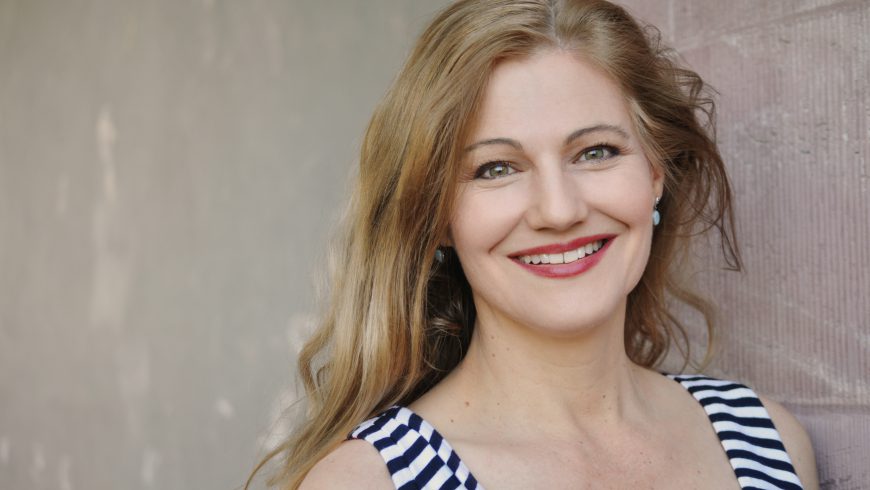 But it was the cast, and the outstanding chorus singing of Accentus, who transformed an atmosphere into a drama. Uniformly light in tone, balanced to Insula’s brittle, springy sound, they gave us plenty of heavyweight thrills. If tenor Stanislas de Barbeyrac (Max) is a known quantity from his redeemingly excellent Arbace in the Royal Opera House’s otherwise disastrous 2014 staging of Mozart's Idomeneo, his Agathe was an unexpected revelation. Floating Weber’s gleaming lines with pearly brilliance at the top, warming the sound into something fleshier at the bottom, South African soprano Johanni van Oostrum (pictured above) was the outstanding voice here – a radiant foil to the baritonal muscularity of de Barbeyrac, nicely partnered by the pleasant bitterness and spice of Chiara Skerath’s Annchen.
Querulous and acid, Vladimir Baykov’s Kaspar made a good pantomime villain in a cast that might have merited something a little more subtle. But Christian Immler was luxury casting as the deus ex machina Hermit – the stand-out among a strong supporting cast that also included Samuel Hasselhorn’s ear-catching Prince Ottokar and Thorsten Grumbel’s Kuno.