

Everything has been immaculately planned for the big event of the evening: the prized possessions arrayed like trophies on the desk, the chosen suit laid out ready to wear, the perfectly colour co-ordinated tie alongside it with a note specifying, "Windsor knot". Yes, indeed: it will be a death in the best possible taste, a very British suicide. The fashion designer Tom Ford's debut feature - designed with equal elegance and a fastidious attention to detail - has snared an Oscar nomination for Colin Firth as a British academic In Los Angeles battling depression after the death of his long-time lover. Is the film itself to die for?
It's 1962, the height of the Cuban missile crisis, and another day in the life, perhaps the last day of the life, of Firth's character. George, an English lecturer, uses his classes on Aldous Huxley as the pretext for musing on paranoia, political repression and hidden minorities. As he speaks, some of the male students in the class shift uncomfortably in their seats. George belongs to the same minority as they do: he is gay.
Ford has created a highly stylised, hermetically sealed world, controlled down to the last cufflink
Ford claims his story is universal. It could be the same, the director says, if the character had lost his wife. True, up to a point. But George's terrible dilemma is that his mourning isn't socially sanctioned; he has no licence publicly to express it. Near the beginning, alone on the phone, he learns that his lover's funeral is for family only and, even in the privacy of his home, he bites back his grief. Freely adapted from the 1964 novel by Christopher Isherwood, the script (co-written by Ford) steers George through a series of encounters that will nudge him back from the brink, back from monochrome to Technicolor (the camerawork takes this idea literally), so that he can finally relax and savour the beauty of a flamingo-pink Pacific sunset, no matter that its glory has flared out of chronic pollution.
Ford has created a highly stylised, hermetically sealed world, controlled down to the last cufflink. It's redolent of other period films to come out of the queer American indie cinema such as Todd Haynes's Far From Heaven or Bill Condon's Gods and Monsters. In these movies, as in the classic Hollywood studio-era melodrama, an extravagant mise-en-scène compensates for, and is the external sign of, the characters' emotional repression.
Some might find A Single Man all a bit tickety-boo; it's mighty slow-moving too. But Ford (and this is by no means common in a first-time director) also gives his actors space to breathe. That Best Actor award will very likely go to Jeff Bridges for his washed-up C&W singer in Crazy Heart, because he gives a great performance as well and he's been nominated five times (plus, of course, he's American). But Firth would be an equally deserving winner. Condemned in recent British films to playing character roles and nice dads, he gives a delicate, intense performance, as unshowy as the movie is flamboyant, that extracts the most from his juiciest part in years. If ever there was a role to lay to rest the ghost of Darcy, this is it.
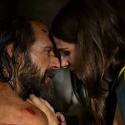
Best of all, Firth isn't left to eclipse the rest of the cast, which includes Nicholas Hoult (above) as a flirtatious student in an angora sweater who might be salvation, might be jailbait; Jon Kortajarena as a hustling Latino James Dean; and Julianne Moore, voguing it up as a character straight out of a novel by Jacqueline Susann or Mary McCarthy, a gin-soaked, fabulously trashy fellow Brit who once had a brief fling with George and still carries a flame for him. A Single Man is a sleek, finely tooled vehicle for them all. A model Ford.










Add comment