With WOMAD not happening this year, where could one go for a feast of global sounds? Fes in Morocco has been presenting its sacred music festival for 29 years. I’ve been several times and although this wasn’t an absolute classic, it was as ever, full of extraordinary moments.
The Fes Festival came into existence as a response to the first Gulf War, given further impetus by 9/11 and is important in reflecting a more tolerant side of Islam, with lots of respect to other faiths. “There are many ways up the mountain” as a Sufi practitioner told me here.
Fes was the old capital of Morocco, the University being founded 200 years before Oxford (by two women, incidentally). The winding passages in the Medina haven’t changed that much in 500 years, if you ignore the cafés with TVs where people drink mint tea watching football.
There’s still a sense of nostalgia here also for the lost world of Andalucia, when Islam ruled Spain, where Muslims led the world in medicine, astronomy and science. The Renaissance was kicked off by translating ancient Greek and Roman texts into Arabic. Also it was where, more or less, Christians, Jews and Muslims lived peaceably. In fact, the title of this year's Festival was "Renaissance", suggesting optimistically there could be a new one.
Andalus music, driven by lute-like ouds, is essentially Moroccan classical music and is revered as a reminder of that time. There was a concert at Bab Makina, the impressive gates of the old royal palace, which alternated between Andalus music from the Ensemble Briouel and Monteverdi’s Vespers, published in 1610. If this was a battle of the bands, Monteverdi won, mainly due to the transcendent quality of the Vespers singing. It would have worked better had they actually mixed the music, rather than switching between the two.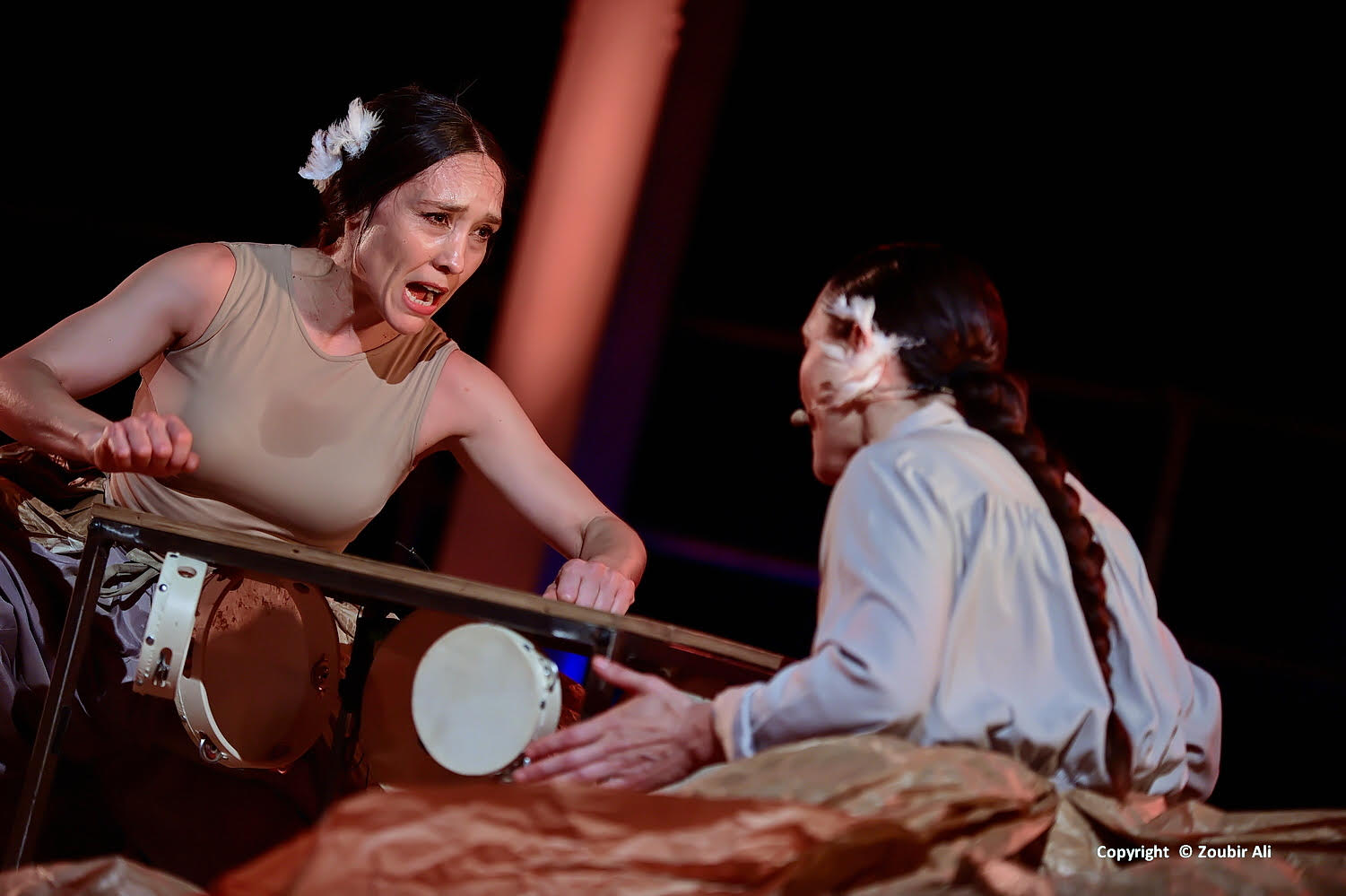 What did work was the lavish opening ceremony – always tricky things to pull off. This one was terrific, the use of lights on Bab Makina’s gates being by turns soothing and psychedelic. A highlight was when a female Sufi group from the Indian ocean island of Mayotte sung with Al Areej, a male ensemble from Oman, a delirious mix. Another was the thunderous drums of Burundi, who also appeared at one of the big highlights of Fez, the late night concerts at the beautiful Jardin Sbil. Although for such a peace-loving festival, close up the drums are quite warlike.
Actually the story of how the Burundi drummers got famous is a curious one – a plausible version is that Malcolm Mclaren was in love with the music librarian at the Centre Pompidou in Paris. One day she put a recording of the Burundi drummers on 45 rpm rather than 33 rpm, and Malcolm stored the rhythm for possible future use – and when Adam Ant asked him to be his manager for a month he suggested he used that beat.
When travelling I am fairly sure the Burundis somewhat speed up their drumming – as that is closer to the speed many Westerners heard the rhythm due to the initial error of the Pompidou librarian. An interesting potential ethnomusicological project for someone?
There were some beautiful moments at Jardin Sbil, notably the twin sisters Florencia Oz and Isadora O'Ryan, billed as Antipodes, the lighting and movement suggesting a kind of futuristic post-flamenco dance and singing, somewhat cooler and more detached than conventional flamenco. (pictured above).
The big highlights for me were the late night performances by local Sufi brotherhoods. One of the most affecting was the assured, grounded performance of the Tijaniyya. They have their main shrine in Fes but have millions of followers in West Africa (such as Youssou N’Dour who premiered his Egypt album memorably here) and also have a huge following in the Islamic parts of the old Soviet Union.
Seeing several of these Sufi brotherhoods, made you realise how much Western music, at least post-Beethoven seems hugely ego-driven, and even a Swiss Gregorian chant concert seemed lacking in power and intensity in comparison.
Another Sufi Night was the Master Musicians of Jajouka, whose trippy music is fuelled by a phalanx of oboe-like rhaitas. This was the “thousand year old rock and roll band” which came to Western attention via Brion Gysin and the recording Brian Jones of the Rolling Stones made before he drowned. There is a complicated split and they are not to be confused with the Master Musicians of Joujouka (different spelling) who had their own boutique festival in their village the same week, where only 50 people are allowed and is by all accounts a unique experience.
It was slightly sad that the Sufi Nights they used to have in previous festivals were open to the public for free, but now they are paid events – which, along with the curtailing of the free Festival in the City (concerts in Bab Boujloud, the blue gate) have meant the festival has gone back to how it started out, a more elitist event as tickets are not that cheap for many Fassis (inhabitants of Fes). Also that the venues, which used to be in several beautiful venues in the medina are restricted for now to two.
But there were locals enough willing to pay for a truly amazing final Aissawa concert at Jardin Sbil complete with the short rhaita pipes and longer and deeper n’far trumpets making a holy racket that seemed closer to some cool avant-jazz with at least 10 drummers cooking up wonderfully complex but gut-wrenching and uplifting rhythms. Music ancient, but utterly new.
With a kind of vibe man out front dancing and conducting the energy, and the audience joining in the chants and becoming one with the group, it was possible for a while to imagine another future. As WB Yeats put it "anything done with intensity invokes the other worlds" and for a moment you could imagine this new Renaissance, beyond identity or polarity, springing up. With Fes, not at the periphery, but as its beating heart.