Founder rate ends 9th September.

We’re rebuilding theartsdesk to secure the future of real arts journalism. Be part of it by subscribing: if you do it now, the founders’ rate of just £40 yearly is yours FOR LIFE!

SUBSCRIBE NOW 

Karine Polwart, Birmingham Town Hall Review: Expertly crafted modern folk

the Karine Polwart Trio return to Brum with a mix of old and new music

share this article

With a few extra dates to her rescheduled UK tour, Scottish folk legend Karine Polwart returned to Birmingham Town Hall with some tunes from her latest album – Still as You’re Sleeping, an album of just voice and piano recording with jazz pianist Dave Milligan – plus a mix of earlier material, covers and traditional songs given her own signature twist. On stage with Polwart for this tour is her brother, guitarist Steven Polwart, and her neighbour and friend, multi-instrumentalist Inge Thomson. Opening with “Ophelia”, from the trio’s 2018 album Laws of Motion, the group at once performed with a great balance and relaxed synergy. “Young Man on a Mountain”, written about Karine and Steven’s grumpy Grandad whose dourness was perhaps a result of his past as a soldier in Italy during the Second World War, featured more unusual and unnerving harmonies.

A song with similar themes both musically and literary, “Suitcase” ponders the thoughts and feelings of an old man who’d arrived in the UK as a boy from central Europe via the Kindertransport system. “Tears for Lot’s Wife”, an adaptation of a poem by Russian poet Anna Akhmatova, was more rousing, and jazz influences were abundant in “The Path that Winds Before Us”, taken from Polwart’s new album.

During the second half, Inge Thomson took the spotlight for one of her own tunes: a song inspired by Rachel Carson’s 1962 environmental science book Silent Spring which then ends with a more upbeat jig. Recording herself playing a motif on a low whistle, she looped that sound to accompany her singing, along with other electronics. It’s interesting to see that kind of technology used in such an innovative way and one which is wholly in keeping with and sympathetic to the genre.

“We’re all Leaving” – a song inspired by Charles Darwin and the loss of his 10-year-old daughter Annie - had a beautiful descending guitar part and some gorgeous harmonies, and the trio’s cover of “Video Killed the Radio Star” was sweet, quirky and fun. Ending the set with a triptych of songs about birds, “Follow the Heron” was serene and poignant while Sydney Carter’s “Crow on the Cradle” had a darker nuance, expertly portraying the lyrics’ sense of premonition. An uplifting end to Polwart’s set, “The King of Birds” was cheering and heartfelt, and a timely reminder that we’re at our best when we work together and pool our strengths.
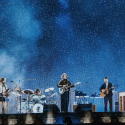

“Follow the Heron” was serene and poignant while Sydney Carter’s “Crow on the Cradle” had a darker nuance

rating

4

explore topics

share this article

Help secure the future of arts journalism

In this era of algorithmic recommendation, opaquely sponsored content and AI slop, theartsdesk’s mission to preserve real journalistic and critical values has never been more important.

If you like what you see here, please join us 
in this mission.

Subscribing to the site will help us in our coming 
redesign and expansion.


If you do this before the 9th September this will be at our guaranteed founder’s rate: 
your subs will never increase again.

Subscribe now for £5 per month. 
or yearly for just £40.

Or if you simply want to support us with a one-off donation, you can do so here.

more new music

Two decades on from Patti Smith and the original pink sheep, the anniversary edition proved again that Latitude's real headliners are rarely at the top of the bill
From Korean bluegrass to gigantic Ugandan xylophones, the global diversity of musical life is here
A championing, but also perhaps a dilution, of South African innovation
The return of a punk-era landmark of British art rock
With a danceable rock feel she displays her burgeoning creativity
The garage rockers don't do themselves justice on new album
Andy Dragazis’ musical alter-ego offers nods to legendary arranger and producer Charles Stepney
The welcome return of a foundational album of electronic minimalism