With the bell of his Dizzy Gillespie-style “bent” trumpet pointing skywards like a rocket launcher, Scott dominated the stage at Ronnie Scott’s last night, every bit the iconic jazz trumpeter. Instead of the clearly-articulated, pure-toned pulse of a Louis or a Dizzy, Scott’s trumpet voice is smudgy, occasionally even grimy, with chromatic bursts of notes, played so fast you can’t always hear the join.
Yet at the right time, he has a tone as straightforwardly piercing as any of the twenties greats. Both as a player and composer, he straddles tradition and modernity, believing he can “stretch” the tradition to include Hendrix, hip hop, and, above all, politics. Last year’s double album, Christian aTunde Adjuah (Ghanaian names he adopted in 2011 in homage to the West African roots of New Orleans music) is packed with instrumental declamation of urgent contemporary issues: people trafficking, the rape of 400 African women in the Sudanese town of Rokero by Janjaweed militiamen, police brutality in New Orleans (a topic he returns to frequently), and HIV/AIDs. Without words, his music is necessarily allusive, but the simmering outrage in the playing is potent and unmissable.
An urgent need to say something almost oozes from this music
Scott has become an increasingly important figure in the ongoing debate about the future direction of jazz, rejecting both the nostalgic neoclassicism of Wynton Marsalis and, as some would see it, the Robert Glasper position: jazz’s subsumation in R&B. His own work has both the breadth of tradition and emotional power to re-connect 1920s brass power with the contemporary world.
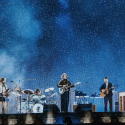
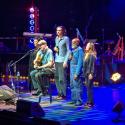
For much of last night’s event Scott gave politics a delicately wide berth. Even without a specific political focus, however, an urgent need to say something almost oozes from this music. The band simmered, the rhythms breakneck and harmonies closely packed, until Scott himself burst through, screaming fistfuls of notes in all directions. Despite some superbly intricate solos throughout from guitarist Matthew Stevens, and later in the set, intensely rhythmical individual work from Kris Funn on double bass, and Corey Fonville on drums, this was very much Scott’s show.
The mood mellowed for most of the second set, firstly with “After All”, an introspective piece by guitarist Stevens, then with the arrival of Scott’s wife, Isadora Mendez, who sang “Georgia” with a sultry, fluttering voice of restrained yet intense passion.
It wasn’t until the final track that we heard a directly political piece, in this case “KKPD” (“Ku Klux Police Department”, inspired by Scott’s own experience with the New Orleans Police). From his 2010 album Yesterday You Said Tomorrow, it was a searing evocation of injustice, the trumpet line sour and smouldering, before erupting in outrage, while the guitar picked out what sounded like a police siren, and the drums went wild.
Why not more of these pieces, though? His albums are full of them. This was the only regret of an evening that otherwise gave a compelling demonstration of how the trumpet power of early jazz can work in a contemporary musical form. When we mistake jazz tradition for the cocktails and red plush seating, that’s when it’ll be gone.
Scott’s political stance is partly formed by New Orleans, where he grew up, and where his grandfather was Chief of Chiefs. For an encore, Scott invited the audience to the stage for a traditional New Orleans Indian call and response song. The audience’s singing was dire, but it was a lovely moment of musical community.