Founder rate ends 9th September.

We’re rebuilding theartsdesk to secure the future of real arts journalism. Be part of it by subscribing: if you do it now, the founders’ rate of just £40 yearly is yours FOR LIFE!

SUBSCRIBE NOW 

The Seckerson Tapes: Heldentenor Ian Storey

The dramatic tenor talks about his operatic journey

share this article

Ian Storey: a rare voice

In 2007 the English tenor, Ian Storey, made a dramatic and highly visible debut as Tristan in Wagner’s Tristan und Isolde at the season opening of La Scala, Milan, conducted by Daniel Barenboim and directed by Patrice Chereau. It was seen by millions on TV, in cinemas, and on DVD and marked a big development in this singer’s career. This year he will be singing Siegfried in Götterdämmerung, again under Barenboim, as part of a complete bicentennial Ring cycle at the BBC Proms.

Storey eschews the heldentenor label preferring to call himself a “dramatic” tenor but whichever way you look at it his voice type or fach is a comparatively rare one. Physically he has been described as having the build of a lumberjack with the face of TV’s CSI leading man William Peterson - a good fit for super heroes - but it’s the voice with its subtle lyric/dramatic blend that drew Barenboim’s ear and led Placido Domingo to facilitate his American debut in Domingo’s signature role, Verdi’s Otello. In this illustrated audio podcast with clips from Storey’s debut album on the newly launched ARC (Artists Recording Company) label supported by Northampton University he talks to Edward Seckerson about his operatic journey so far from the emergence of a voice of exceptional range through to that steep and unforgettable learning curve of studying Tristan with Barenboim.

This text will be replaced


If you would prefer to download and listen offline, please download
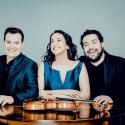
It’s the voice with its subtle lyric/dramatic blend that drew Barenboim’s ear

rating

0

share this article

Help secure the future of arts journalism

In this era of algorithmic recommendation, opaquely sponsored content and AI slop, theartsdesk’s mission to preserve real journalistic and critical values has never been more important.

If you like what you see here, please join us 
in this mission.

Subscribing to the site will help us in our coming 
redesign and expansion.


If you do this before the 9th September this will be at our guaranteed founder’s rate: 
your subs will never increase again.

Subscribe now for £5 per month. 
or yearly for just £40.

Or if you simply want to support us with a one-off donation, you can do so here.

more classical music

Czech piano trios, English choral music and an influential wind soloist celebrated
Natural scenes with birdsong fill a varied programme
The bigger the chorus, the harder to catch the words of great poetry
The Estonian Festival Orchestra rules supreme, but other aspects just got even better
A rapid Beethoven 9 and a showcase for the phenomenal Abel Selaocoe
Finnish music from Finnish conductors, life-enhancing minimalism and massed gongs
Eloquent thoughts on the wonder of 'Dichterliebe' and a new work inspired by it
Latest in a line of great Irish mezzos shows her versatility, and the strings swoon
A pair of much-loved cello concertos, plus percussion transcriptions and a great German song cycle
Two recitals in a thousand, other events good to excellent