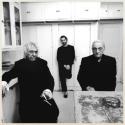
It might have looked good on paper; the best of Bryan Ferry revisited in a 1920s swing jazz style. But in practice, rather than reveal previously unrecognised properties of some of the most haunting and original pop/rock songs of the late 20th century, subtracting the vocals and placing them in an early 20th century context simply eviscerates them of their uniqueness and power.
For example, the deliciously awkward Dada pop of “Do the Strand” bounces merrily along like the needle on the old wax 78rpm record it’s seeking to emulate, but fails to capture anything of the original’s arch cool. Likewise, the art school funk of "Love Is the Drug" has a sassily rasping trombone picking out the vocal melody, but none of the icy edge of this seminal 1975 single. Then later on the album when we get to more languid, overtly romantic Ferry songs such as “Avalon” and “Slave to Love”, they bafflingly get the same “Minnie the Moocher”-like jaunty arrangements.
Maybe Roxy Music's frontman thought this project would draw attention to his underrated ability to write timeless, haunting melodies. But it actually has the opposite effect, because hugely diverse material (both in arrangement and form) gets sealed in the same piece of mutely glowing amber, striving to be something it isn’t and wasn’t ever meant to be; a classic tune of the Gershwin era. Oh, of course The Jazz Age is beautifully played by the best musicians available for the job, and produced to sound like the music is coming out of an old wind-up gramophone, but Ferry caught this toe-tapping sepia vibe far more successfully with his sprightly 1999 Cole Porter covers album As Time Goes By. This immaculate but irrelevant effort is really nothing more than the classiest and most lovingly produced novelty record ever made. Beyond that it’s hard to see the point, unless you want to play “guess the song” with some fellow Roxy fans – because, with every track dressed up in the same coat and tails, it can take a bar or two to work out what you’re listening to.