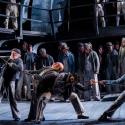
Albert Herring probably doesn’t make the top five most performed of Britten’s operas, yet is easily the best known work in English Touring Opera’s brave Autumn season – the other two are Viktor Ullmann’s The Emperor of Atlantis and Peter Maxwell Davies’ The Lighthouse.
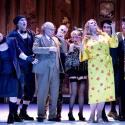
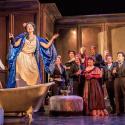
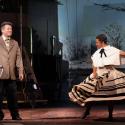
Britten’s "country comedy" is light-hearted but it displays similar preoccupations to Peter Grimes and Billy Budd – insularity, groupthink, innocence and a hero who doesn’t fit in. Overall, ETO gave a compelling production with very effective direction from Christopher Rolls. The characterisation in the piece is fairly two-dimensional – we are dealing with types rather than fully-fledged individuals – but Rolls gets the best out of his cast, with plenty of nifty comedic touches, and the Suffolk village’s suffocating smallness is right there.
The band was flawless, and Rosewell kept things tight and light
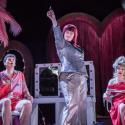
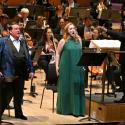
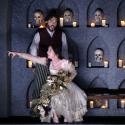
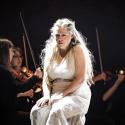
Albert himself (Mark Wilde) is a picture of bumbling nervousness, if perhaps lacking some of the wide-eyed wholesomeness which really clinches the role. Charles Rice as Sid, the rakish butcher, is spot on and a great match for Martha Jones’ Nancy – the chemistry is convincing and the voices well matched. Jennifer Rhys-Davies makes a very imposing Lady Billows, if a little underpowered on the first night. The rest of smaller roles are also well cast and enthusiastically performed: a particular highlight is the effervescent Miss Wordsworth (Anna-Clare Monk) taking choir practice. A lack of surtitles, however, presents a bit of a challenge not always taken up: especially in ensemble numbers some of the comedy dissipates through half-heard lines.
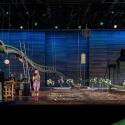
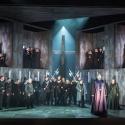
They say that when lighting is good one shouldn’t notice it, but in this black box theatre with no proscenium arch, in a single-set production, Guy Hoare deserves special mention for conjuring up a very distinct atmosphere and sense of space for each act. Neil Irish’s neat set of a skeleton of a house cleverly allows action both indoors and out without sightline problems, though perhaps allowed a hint of abstract modernity into this archetypically rustic world.
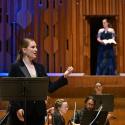
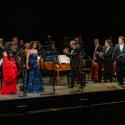
The 14 young musicians in the pit were from Aurora Orchestra, conducted by ETO’s music director Michael Rosewell. There is a great deal of complexity in the music, plus all manner of special effects, not to mention many exposed passages for instruments more used to courage in numbers (a sprightly double bass solo comes to mind). The band was flawless, and Rosewell kept things tight and light, extracting every ounce of wit from a score which may not be Britten’s best, but still has plenty to enjoy.