

The Sex Pistols played their final live show on 14 January 1978 in San Francisco. According to the third and final programme in the Punk Britannia series, “for many, it would be the end of punk”. It certainly was for ex-Pistol John Lydon, who'd form Public Image Ltd. Taking on the task of tracing what happened next was a challenge. Nothing was neat. Loose ends, new strands and evolution of the existing meant it couldn’t be. If this programme succeeded, it was in portraying the turmoil that came in punk’s wake.
Bringing order where there is chaos is always difficult. As an overview of the musical changes that emerged from 1978 to 1981, the programme was a treat. Packed with opinionated, analytical and often funny contributors, it shone a light and brought new perspective. Books have been written, but British television hasn’t tackled this in such a broad-brush way before.
This was about the arty, challenging music tarred as middle class
Magazine were targeted as the starting point. Their debut single “Shot by Both Sides” was issued within days of that final Pistols’ show (it was released 20 January 1978). As the ex-frontman of Buzzcocks, Magazine's founder Howard Devoto saw where punk was going and had decided he didn’t like it. Punch bag behind him, their bassist Barry Adamson quipped that “we weren’t really about entertaining”.
Things weren't cut and dried. Magazine played their first show in October 1977. Wire, cuckoos in the punk nest, were identified with the post-punk era. They began playing live in late 1976 and issued their first record in June 1977. The Fall – Magazine’s fellow Mancunians – formed in 1976 and had been on stages from May 1977. What punk did was open doors to the obtuse, angular and difficult: mavericks that would never otherwise have got a look in. Which is why pre-existing bands like Throbbing Gristle, Cabaret Voltaire and even XTC (the latter two of which weren't mentioned) found platforms after punk’s arrival. These three were just as post-punk musically and attitudinally as those seen in the programme. Still though, nothing was neat.
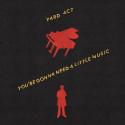
Post-punk was defined by the diverse contributors: Magazine, The Fall, Wire, Gang of Four, Joy Division, The Pop Group, The Slits, Young Marble Giants, the early Human League. Quick diversions into the scorned new wave (Elvis Costello and The Police), anarcho-punk (Crass), Oi (journalist Garry Bushell and The Cockney Rejects), Two Tone (The Specials) and the new pop (Orange Juice’s interpretation of how to address the mainstream, the reconfigured Human League and Duran Duran) rammed home just how many strands the era accommodated. An amused Bushell declared The Cockney Rejects “the reality of punk mythology”. This programme was about the arty, challenging music Bushell tarred as middle class. The music he had no time for.
That’s fine, and it was a great, fascinating programme. Nowhere more so than when two songs were dissected: Public Image Ltd’s still unsettling “Poptones” and Young Marble Giants' disturbing “Final Day”, a disquisition on an end brought by nuclear means. The Pop Group’s Mark Stewart, packet of fig roll biscuits in front of him, said he believed that World War III was about to break out. Fear of an impending end – paranoia – was integral to the era.
The choice of contemporary clips of bands was peerless, especially the otherwordly and rarely screened Joy Divison's What's On performance of "Shadowplay". The reunited Pop Group lurched through “We Are All Prostitutes”, still a magnificent noise. But it wasn’t measured against the impossible-to-top, beserk and beautiful original. The programme belonged to John Lydon, whose current version of Public Image Ltd ended proceedings. Their new album was issued a couple of weeks ago. Can you blame him for claiming the final word?
Watch the video for The Pop Group’s “She is Beyond Good and Evil”




Add comment