Almost like an inverted echo of Stevie Wonder over in Detroit, Little Stevie Winwood was a Brummie teen prodigy who scored an early dose of stardom with the Spencer Davis Group at age 15. Raved over for his amazing soulful vocals and effortless instrumental skills, he went on to form Traffic before joining “supergroup” Blind Faith with Eric Clapton.
Quite a lot of people already know all this, and many of them will have been to see Winwood and Clapton on their recent tour, but somehow Winwood has always contrived to avoid the kind of status and visibility that ought to go with his rich and often successful history. Although he had chart-topping hits with Spencer Davis, enjoyed a run of successful albums on both sides of the Atlantic with Traffic and later became a sleekly groomed solo star in the 1980s (defying all his anti-commercial instincts to hire a stylist and appear in videos for MTV), it’s as if Winwood’s default setting was Rural Recluse. As this absorbing film suggested, he was only reluctantly dragged away from his beloved English countryside to face shedloads of screaming punters … or perhaps that should be gently nodding punters, since Winwood’s spacey, jazz-and-folk-influenced improvisations were shrouded in a haze of dope and formed the soundtrack to a billion acid trips.
Throughout much of the Winwood saga, drugs were loitering casually wherever he went. When Traffic made their first visit to San Francisco in 1968, they were met at the airport by the Grateful Dead, who sensed from their loose, improvised music that they must be kindred spirits. “We said, ‘Have a little bit of LSD and let’s wig out a little bit,’” recalled the Dead’s Bob Weir. “And they were game, which we pretty much figured they would be.”
Clearly this was not a “just say no” moment. Winwood once confessed that there were a couple of American tours he undertook in the late 1960s about which he could remember absolutely nothing, and his frail, hesitant manner does suggest a man still suffering the fallout from being spun through a psychedelic vortex. But he has seemingly come through it with his marbles intact and is, of course, still alive, unlike many of his former friends and bandmates, notably his Traffic comrades Chris Wood and Jim Capaldi. In the film, Winwood went back to visit the cottage in Aston Tirrold in Oxfordshire where Traffic had once lived as a self-sufficient musical commune, crashing on mattresses on the floor and playing music outside during the summer months. In those days the cottage was derelict, but today it gleams amid rolling Home Counties meadows like the apple of its current owner’s eye. 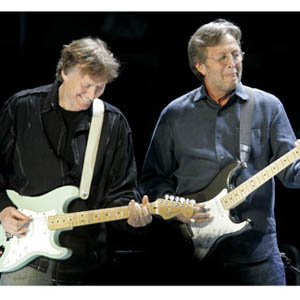 The diffident Winwood isn’t given to sobbing displays of emotion, but revisiting the cottage and poring over photos of his ex-comrades on an old album sleeve brought a lump to his throat.
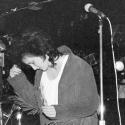
Despite his tour with Clapton (pictured right), partly instigated by Clapton out of lingering guilt at the way he walked out of Blind Faith and left Winwood in the lurch, Winwood now describes himself as “semi-retired”, though he still plays the organ in his local church in Gloucestershire, and continues to make music compulsively in his spare time. He’s still trying to find the elusive mix of jazz, folk, gospel, soul, baroque or whatever else that has always been echoing in the back of his mind. In the Clapton shows, he has been performing "Can’t Find My Way Home", his most painful and beautiful song: “I ain’t done nothing wrong, but I can’t find my way home.” It was difficult to tell whether he has, or if he ever will.