

The most intriguing aspect of the mid-Seventies, Memphis-based band Zuider Zee isn’t that they took their name from a geographic feature of the Netherlands or that they dealt in against-the-grain Anglo-centric pop rock or even that the new compilation Zeenith features top-drawer music which was never released at the time. It’s that their path never crossed that of the similarly minded and perennially lauded local outfit Big Star.
In the liner notes to Zeenith, Zuider Zee’s Gary Bertrand says “We had no interaction with Memphis groups, none at all.” His bandmate Richard Orange goes further: “We’d hear the name Big Star, but they hardly ever played. We were there, but we were outsiders – until we left Memphis, and then everyone claimed us, which is funny because they weren’t behind us when we were there.”
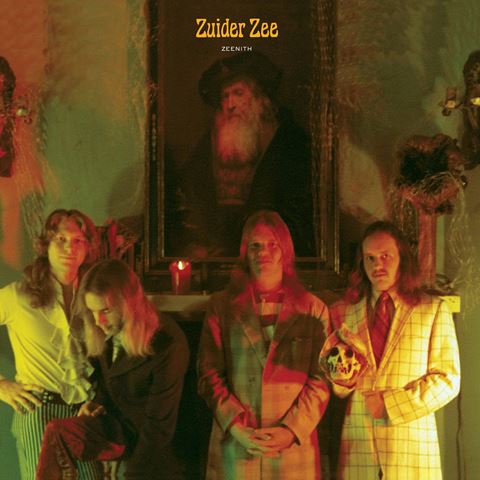 Until now, Zuider Zee’s cult status has rested on the eponymous album they issued on Columbia in September 1975. Their label probably wasn’t too interested in them: some promo copies credit the Los Angeles-recorded album to Zuider Lee. Nonetheless, the poor-selling album had a fan in Cheap Trick’s Rick Nielsen who wrote a letter to the band which he sent to Ardent Studios, the Memphis set-up at which Big Star had recorded. To Nielsen, the two bands were somehow related.
However, as Zeenith makes clear, although Zuider Zee were based in Memphis from February 1973 their roots were in Louisiana and before being in the Tennessee city they operated from Jackson, Mississippi. After settling in Memphis as Fair Murphy Wormwood, they changed their name – Zuider Zee was filched by Orange from the tale of the boy who put his finger in the dyke – yet barely played in their adopted city. Arkansas and Oklahoma were their main stomping grounds.
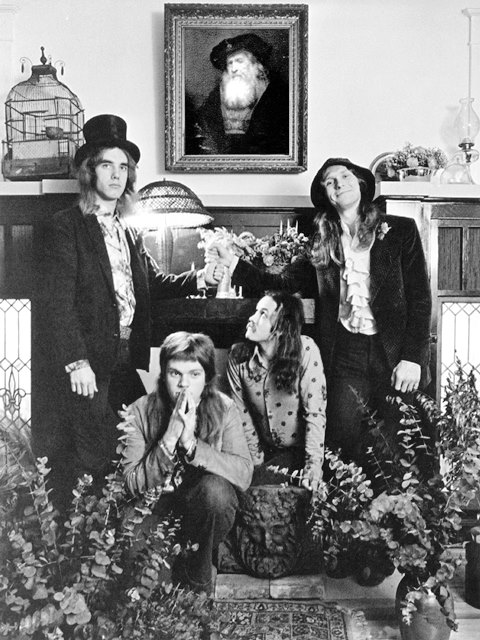 Disconnects such as these define Zuider Zee. Southern boogie was on the rise and the band, says Bertrand, “never played blues or boogie…we preferred the more English rock ’n’ roll feel; we were just better at it. King Crimson, Hendrix, Beatles – those artists were just more challenging and interesting to play.” Another name mentioned in the liner notes is T.Rex (also liked by Big Star). One of Bertrand’s early bands played Sgt Pepper’s in its entirety. A song on Zeenith is titled “Royal Command Performance”, a clear Beatles reference. In jest, on the tape box they credited it to – Sgt Pepper’s-style – to a made-up band called The Underwater Men. After the move to Memphis, Orange says they “took lots of acid for about six months to a year.”
All of this would be interesting enough even if the twelve tracks on Zeenith drew from their influences but were not that great. Zuider Zee would still be a noteworthy anomaly. But, as it happens, everything on the new compilation of fully finished, previously unheard recordings is wonderful. Overall, the closest touchstone is Badfinger but as if they had the exaggerated sensibility of Glam Rock and an affinity with the peculiar akin to that of Sparks.
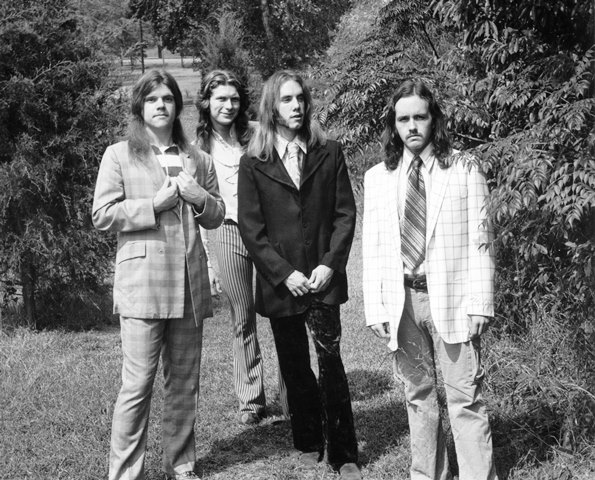 Zeenith kicks off with “Haunter of the Darkness” which, with its HP Lovecraft-borrowing title, was recorded in September 1973. As it unfolds, suggestions of ELO, John Lennon’s “Cold Turkey”, Todd Rundgren and Sparks bubble up. But, most of all, what comes across is the notion of a band filtering 1967/1968 Beatles through a Seventies art-rock mindset. It’s the same with the next cut, “Lancelot’s Theme”. Although Paul McCartney is on the band’s mind this time they again sound off balance; an approach to songwriting and arrangement refracting the familiar through an aural stained glass window. The song would have been a hit in the hand of the more classically minded Raspberries, but Zuider Zee’s edginess positioned them just outside the mainstream.
The nerviness reaches its zenith on the magnificent “After the Shine’s Gone”, a crescendo-packed, ultra-melodic portmanteau song which, though quirky, could have charted in the UK if recorded by, say, Pilot. In contrast, the intimate sweetness of the harmony stuffed “Quite a While” confirms Zuider Zee’s appreciation of nuance.
When an album was issued in 1975, it had the songs but was hampered by a clunky production which awkwardly attempted to merge a soft-rock fuzziness with a rockiness largely absent from Zeenith. In comparison with the spirited unissued take heard there, the 1975 album version of “Haunter of the Darkness” lacked focus, was over-arranged and featured superfluous instrumentation. Only now is it possible to hear this idiosyncratic band in the raw and at their best.
- Next Week: Manfred Mann's first four HMV albums












Add comment