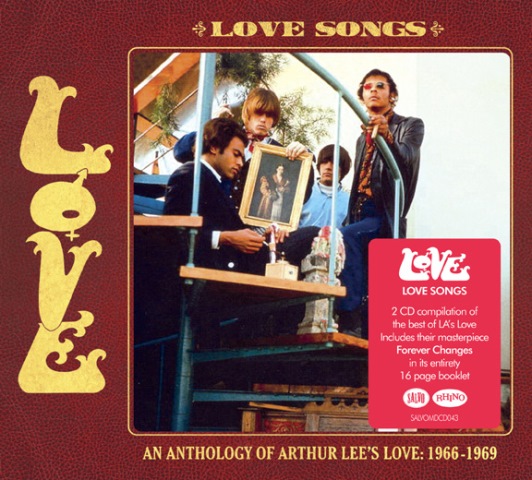
 Love: Love Songs The Red Crayola: The Parable of the Arable Land
Just how much messing with a band’s back catalogue is acceptable? Should classic albums only be reissued as stand-alone releases, sometimes bolstered with bonus tracks but still allowed to stand on their own merits? These two reissues of music by prime psychedelic-era outfits Love and The Red Crayola raise these questions and more.
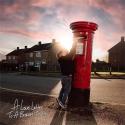
Love’s third album Forever Changes didn’t attract a lot of attention or sales when it was originally issued in November 1967, but it’s gone on to be accepted as a classic: the nine songs by bandleader Arthur Lee encapsulated a cryptic vision of Los Angeles, while the two written by co-member Bryan Maclean included the beautiful “Along Again or”. The darkly atmospheric, mostly acoustic whole was wrapped in orchestral arrangements taking in the mariachi as well as the kaleidoscopic fragmentation of psychedelia. The songs were non-linear, but still naggingly melodic and utterly unforgettable. Forever Changes casts its spell. On the new double-CD compilation Love Songs, it is included in its entirety as tracks 1-11 on Disc Two. At the least, subsumed thus, it sits uncomfortably on what is subtitled An Anthology of Arthur Lee’s Love: 1966-1969.
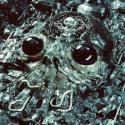
With Texas group The Red Crayola, matters are more clear-cut. This vinyl, double album reissue of their June 1967 album The Parable of the Arable Land collects the stereo version on the first record and the mono on the second. Content-wise, it’s a clean, precise reissue.
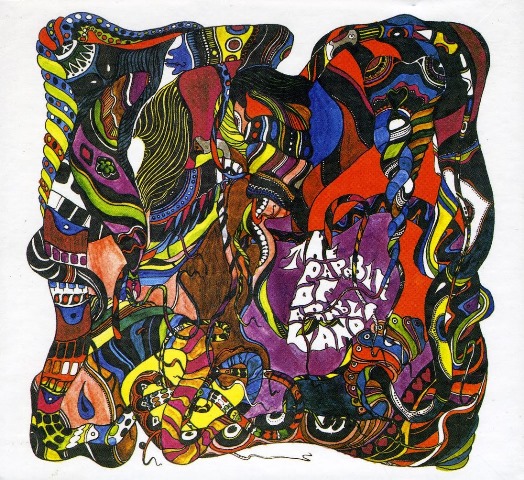 The Parable of the Arable Land showcased six, strange shimmering songs that sounded as if they were recorded by a band of altered-states spectres. The Red Crayola, who formed in Houston, Texas in 1966, could barely play but nonetheless created a sound-world as otherworldly as their label-mates The 13th Floor Elevators. The Red Crayola though were university students rather than psychedelicised garage punks and their debut album was as arty as it was mind-expanded: the songs were linked by recordings of free-form noise made in the studio by a bunch of cohorts called The Familiar Ugly.
Original pressings of The Parable of the Arable Land were and are muffled and murky. This new pressing – especially on the stereo version – is astounding. It has a clarity, depth and immediacy which makes the album even more an object of wonder than it already was. The original master tapes for both sides of the stereo and one side of the mono were used for this pressing – the tape for one side of the mono is missing. The fine remastering was by former Spacemen 3 member Sonic Boom.
With Love Songs, no details of the mastering or remastering are noted in the package. The four main source albums (Love, Da Capo, Forever Changes and Four Sail) for the compilation were issued on CD in newly mastered versions by Rhino in 2001 and 2002 and, with nothing to suggest otherwise, those digitalisations are presumably the source here. Inexplicably, the tracks from Love are heard in a jarring mix of mono and stereo: “My Little Red Book” is mono then “Can’t Explain is stereo, after which “A Message to Pretty” is mono and “My Flash on You” is stereo. The Love album tracks don’t sound as punchy as the 2001 CD. The Da Capo selections are in stereo throughout, as is everything from Forever Changes and Four Sail. The Forever Changes tracks sound slightly less dynamic than the 2001 CD version.
The Red Crayola reissue sounds great and anyone who loves the album needs it
The three albums which aren’t Forever Changes are cherry picked for tracks, and those chosen (no rationale is given for the selection) appear in the same sequence as the original albums. Interspersed are the B-side “Number 14”, the “Your Mind and We Belong Together”/“Laughing Stock” single and the Forever Changes outtake “Wonder People (I Do Wonder)”. Nothing has not been heard before. Most odd is that the 1970 Jimi Hendrix/Love collaboration “The Everlasting First” appears at the end of Disc One after the Da Capo tracks.
Although confused and confusing, Love Songs is nicely packaged. A double foldout digi-pack, it includes a well-designed and illustrated booklet with an essay retelling the familiar story crisply. This does not supersede the four 2001 and 2002 reissues, each of which can be found for between £1.50 and £6.26 (really) on the internet at the time of writing – about £15 for the lot including postage. Love Songs is £10.99 so, as with the Madness reissue a couple of weeks ago, you pays your money and you takes your choice. There’s no such issue with The Red Crayola reissue – it sounds great and anyone who loves the album needs it.
But however it is presented, with both bands, this ever-enjoyable, flawless music is essential and will continue to grow in stature.