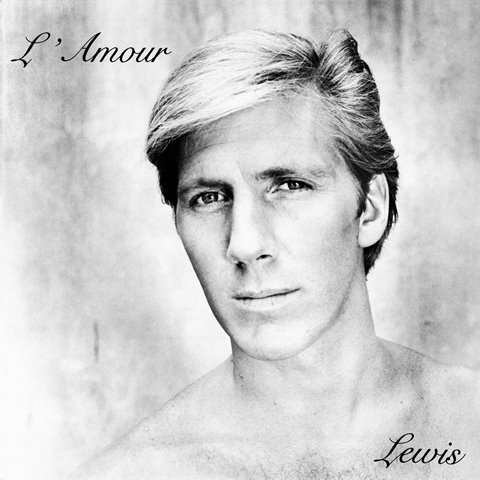
 Lewis: L'Amour
Imagine a very subdued Antony Hegarty whispering over the spookiest moments of Angelo Badalamenti’s music for Twin Peaks. Or conjure up a marriage of Arthur Russell’s shimmering World of Echo and John Martyn at his most intimate, but shorn of all but the most necessary instrumentation. To say that L’Amour, the only album by Lewis, is arresting underplays it. This is one of the most direct and affecting series of songs ever captured in a studio. Yet until a few years ago it was unknown and, even then, only available as a dodgy download with added colour from the scratches borne by the vinyl from which it had been dubbed.
Many, many records get away. But very few of them, when rediscovered, are actually as good as the collector-fuelled hype. If a cloud could make music, this is what it would be.
Despite being recorded in the early Eighties, L’Amour only made significant waves around 2011. All that was known then was that the album was by a solo artist who might be Canadian. As the liner notes to this exemplary reissue make clear, it was rediscovered at a flea market in Edmonton, Alberta in early 2007 by a collector who thought they'd found a privately pressed country album. Five more copies then turned up in Calgary in 2008. Then, CD burns began circulating after which it graduated to the internet.
 So far, so collector specific. But when the actual music was taken in, it was instantly clear this was an artist both able to envision and actualise music imbued with the highest order of spectral beauty. Despite the touchstones noted above – "Ghosts"-era David Sylvian also comes to mind as does Django Reinhardt's jazz guitar – L’Amour actually sounds like nothing else. Nonetheless, benchmarks are inevitably sought, especially with something so obscure. (photo left by Ed Colver)
This is, unarguably, a ground-breaking album. It pre-dates what it ostensibly most evokes. Badalamenti’s Twin Peaks music was first heard in 1990 and Arthur Russell’s World of Echo was issued in 1986. L’Amour was out there on its own.
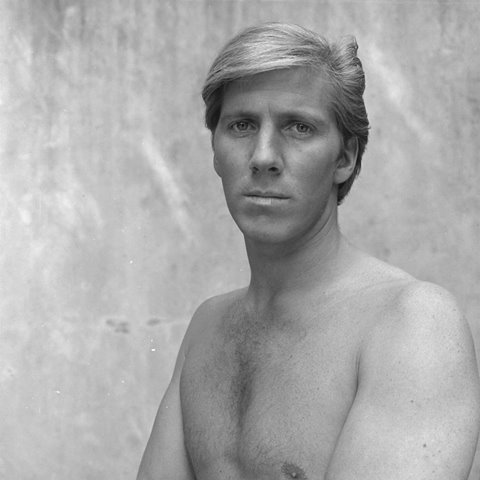
The reissue of L’Amour fills out the story with extra pictures from the session for the album’s sleeve and also the full story of how the album was rediscovered. The facts, as they are known, are laid out – mostly drawing from the testimony of album cover photographer Ed Colver and Lewis’s nephew.
Lewis was actually called Randall Wullf. It’s not known – or posited in the liner notes – whether the combination of the assumed name and album title was a play on the author of westerns, Louis L'Amour. L'Amour was recorded in Los Angeles in 1983. It was barely issued. Probably, no more than 100 were manufactured. Some copies bore a spooky, Rorschach ink-blot type image on an alternate sleeve which had turned up in the 1990s. Whether it was originally pressed to attract the attention of record labels is unknown, as are the current whereabouts of Wullf. He seems to have issued a few other – lost – albums under another pseudonym in a style described in the booklet as “soft religious music”.
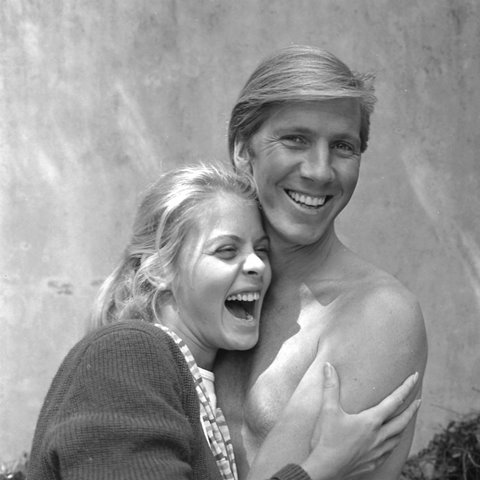 As for the man himself, he is recalled as being “charismatic and refined”. His nephew says he made money from the stock market, had all-white leather furniture and claimed to be have been brought up in Hawaii by the rich American philanthropist Doris Duke. Wullf turned up for the photo session for L'Amour's sleeve with a girlfriend Colver says “looked like a model.” (pictured right, photo by Ed Colver).
Whatever the impressions, Wullf paid for the session with a cheque which turned out to be a dud. The account it should have drawn on had been closed. He may now live in Vancouver.
As fascinating as the story is, the music would still cast its spell with no information, no knowledge. The otherworldly, transcendent L’Amour really is a lost classic. It has to be heard.
Overleaf: listen to from Lewis' L'Amour
Listen to from Lewis' L'Amour