“I’m here, I’m here, I’m here,” sang John Cale in the droning voice of Major Tom. Whether the spirit of David Bowie was indeed hovering over the Albert Hall for this impromptu memorial late-night Prom is not easily answered. The shape-shifting Bowie who stayed ahead of the game was honoured in a set lasting nearly two hours and covering 47 years of music-making from 1969 to 2016. But anyone hoping to catch a spacemobile back to 1973 was not to be humoured. Those who turned up with lighting-bolt faces should have been warned: this ain’t rock’n’roll, this is contemporary classical.
The set was put together by the conductor André de Ridder, a violinist fronting his chamber orchestra stargaze performing arrangements submitted by the likes of composers Michael van der Aa and Anna Meredith. That they’re a resourceful outfit was soon evident as they conjured up for an overture an intriguing soundscape in “Warszawa”, the ambient instrumental from Low. In place of synths were yearning strings, a lordly brass chorale plus a fluttering flute, before a trim segue ushered in the chugs and howls of the “Station to Station” intro.
This was not to be an evening enlivened by the sinful glamour of electric guitars. Until John Cale came on with his band for the finale, there was no hint of a traditional rhythm section. The task of supplying a thumping pulse in “Fame” fell to a lone tambourine. Rick Wakeman’s piano licks on “Life on Mars” were handed over to a xylophone. There was a dirty trombone solo on “Space Oddity”, and woodwind swirls in “I Can’t Give Everything Away”. The point of a Bowie Prom, you had to keep reminding yourself, was to find new shapes in old songs. “This is not a wake,” said Amanda Palmer near the start. Nor was it a karaoke night.
 Sometimes it strayed too far off piste, as arrangements trampled all over the instincts which first impelled a song’s composition. “Did you recognise it?” said de Ridder teasingly after a pointless instrumental noodle which he announced as “Rebel Rebel”. The countertenor Philippe Jaroussky crooned “Always Crashing in the Same Car” as a Purcellian lament stuck in first gear. It was beautiful, but a wanton misreading. With that ethereal voice, he would have shed far more light on “Wild Is the Wind”.
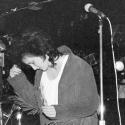
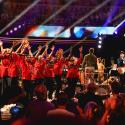
The male singers on the bill seemed to be shackled by an anxiety that they better not mess with Major Tom. Conor O’Brien’s “The Man Who Sold the World” was politely fey and, despite the innate melodrama of his voice, Neil Hannon’s “This Is Not America” was a vanilla genuflection not entirely boosted by a rap insert by Elf Kid. Marc Almond (pictured above) did his wobbly best to turn “Life on Mars” into a camp cabaret torch song, peeling dramatically away from the mic on the word “Mars”. Paul Buchanan of Blue Nile, aware that the evening could use a lift-off, shyly prodded the audience to join in on “Ashes to Ashes” but the austere setting for string quartet discouraged a singalong. It was only much later, when Almond returned for “Starman”, that the audience felt finally emboldened to open their pipes.
 Less stultified by reverence, the starwomen on the bill had a better night of it than the starmen. Laura Mvula (pictured above) sang a sassy “Fame”, Amanda Palmer a game “Heroes” and, above all, Anna Calvi turned “Lady Grinning Soul” into a stunning aria complete with defibrillating blasts from the Albert Hall’s organ, treating the audience to a rare bit of volume.
The most persuasive section was a suite of songs from Blackstar, perhaps because Bowie's valedictory album is the least barnacled with associations and memories. In the evening’s theatrical highlight, Calvi and Palmer duetted hauntingly on the title song while Jherek Bischoff supplied nasty stabs of guitar before the organ piled in again as if summoning the composer through the very gates of heaven.
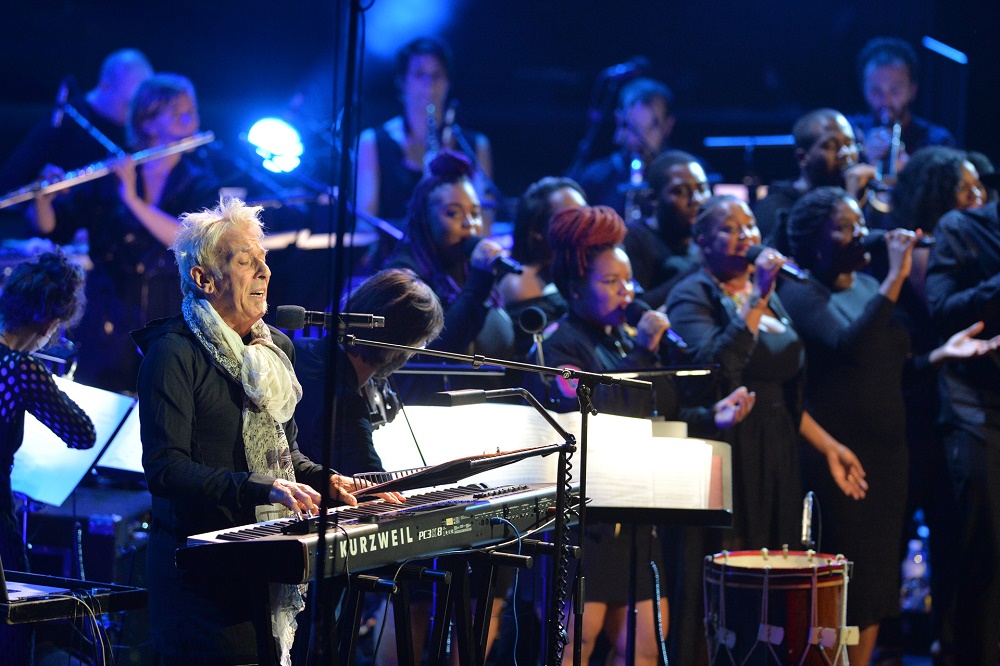 The pinstriped skirt modelled by Cale (pictured above) seemed to presage “Boys Keep Swinging”. Instead he sang a trio of songs which gradually retreated into the past. “Valentine’s Day” from The Next Day, "Sorrow" from Pin-Ups, then “Space Oddity”. He ushered on the gospel choir he first worked with at Cardiff’s Festival of Voice, but they were tethered by a dirge-like arrangement which suited the narrow range of Cale’s gravelly voice but not a gravity-defying song about disappearing into space.
The finale went almost back to the beginning, “After All” from 1970, a Weillesque oom-pa-pa in which the howls of “Oh by jingo” were the closest the evening came to a ghoulish séance. Only after all the singers had left the stage, and stargaze plus Cale’s drummer cracked into a joyous instrumental take on “Let’s Dance” (arr. Greg Saunier), did the evening finally turn into an unfettered levitation. The audience, hushed for so long, supplied the vocals and the moves. What the Bowie Prom proved, as if proof were needed, is that the man himself is utterly irreplaceable.