Quicksilver Messenger Service were central to what emerged from San Francisco as 1966 unfolded – the psychedelic-dance-ballroom scene. They first played the city’s Avalon Ballroom on 13 May 1966, and were there a further 74 times. Before this, the band had been on stage at the also-Family Dog-promoted Fillmore on 26 February, and over 25 to 27 March. Their initial booking for the city’s other main promoter Bill Graham was also at the Fillmore, on 19 March.
These early shows – of a band which debuted live in December 1965 – ensured that QMS was moving fast, seemingly as much so as their the fellow SF – or SF-based or related – peers Big Brother & The Holding Company, Country Joe and The Fish, The Grateful Dead and Jefferson Airplane.
Despite this and a demo session for Vanguard Records in 1966, QMS did not release an album until May 1968. By this point, Big Brother, Country Joe, the Dead, the Airplane, the Steve Miller Band and Moby Grape already had LPs out. From a contemporaneous perspective – and with hindsight – this was clearly not a band champing at the bit for chart action or a mainstream audience. The live setting, it seems, was where QMS was at.
With a slight caveat, the San Francisco Examiner’s Philip Elwood agreed. Reviewing an August 1966 Fillmore show, he wrote “The Messengers have as lusty a beat as any I've heard on either coast in the past couple of months. Their sense of climactic dynamics is overwhelming. Consistently stronger vocals would help them out of their tendency to convert every number into a rhythmic marathon.”
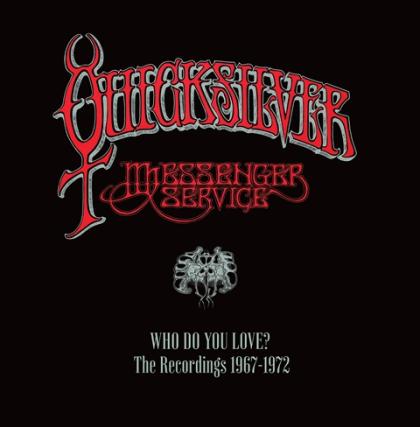
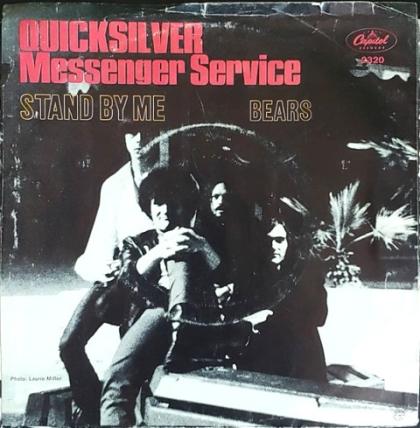
The knottiness inherent to the QMS story is amply made clear by the seven-CD clamshell set Who Do You Love – The Recordings 1967-1972, which collects the albums and 1968’s stand-alone “Bears” / “Stand my me” single from their tenure with Capitol Records, alongside live and studio material which has been out before on other archive sets; most notably 1999’s double CD Unreleased Quicksilver Messenger Service – Lost Gold And Silver. The two tracks they recorded for the filmed-in-1967, released- in 1968 mondo-inclined hippie doc Revolution are not included as, according to the new set’s booklet, “unfortunately both tracks recorded for the Revolution soundtrack cannot be included in this boxed set due to licensing issues” – surprising, as they have been legitimately reissued before (including on …Lost Gold and Silver).
The crown jewels and the essentials of the new set are the first two albums: their May 1968 eponymous debut and Happy Trails (issued March 1969). As three separate producers were used to complete it, Quicksilver Messenger Service must have been a difficult album to make. Stretching out on a ballroom stage was different to knuckling down in a recording studio. Nonetheless, on its two longest cuts “Gold and Silver” and “The Fool,” the album captures a very particular, very special type of shimmering jazz-inclined two-guitar interplay between the vibrato-favouring John Cipollina and Gary Duncan which rippled through time to impact on the dynamic between Television’s Richard Lloyd and Tom Verlaine.
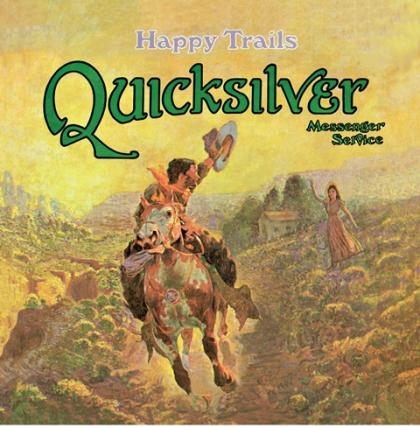
Next up in the album racks, Happy Trails was a mélange of live recordings from the New York and San Francisco Fillmore venues, and San Francisco’s Golden State Recorders. Side One featured the “Who do You Love Suite,” a far-out, multi-section extemporisation based around Bo Diddley’s “Who do you Love.” In the UK, in July 1969, Melody Maker's conclusion about the album was that it is “a moody, mainly instrumental set which will appeal strongly to those who like head music.”
Both albums explicitly captured the heights reached on the many live recording from 1966 to 1968 which are in circulation.
After this, December 1969’s less-questing Shady Grove. Its release came before a 31 December show at New York’s Fillmore East which was, according to Lenny Kaye in Circus magazine, known to be a “farewell concert.”
Nonetheless, they subsequently ploughed on – despite the departure of Gary Duncan, who was not present for Shady Grove. His place in the studio was taken by UK session keyboard player Nicky Hopkins, who joined after recording with fellow Capitol Records signees the Steve Miller Band. Hopkins is to the fore on Shady Grove. Distractingly so. Of Shady Grove, Kaye noted “the sound of the group itself is not reminiscent of anything we've heard from them in the past...it almost appears as if the remaining original members - Freiberg, Elmore and Cipollina - have bowed to Hopkins' direction.” Kaye respectfully concluded “Shady Grove marks the birth of a new group.” QMS had seemingly given up trying to encapsulate the outer limits of its former live identity.
The ensuing albums Just For Love (August 1970), What About Me (December 1970), Quicksilver (November 1971) and Comin’ Thru (April 1972) were increasingly anodyne – but Just For Love did generate the chart single “Fresh Air.”
Of What About Me, Rolling Stone’s Ben Edmonds, in his February 1971 review, said “Quicksilver displayed acute weaknesses on their previous album and they remain very much in evidence on What About Me. The band’s sound, for all the potential richness afforded by three guitars and piano (not to mention the introduction of horns and added percussion on some tracks), still feels only half-realized (attributable to a basic weakness in material) or muddled (attributable to a production and engineering still far from acceptable). The question as to whether Quicksilver now exists merely as a vehicle for the rambling romanticism of Dino Valenti [who was now in the band – and sometimes named 'Valente'] is once more made unavoidable…he cuts off Quicksilver from their earlier musical identity without replacing it with anything of real substance.”
In Fusion, Gene Sculatti, wrote of Quicksilver “as a record, Quicksilver is sad testimony to better times. Songwriting is something they don't invest much effort in, and it shows.”
Indeed, a core issue with the post-Happy Trails QMS is the inability to determine that the band was concerned with defining its identity. Perhaps becoming unmoored from their San Francisco comfort zone contributed to this? Or maybe it was a result of an instability which had been there from day one, a shakiness meaning the band could never settle on a direction. The line-up changes must have contributed to the loss of distinctiveness.
Then there was, as Edmonds had considered, the question of whether they had become Valenti’s mouthpiece. He was singing the songs. He was writing the bulk of them.
His route into the band had a protracted background. Quicksilver Messenger Service coalesced in 1965. They were a five-piece: John Cipollina (guitar), David Freiberg (bass), Jim Murray (vocals), Casey Sonoban (drums), Skip Spence (guitar, vocals). The intention was for known solo singer and songwriter Valenti to be in the line up but, after a bust by the man, he was in jail. Without him, the band pushed forward. Spence then absconded to Jefferson Airplane, and Sonoban also left. Drummer Greg Elmore and guitarist Gary Duncan came in as replacements. Their top-tier garage-rock band The Brogues folded. This was the settled state until October 1967, when Murray left. They were now a four piece – the band which signed with Capitol Records shortly after Murray’s departure; the band which completed the debut album and Happy Trails.
Following Happy Trails, Gary Duncan went off to form a band putatively named The Outlaws with the now-sprung Valenti, who was looking to do something after his (amazing) August 1968 solo album hadn’t been a major seller. Hopkins stepped into the gap in the band. Then, for Just For Love. Duncan was back. Valenti too was now in QMS. Hopkins was soon gone. John Cipollina left after What About Me. The music no longer had space for him. Valenti – now dominant – Elmore and Duncan kept it going. Quicksilver Messenger Service, such as it then was, sputtered to a halt in the wake of 1972’s Comin’ Thru.
Quicksilver Messenger Service, Happy Trails and the other material from 1967 and 1968 is what needs to be heard on the nicely presented Who Do You Love - The Recordings 1967-1972. Some of what followed is worth dipping into, but it represents a promise which was not built on after 1969. Though the full story is worth telling, to paraphrase Ben Edmonds, Quicksilver Messenger Service’s earlier musical identity was not replaced by anything of real substance.
- Next week: Darrow Fletcher Presents Jacklyn & Genna Records – prime Chicago soul
- More reissue reviews on theartsdesk
- Kieron Tyler’s website