“Do You Believe in Magic.” “You Didn't Have to be so Nice”. “Daydream.” “Did You Ever Have to Make up Your Mind?” “Summer in the City.” “Rain on the Roof.” “Nashville Cats.”
The first seven singles by The Lovin’ Spoonful are all great, really great, and all were hits. Top Ten in the band’s US home. International hits too. Arriving in a torrent over July 1965 to November 1966, they help define Steve Boone, Joe Butler, John Sebastian, and Zal Yanovsky as integral to America’s riposte to the Beatles-kindled British Invasion of the US charts. The Byrds’ “Mr. Tambourine Man” had been released in April 1965, and The Lovin’ Spoonful were amongst the earliest of the post-Fabs ripples to radiate outwards from the US. For this – the combination of impressive singles and success – The Lovin’ Spoonful are significant. It's a musical outpouring telling a version of their story with a straightforward narrative.
Like The Byrds, The Lovin’ Spoonful – whose membership shared with The Byrds a background in the US’s pre-Beatles popular folk scene – were tarred as purveying folk rock. When the Spoonful first visited the UK in April 1966, British music weekly Melody Maker observed “say ‘folk rock’ to a folk or rock fan and they both curl up. Yet in America sounds by groups like the Lovin' Spoonful, Byrds, Mamas and Papas, and Simon and Garfunkel are being hailed as folk rock or even folk and roll. But how valid is the all new folk rock? How big is this new Stateside development and will it be an influence in Britain? Is America striking back?”
In the piece, Mick Jagger was quoted saying “Rubbish! They've been talking about folk rock in America since 'Like a Rolling Stone.' It doesn't mean a thing. It's just a word that covers groups that were or are influenced by folk music in varying degrees. It's not even strong rock and roll. They've just dug up a few influences. All the records are different, 'Daydream' is different from everything else the Spoonful have done."
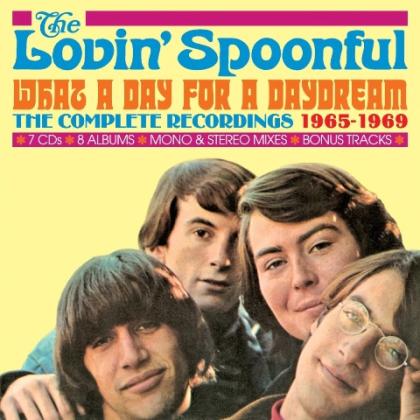
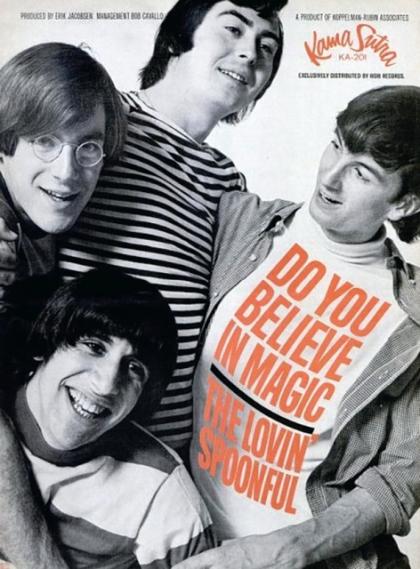
What A Day For A Daydream - The Complete Recordings 1965-1969 is a seven-CD box set which, as its title attests, collects everything The Lovin’ Spoonful issued as a recording entity for the Kama Sutra label: post-Sixties reunions are excluded. There are mono and stereo versions of their first four albums: Do You Believe In Magic (released in October 1965), Daydream (March 1966), Hums Of The Lovin’ Spoonful (November 1966) and Everything Playing (December 1967); plus, in stereo, the film-related albums What’s Up, Tiger Lily?' (August 1966) and You’re A Big Boy Now (March 1967) as well as Revelation: Revolution ’69 (October 1968’s final Spoonful album) and Zal Yanovsky’s peculiar solo set Alive And Well In Argentina (April 1968). Also heard is the early 1965 demo made for Elektra Records, which initially appeared on the May 1966 What’s Shakin’ comp. Everything is here.
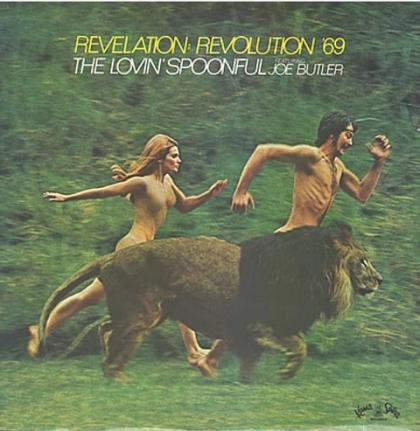
As the soundtracks and the Yanovsky album imply, the overall narrative wasn’t quite as neat as the early hit-driven track record implies. Despite its credit as “The Lovin’ Spoonful Featuring Joe Butler,” Revelation: Revolution ’69 was barely a Spoonful record. The only original band member on the album is drummer Joe Butler. In the UK, New Musical Express reviewed the LP. In full, the verdict was: “My, how the Spoonful have changed since the days of John Sebastian and the lunatical Zalman Yanovsky. Gone are the days of light pleasant songs, now it's all ‘yea, man, valid statement, take a trip, do your thing’ and, frankly, I don't like it. 'War Games' is a mess of dogs barking, babies crying, guns firing and kids playing, yet by contrast 'Only Yesterday' is really very pretty. That latter track and the nude lady on the cover are the only worthwhile things about the LP.” Clearly, Revelation: Revolution ’69 confirmed the glory days were over.
Main songwriter John Sebastian had left the band in June 1968. Yanovsky had been ousted earlier and was replaced by The Modern Folk Quartet’s Jerry Yester, who had previously worked in the studio with the band. Yanovsky played his last Spoonful show in June 1967. Bassist Boone was ostensibly still in the band up to 1969, but had nothing to do with Revelation: Revolution ’69. There were other signs of turbulence. Back in 1967, irrespective of the band credit, You're A Big Boy Now was pretty much a John Sebastian solo album – which rankled with the rest of the band.
The earliest intimation of future wobbliness came with a May 1966 drug bust in San Francisco when Boone and Yanovsky were arrested for possession of marijuana. Yanovsky was Canadian, and duo avoided charges and Yanovsky being sent back there and a bar on future US entry when they made a deal to reveal to cops the identity of their supplier. At that point, this wasn’t public knowledge.
However, in February 1967, San Francisco Bay Area underground paper The Berkeley Barb put on its front cover the story that Boone and Yanovsky had snitched to the narks. In August, the Los Angeles Free Press picked up the story, as did Scranton, Pennsylvania’s The Scranton Tribune. There were also calls to boycott the band, and to picket their shows. Any standing The Lovin’ Spoonful had with the burgeoning freak-’n-beard scene was obliterated.
In May 1967, between the Berkeley Barb piece and the subsequent fulminations, Yanovsky was booted out – ostensibly for his differences of opinion with Sebastian about the band’s musical direction. He had disliked the fabulous You’re A Big Boy Now spin-off single “Darling be Home Soon,” so spent the band’s 22 January 1967 Ed Sullivan Show appearance to promote the single undermining Sebastian’s performance with on-camera, look-at-me arseing around. He was a loose cannon.
The Lovin’ Spoonful’s commercial fortunes subsequently declined – and, widespread knowledge of the deal with the man meant there was no way they could get to grips with the hippie-psychedelia groundswell. Nonetheless, fences were later mended: Sebastian contributed a song to Alive And Well In Argentina, and the pair went on to work together.
After Yanovsky's replacement, it was increasingly a mess and a lot of the ensuing music was either OK or plain bad. A pity, because at their best over 1965 and 1966, and into early 1967, The Lovin’ Spoonful were one of America’s greatest and most distinctive bands. Their music was imbued with joy. Their approach to musical rootsiness antedated what would bed in after the arrival of The Band. Dig into the exhaustive, nicely presented, crisply and freshly mastered What A Day For A Daydream - The Complete Recordings 1965-1969 and revel in the wonderful stuff. Bear in mind, though, that some of what’s here only needs to be heard once.
- Next week: Evil Grave’s Death From Malta – previously undiscovered heavy Maltese band from the Seventies get their debut release
- More reissue reviews on theartsdesk
- Kieron Tyler’s website