Brazzaville is on the north side of the Congo River. It is the capital of the Republic of the Congo. Kinshasa is on the south side of the Congo. It is capital of the Democratic Republic of the Congo, formerly known as Zaïre. The cities face each other, about 1.5km apart, divided by the river and being in different nations.
Congo Funk! - Sound Madness from the Shores of the Mighty Congo River (Kinshasa/Brazzaville 1969-1982) unites them by collecting 14 tracks demonstrating their musical fortunes were intertwined. Take the compilation’s Les Bantous De La Capitale, who were formed in Brazzaville by musicians who had been playing Kinshasa since the late Fifties – all of them were originally from the Republic of the Congo. Similarly, in the 1970s, Abeti Masikini shuttled between Kinshasa and Brazzaville.
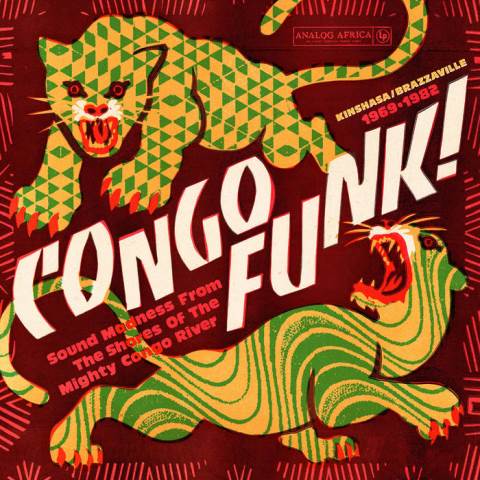 From the south bank’s perspective, the two-way musical trade between each country was complicated in 1971 when, as the essay coming with Congo Funk!, explains, President “Mobutu started the authenticity campaign which aimed to rid the country of all colonialism and Western cultural influences and announced that as of October 27, the Democratic Republic of the Congo would be called the Republic of Zaïre.” Mobutu had taken power in 1965, and his Zaïreanisation programme meant the role of the European record labels which had interests in the country was reduced, and the foreign-sourced components needed to manufacture – and record – records became scarcer and scarcer. Music, though, was one aspect of the country’s industry which became diminished. Nonetheless, as becomes clear here, the beat did not stop. Mostly, thanks to a series of independent labels.
 Stylistically on Congo Funk!, it’s impossible to tell what might be a Brazzaville record or a Kinshasa record – this seems to be a core argument behind the collection. While about half the tracks collected are rooted the Congolese Rumba music broadcast by Radio Brazzaville, there are excursions and transformations. "M.B.T's Sound" by Kinshasa’s M.B.T's, released in 1977, has the Rumba swing yet its funk rhythms mean it hardly conforms to a template. Tabu Ley was a major figure in Congolese Rumba, and was playing live from the late 1950s. He and his successive bands weren’t part of the independent scene and remained popular during the Zaïreanisation period. 1977’s "Adeito," credited to Tabu Ley Et L'Orchestre Afrisa, is a fantastic, just-short of seven-minutes hypnotic, rolling work-out.
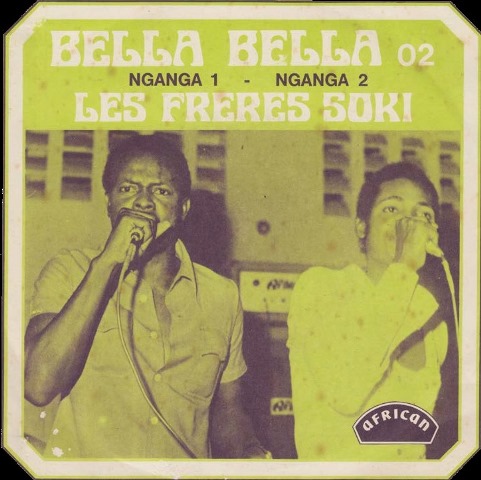
More frenzied is 1974’s equally mesmerising "Nganga," by Kinshasa’s Les Frères Soki Et L'Orchestre Bella-Bella. Its brass is over-recorded and distorted. Its vocals undulate so much it suggests a Doppler effect. The whole is so echoey that listening becomes akin to entering a corridor with the players at the other end. Equally striking is Orchestre O.K. Jazz’s "Kiwita Kumunani" (1969) which has a large dash of James Brown in its make up – considering Brown played their home country Zaïre in 1974, this is a prescient record.
Despite its thesis, Congo Funk! is more about the Democratic Republic of the Congo/Zaïre than the Republic of the Congo. Nonetheless, the point is made: the musical ecosystems of the two capital cities were connected, albeit with the balance tipped to one side of the Congo River. The full story and its context is assiduously told in the booklet. Yet even if the background was unknown, it’s a testament to Congo Funk! - Sound Madness from the Shores of the Mighty Congo River (Kinshasa/Brazzaville 1969-1982) that what’s compiled would still captivate.
- Next week: Linda Smith’s Nothing Else Matters and I So Liked Spring
- More reissue reviews on theartsdesk
- Kieron Tyler’s website