

They did it, and continue to do it, their way. Under the self-confident title of The Mancunian Way, the BBC Philharmonic’s new season aims to celebrate the story of music-making in the city through works, composers and performers with special links to Manchester. There is much to celebrate, not least nowadays the spirit of collaboration between the musical strongholds in the city, where it is entirely possible to carve out a total career from childhood to professional fulfilment.
classical music reviews
Graham Rickson

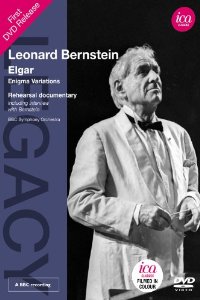 Elgar: Enigma Variations, Rehearsal documentary BBC Symphony Orchestra/Leonard Bernstein (ICA Classics DVD)
David Nice

Night life in the Square Mile, at least from the perspective of my evening routes around the Barbican, is dominated by booze and sportiness. The way to last Thursday’s concert was blocked by a Bloomberg relay marathon, and cycling through the tunnel towards Milton Court yesterday evening, I encountered the bizarre spectacle of carnival-style trucks pedalled by a dozen drinkers apiece, sitting at a central "bar" and already well oiled.
igor.toronyilalic

“Lighting design”. Are there two more terrifying words to find in a concert booklet? Since I last went to a normal concert, it seems that the lunacy that is the tradition of bathing audience and stage in as much light as possible as if we were some kind of site of forensic investigation or a harvest of hash has been replaced - at least for symphonic dramas like Berlioz’s Romeo et Juliette - by its twin pole of idiocy: lighting design (capital L, capital D). Last night, this meant traffic-light signalling helpfully reminding us when to feel sad (blue) or happy (orange).
Sebastian Scotney

This was the first of the ten concerts in the Temple Music Society's autumn/winter season. The Society uses two venues right in the heart of London, Temple Church and, as last night, Middle Temple Hall, most famous as the site of the first performance of Twelfth Night in 1602.
David Nice

Rumour machines have been thrumming to the tune of “Rattle as next LSO Principal Conductor”. Sir Simon would, it’s true, be as good for generating publicity as the current incumbent, the ever more alarming Valery Gergiev. But if the orchestra wanted to do something fresh and daring, it would be better advised to take the plunge with Robin Ticciati, a disarming mix of youth - he’s still only 30 - and mastery; his romantic rubato, the freedom with the phrases, already strikes me as more convincing than Rattle’s has ever been, as last night's Dvořák testified.
Matthew Wright

Hungarian composer Bela Bartók’s analytical rigour and folk-inspired voice have established his position as one of the most original voices of the twentieth century, but he still represented a bold choice for the opening event of the 2013 Kings Place Festival. Aurora Orchestra principals Thomas Gould (violin), Timothy Orpen (clarinet) and John Reid (piano) performed his Contrasts trio for violin, clarinet and piano with lyrical intelligence in the beautifully balanced acoustic of Hall One.
Graham Rickson

David Benedict

BBC Four’s new series Sound of Cinema: The Music that Made the Movies is shocking. The overwhelming majority of arts-based TV consists of programmes consigning specialist knowledge/presenters to the sidelines in favour of dumbed-down, easily digestible generalisations mouthed by all-purpose TV-friendly faces. But this three-part series is fronted by, gasp, a composer who uses insider knowledge to hook and hold the viewers.
David Nice

So we glide between seasons from one communicative diva giving her all in a vast space to another casting spells in intimate surroundings. While Joyce DiDonato, not perhaps one of the world’s great voices but certainly a great performer, was captivating the Proms multitudes on Saturday night, the Wigmore Hall’s concert year sidled in with Bryn Terfel and Simon Keenlyside, no low-key singers.