
In 1725 a collection of some 50 songs was published by one William Thomson. You might not know his name, or even the names of the songs, but given the first bar of most I’m betting you could hum them from beginning to end. The work? Orpheus Caledonius – the first published collection of Scottish folk melodies and lyrics.
classical music reviews
alexandra.coghlan

David Nice

Forget the ersatz experience of Sergey Eisenstein's mighty silent films accompanied by slabs of Shostakovich symphonies composed years later. This collaboration between the London Symphony Orchestra and Kino Klassika is as close as we can ever come to hearing the massive score composed by Austrian-born Edmund Meisel for the greatest of the master's 1920s films. It was intended for large-scale screenings of October in Berlin and Moscow, which never took place in the expected format.
David Nice

Singing students from the Guildhall School should have been issued with a three-line whip to fill the inexplicably half-empty Milton Court concert hall for last night's charmer. After all, every musician, and not just sopranos, should know that this is how it ought to be done. True, an effervescent personality like Lucy Crowe's can't be simulated. But every other respect of her stunningly sung and varied Mozart can be aspired to: the relaxed, natural stance (and in this instance, knowing how to play a recalcitrant shoe heel for comedy), knowing what to do with the hands, how to execute coloratura as spine-tingling expression, not mere display, how to spin long lines and to colour the music according to the situation, with the right dramatic looks and widening of the eyes to match.
True, this was culinary Mozart of the sort to make E F Benson's Lucia and Georgie affectedly exhale, two-thirds of it composed in his teens, but as with Donizetti and Bellini, when you have supreme stylists in charge, it all commands attention. There are no better period-instrument players around than Harry Bicket's band, and though the dry acoustics didn't help them out in the way that the Wigmore Hall would in the frothiest of Mozart's early Divertimenti, the D major K136 with the already-vintage humour of its six-note finale kickoff, the pleasures came thick and fast. Mozart's inner string lines were full of life and interplay, runs clean and bright.
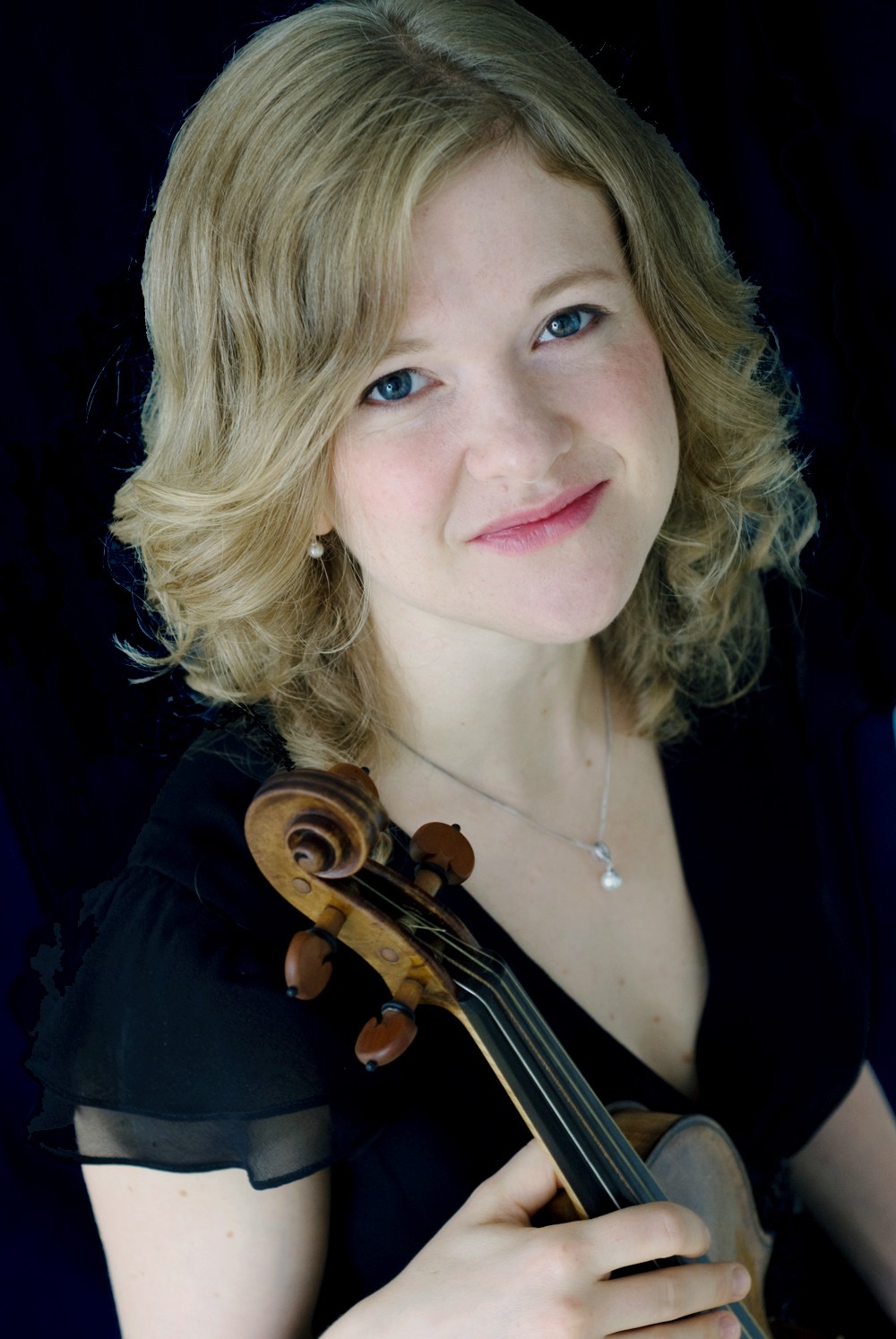 The orchestral counterpart in the concert's second half, the A major Violin Concerto K219 with its rollicking "Turkish" rondo episode, brought another pleasure of collaboration. The English Concert's leader, Nadja Zwiener (pictured left), may not be a born soloist with the kind of panache that Isabelle Faust brought to the even slighter G major Concerto at the Proms, and in her first entries she had a bit of an intonation problem as well as less than perfect ornamentation. But the Adagio shone with such a rare consonance between violinist and orchestra, the sort of thing that star players flying in for one rehearsal can't achieve, and by the finale, with aforementioned romp both clearly articulated, with none of the usual rushing, and laugh-out-loud exuberant, we were back to the level of what Crowe had already achieved with Bicket and co (the conductor-instrumentalist pictured below by Richard Haughton).
Our great soprano didn't make it easy for herself, plunging in with Aspasia's ferocious first aria in Mitridate re di Ponto. If Crowe had been singing this role rather than the less rewarding one of seconda donna Ismene at Covent Garden, that musically rather ordinary evening might have come up to the mark of this one dazzling performance. More brilliant still was "Ah se il crudel periglio" from Lucio Silla, with its unbelievably well-executed runs in the recap.
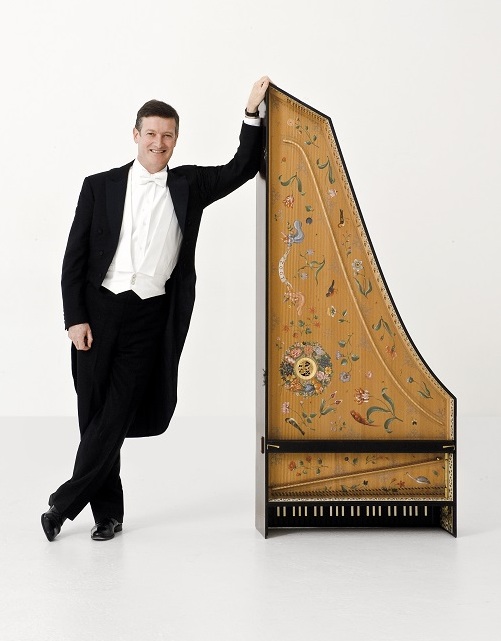 The necessary breather in between was the lovely "Ruhe sanft" from Zaide, Crowe touching and perfect of legato phrasing in dialogue with Katharina Spreckelsen's cool oboe obbligato. The maturity of Mozart begins to shine through here in the extra beauties he finds in the instrumental coda, and by the time of the "Et incarnatus est" from the great but unfinished C minor Mass, we are in vintage territory with not only that effortlessness of vocal writing but also the woodwind ensemble, enriching what becomes a kind of quartet-cadenza of melting beauty.
Crowe also made the heart flip in the simpler, solo cadenza at the heart of "Exsultate, jubilate". Each time I've heard her sing it, not a note or a phrase has been out of place, and this was on the same level as last year's glorious performance with David Bates and La Nuova Musica. The bonus proved simply sublime, making the eyes prick as the earlier numbers could not: as Bicket pointed out, Mozart by the end of his life knew how to say with 40 bars what had earlier taken him 200, and with Crowe bringing extra fullness of tone to what is usually just a pretty arietta, Servilia's "S'altro che lagrime" from La Clemenza di Tito, we all too few in the audience came out knowing we'd heard the best that singing in concert has to offer.
Next page: watch Lucy Crowe sing 'Exsultate, jubilate' at the 2016 Proms
Bernard Hughes

Julian Anderson’s 50th birthday this year was the prompt for the latest of the BBC’s Total Immersion days, devoted to the work of a single contemporary composer. I have long been a fan of Anderson’s music since hearing the marvellous Khorovod in the 1995 Proms, but, after a couple of recent blips – I was not so keen on the opera Thebans or the recent Piano Concerto – I was ready to have my admiration re-awakened. And, in large measure, it was.
Bernard Hughes

On paper this was a fairly austere piece of programming. No variety in composer, genre or style, just four Bach Partitas in a row, works of similar approach, length and technique. And yet in performance, in the hands of Angela Hewitt, there was sufficient variety, not to mention poetry, humanity and wit, to make for a completely satisfying recital.
Peter Quantrill

The Royal Festival Hall rather belied its name for a visit to London on Saturday of France’s premier new-music ensemble. It can’t be helped that the more intimate space of the Queen Elizabeth Hall next door is presently closed for renovation, but with the balcony and back of the stalls both empty and unlit, the place presented a more dismal aspect than usual.
Jessica Duchen

Now we know who sent Jonas Kaufmann the Union Jack boxer shorts for the Last Night of the Proms. Whether the sender’s identity is the bigger surprise, or the hint of ambiguity over whether the "Greatest Tenor in the World" had previously heard of one of Britain’s favourite baritones – well, you decide. And no, we don’t learn who threw the knickers at him from the arena.
Gavin Dixon

Dances of earth and songs of sea – the BBC Symphony Orchestra's latest programme offered an inspired coupling, where similar inspirations balanced contrasting styles. In a gritty first half, Birtwistle’s Earth Dances played out over a continuous 40-minute span of uncompromising modernism.
David Nice

"Mitsuko Uchida plays Mozart" might have been the marketing tag to sell out this first concert in the Scottish Chamber Orchestra's 2017-18 season (despite student and free under-18s take-up, the Usher Hall still wasn't full). "Dvořák Symphony No.
Jessica Duchen
