

Ghostpoet – aka Obaro Ejimiwe – released his first album Peanut Butter Blues and Melancholy Jam in 2010. He has since been named as The Guardian’s New Band of the Day, nominated for a Mercury Prize and toured the festival circuit with the likes of Metronomy. His third album Shedding Skin, due to be released on March 2nd, was the focus of Pias Nites at Shoreditch’s Village Underground.
new music reviews
Guy Oddy

While Julian Cope’s albums are usually fairly expansive affairs which employ a vast array of instruments, an audience with the Arch Drude is a more intimate affair these days. There’s no backing band and the man takes to the stage armed only with a 12-string acoustic guitar, a microphone and a few effects pedals. There’s also a big bass drum set up on stage with “You can’t beat your brain for entertainment” written on the skin – but that’s just a prop and doesn’t get played.
Kieron Tyler

Norway’s celebrated jazz colossus Jan Garbarek hadn’t played the north Norwegian city of Bodø for 15 years. Moreover, he and his group took the stage of the spanking new Stormen concert house as the openers of Bodø Jazz Open, the city’s four-day festival of all that is and isn’t strictly jazz. If there was any pressure, it didn’t show. Resolutely composed during his hour and three-quarters on stage, Garbarek also said nothing. Given his stature, the waves of power intermittently surfacing in the music and the nature of the event, there was only one possible outcome – a standing ovation.
Kieron Tyler

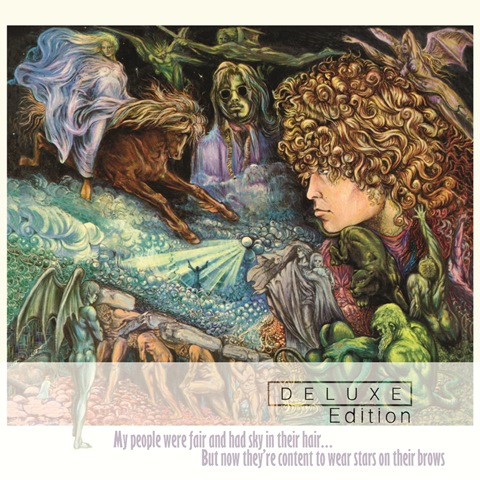 Tyrannosaurus Rex: My People Were Fair and had Sky in Their Hair, Prophets, Seers & Sages: Angels of the Ages, Unicorn
Tim Cumming

There have been Throbbing Gristle reunions at Tate Modern, and Psychic TV last played in London at the now-demolished Astoria in 2008 – the band in nurse’s uniforms, playing psych garage rock over projections of medical procedures and sex scenes – but it’s a long time since Genesis Breyer P-Orridge was in London.
Mark Kidel

Artangel continues to instigate extraordinary events in extraordinary places. Over the past two decades and more, directors Michael Morris and James Lingwood have helped generate major and ground-breaking work by Rachel Whiteread, Brian Eno, Laurie Anderson, Roni Horn, Jeremy Deller, Steve McQueen, Matthew Barney, Gregor Schneider, Francis Alÿs and many others. It's a long list. Their latest collaboration with PJ Harvey is no less thought-provoking and inspiring than the best of their unique collection of imaginative and risk-taking projects.
Gavin Dixon

Latvia likes to be different. At least that’s the message they sent out with the cultural programme marking the start of the country’s presidency of the Council of the European Union. Pomp and circumstance were out, and instead we got a Cage-inspired happening, an audio/visual presentation that was many things: part video installation, part performance art. The only thing you couldn’t describe it as was a choral concert.
Russ Coffey

After three albums the question remains: is Die Antwoord more than a just a clever joke or is the act simply a caricature of South Africa’s trashy “Zef”-side? The guys and gal behind "Ninja and Yo-landi Vi$$er" are in no doubt – they claim to be “conceptual artists”. And many fans agree, saying that besides the posturing lie some real cultural truths. Last night three or so thousand descended on Brixton to make up their own minds.

 Radio Birdman: Radio Birdman
Guy Oddy

All-seater, up-market concert halls can be a bit intimidating to bands when they are used to more intimate venues. Silences can feel awkward and stage talk can dry up or be reduced to perfunctory “thank you”s. So it almost proved this evening when First Aid Kit strode onto the stage of Birmingham’s Symphony Hall.