

This is one of the saddest films I’ve ever seen. It follows the fortunes of Peyangki, an 18-year-old Buddhist monk living in a monastery high up in the mountains of Bhutan. This is the second documentary made by Thomas Balmès about this endearing young man. The first film, Happiness won an award at the Sundance Festival in 2014 and Sing Me a Song opens with footage from Happiness of the eight-year-old Peyangki sharing his hopes of going into retreat one day and becoming a fully-fledged lama.
At the time, this remote spot was about to be opened up to the outside world and the young novice enthuses about the road that will soon link the nearby village of Laya with the capital Thimphu. Pylons are being erected and Peyangki also dreams of living in a house powered by electricity and eagerly anticipates the arrival of television and the internet.
In Sing Me a Song we see these contradictory desires eroding his faith. It’s ten years on and the monastery seems scarcely to have changed. The warm glow of flickering butter lamps, the reds of the monks' robes and the ochres and umbers of the richly decorated interior create a womb-like atmosphere of spiritual certainty; but there’s a worm at the core. The internet is causing havoc and the distracted novices are behaving like unruly kids. Instead of learning the sacred texts they are letting off fireworks and playing war games with toy guns.
They gather for morning prayers; sitting cross legged on the bare boards, they rock back and forth as they chant. It’s a scene repeated over centuries, except that while rattling off the familiar phrases, the lads are simultaneously surfing the net on their phones. Escapism has replaced mindfulness and words that should command their full attention have been reduced to meaningless prattle.
Peyangki is the most distracted of them all. Theoretically committed to a life of celibacy, he is mooning over a young woman he met on WeChat. To raise cash he goes foraging for medicinal mushrooms, then hitches a ride to Thimphu (main picture) to see his beloved Ugyen. Surprise, surprise, the meeting (pictured below) doesn’t go well. They are worlds apart; she wants a provider for herself and the daughter she “forgot” to mention, while he is simply adrift – all at sea. He doesn’t belong in the city, yet is unwilling to return to the monastery so swaps his robes for western clothes, learns to walk with a swagger and whiles away the time playing video games in internet cafes.
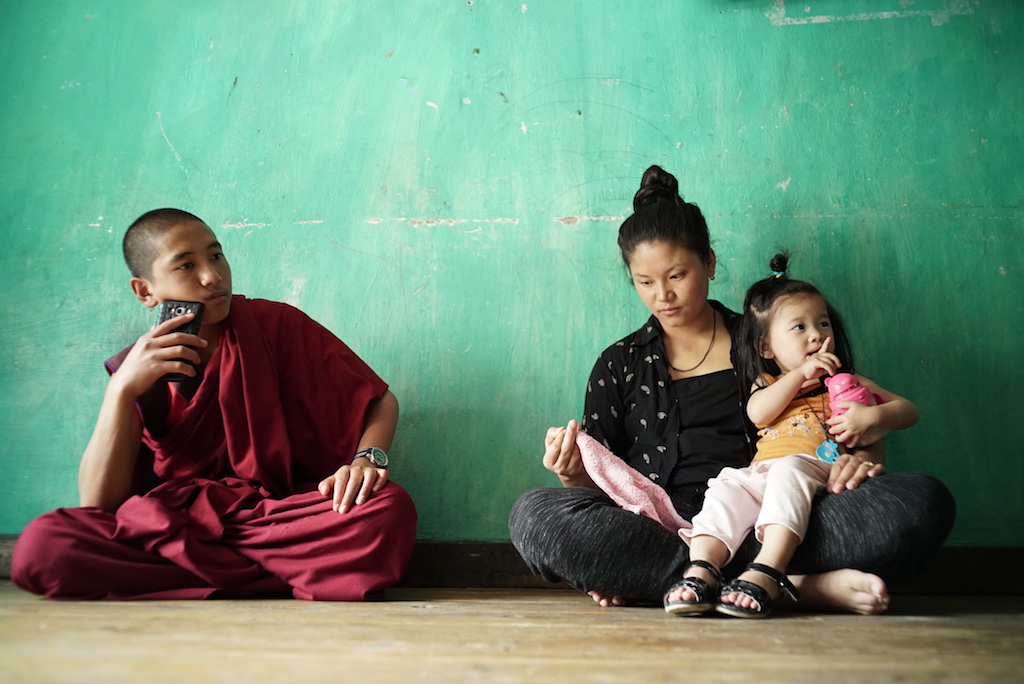 If this were a feature film the plot would be banal, but as a true story it’s heart breaking. Peyangki is a natural; no actor could deliver such a direct and honest performance, yet the film often feels like a docudrama, with scenes set up especially for the camera. This doesn’t invalidate it, though, because Sing Me a Song is far more than a sad tale about a lost soul. It's a parable about a society in crisis.
Bhutan was the last country in the world to accept the internet and it’s effect on this isolated and ill-prepared society has been dramatic. One scene is filmed in a nightclub lounge full of young men and women. Peyangki sits looking bored and isolated and your heart goes out to him until, that is, you notice that everyone is being similarly ignored. Instead of enjoying one another’s company, these teenagers are all peering at their mobiles, searching the net for gratification elsewhere. The grass evidently looks greener on the tiny screen.
The monastery is a microcosm of a country whose traditions and values are under threat from a technology it neither knows how to cope with or contain. Devastating.
- Sing Me a Song is on demand from Dogwoof, Curzon Home Cinema and iTunes
- More film reviews on theartsdesk












Add comment