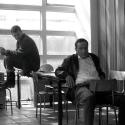
If only there were more: that's a first response to Nothing Like a Dame, Roger Michell's affectionate yet clear-eyed portrait of four of Britain's finest actresses, all now in their 80s. As the camera circles around Maggie Smith, Judi Dench, Joan Plowright, and Eileen Atkins in conversation, it's impossible not to be swept up in a collective portrait of these remarkable careers alongside their shared awareness of the advancing years. Small wonder the one classic role they pause to debate at length is Cleopatra. Age really cannot wither this quartet's infinite variety.
Due to be aired on the BBC following a limited cinema release, the film consists of chat caught, as it were, on the lam. Michell provides the occasional offscreen prod to get a topic going, and once in a while the film crew appears in a shot, more often than not to be shooed away by Smith. But with ladies like this, intrusions would be unnecessary as well as impolite. Who wouldn't want to hear as much as Smith has to say about pinching her comic technique from Kenneth Williams? Or from Dench, bronzed following a Cornish holiday, putting a patronising young paramedic in his place by announcing that she recently appeared on the West End in The Winter's Tale? (Pictured below: Judi Dench as Paulina, photograph by Johan Persson.)
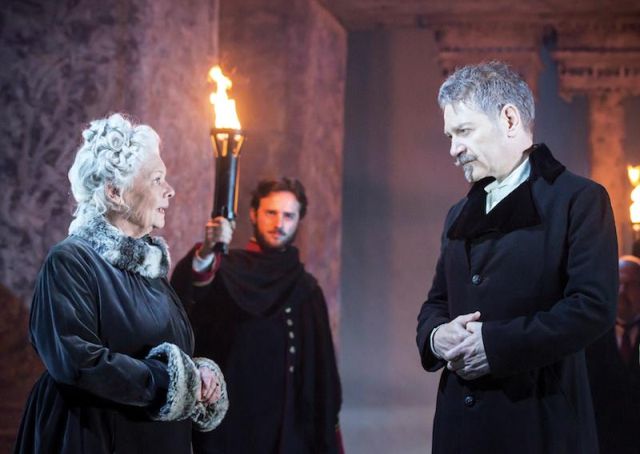 The points of convergence between the women make for a veritable thespian cat's cradle. All except Atkins appeared in the Franco Zeffirelli film Tea with Mussolini, while I have seen Smith over the years onstage with each of the others in turn. Away from stage and screen, the ladies can all speak on what it was like having been married to an actor, Smith movingly insisting on remembering the good times she had with Robert Stephens and letting whatever else their marriage consisted of go unsaid. (She and Atkins remarried, Plowright and Dench have not.)
Filmed inside and on the Sussex grounds of the home that Plowright shared with her late husband, Laurence Olivier, this portrait of the artist as a reflective dame essentially takes the form of a round-table discussion spliced with pairings of Dench and Smith, say, on the sofa, chortling about memories and fretting about what happens with time to the memory.
The chosen clips – Dench as Sally Bowles in Cabaret, Smith and Stephens in Private Lives, among others – won't generally surprise any British theatre buff who hasn't had the odd amble round YouTube, but one can surely infer from her remarks that this is yet another celluloid venture Smith most likely will not see. (She confirms once more that she has yet to watch Downton Abbey, pictured below.) Less expected, and utterly delightful, are remarks in passing about Atkins's unexpected acquaintanceship with the initials KY – cue much hilarity – and a sightless Plowright advocating yoga and mindfulness and the need always to exercise the brain.
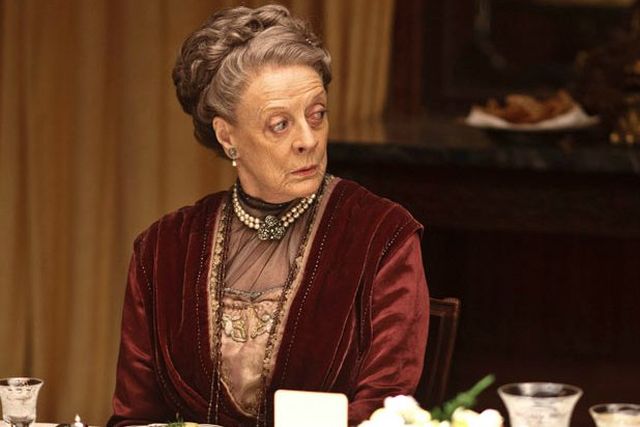 Agelessly witty and effortlessly stylish as they are (all four have remarkable skin), the women make no attempt to conceal the toll exacted by time. Dench stops the heart, as she has made a career of doing, pausing before she talks of her beloved Michael Williams: a lifetime of feeling contained in a fleeting silence. Smith later admits to loneliness but not before informing us that Edith Evans had two sets of teeth: the gossipy and the self-aware ever-intertwined. We get talk about sharing hearing aids alongside lines from bygone plays remembered as if the years had somehow fallen away. And in one startling moment, all eyes turn in mock-fury on Dench for scooping up the best parts. (Theatre buffs will note the arrival of this film in the same week that Glenda Jackson and Diana Rigg, contemporaries all, got Tony nominations for their current Broadway parts: this generation of women, Vanessa Redgrave included, marches ever onward.)
Career highlights? Roles that got away? Changing tastes and preferences for work? Those are among the topics one could imagine explored in further depth had Michell's camera rolled ad infinitum. Let's just say that I laughed plentifully and was greatly touched and doubt I'm alone in wishing for a director's cut packed with outtakes. And when Nothing Like a Dame draws to a close with audio of Dench reciting "our revels now are ended", the only possible response is to insist that they are not.
- Read more film reviews on theartsdesk
- Overleaf: watch the trailer for Nothing Like a Dame
- Exclusive premiere screenings tonight: https://www.nothinglikeadame.film/