Hell has no fury like a stan scorned, as an Eminem song memorably established with respect to obsessed fanboys in the pop world, and this visually nimble not-quite-thriller shows us the further perils of celebrity disciples who get the hump.
Britain’s Archie Madekwe plays Oliver, an up-and-coming music artist in LA, provider of pleasurable late-century-influenced pop and surrounded by the usual crew of Gen Z mates and loafers. In a clever opening scene, he gloms onto a nervous, shifty, college-dodging worker in a clothes store, and somehow the gulf in power and personality between them makes Oliver invite the nerdy nobody over to hang and chill.
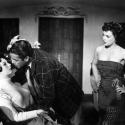
Hello to our cuckoo-in-the-nest disruptor Matthew, played by Canada’s Théodore Pellerin. In contrast to the way that ingénue Anne Baxter, with her seeming warmth and grace, threw a comfort blanket over her scheming in in All About Eve, the 1950 film that defined this sub-genre, it’s obvious from the start that Matthew is a no-gooder (assuming that such a thing exists in the pop world).
Resembling a geekier Jean-Paul Belmondo, the superb Pellerin has a face like a map, in the famous phrase, of places you wouldn’t want to visit. It’s at once fleshy and peaky, wolfish and queasy, wide-eyed and cunning. Even his ears look unreliable. Matthew joins Oliver’s entourage, and is subject at first to mild hazing from the other hangers-on in Oliver’s handsome canyon home. Soon he’s inveigled his way into video work for the popster and is amazed to find that just being vaguely within Oliver’s Instagram aura brings him oodles of followers online.
Writer-director Alex Russell (a producer on TV’s The Bear) shoots and edits this debut feature a little like an episode of MTV Cribs, jangly and lo-fi, appealing to the college demographic while undermining their lolling values. But maybe you can only ironise the visuals like that within a comedy – elements of which are fleetingly present here as, for example, they shoot a pop promo involving a muddy field and a sheep. Russell ventures instead down the psychological drama route, yet doesn’t quite have the script chops or the visual distance to crank up the tension – nor yet provide the style experiments and cracking banter of TV’s brilliant “entourage” show, Atlanta.
Images are crafted to look like grainy video, but in fact the movie was largely shot on 16mm film. Today, presumably, even video from a phone is just too good to look like video.
The first hour spends much time watching Matthew get in with all the boredom and japery of the group, who have an amusing obsession with knitwear but are not well delineated, and he only really gets going with the svengali stuff in the final third. One of Matthew’s friends from the clothes store gets pulled in as an Oliver bro, too, leading to some dangerous jealous raging from Matthew on a jolly they all take to London. And after Matthew is bounced from the entourage for too much skeeviness even for them, he fashions a blackmail noose for Oliver involving underage girls that – for some reason – is way too obliquely set out.
The book Deliver Me From Nowhere noted how Bruce Springsteen liked to recruit people to management and technical positions with scant previous experience, and this movie convincingly shows how pop creativity can be shaped via just that DIY ethic, with grown-ups from the corporate world nowhere to be seen. But Lurker lurks a bit itself without ever quite jumping out at us. It doesn’t go down the full Stephen King route into jeopardy and violence; and save for a bit of sub-Lawrentian wrestling between Oliver and Matthew, it doesn’t explore the psycho-sexual bondage route of a boss-underling twister like The Servant (1963).
In the end, it seems, minor celebrities like Oliver, if they want to break through, need a traitorous infiltrator like Matthew to manipulate and exploit them. It’s a surprising controlling idea that enlightens us in a somewhat underwhelming way.