El Eco (The Echo) is a small village in Mexico’s central highlands, about two hours drive from Mexico City. But it might as well be thousands of miles away since it feels cut off from the outside world, especially for the women and children eking out a living there.
Tatiana Huezo’s visually stunning film opens with Luz Ma and her mother rushing to save a sheep from drowning in one of the deep pools formed by the torrential rains that seem never to stop. With her father working away most of the time, this bright-eyed girl is her mother’s only helper. She can’t be more than 11 but we see her harvesting corn and helping to deliver a lamb and bury a dead sheep as well as doing household chores because, as her father tells her little brother, Tono, “that’s what women are for.”
Her mother left school at 14 to get married. “I won’t say I regret it”, she tells her daughter, “but it’s best to study first and learn all you can about life.” Luz Ma wants to be a vet, but her chances of escaping a life of farm work look slim, especially as her father expects to relax when he gets back home and doesn’t respond to his wife’s pleas for help on the farm.
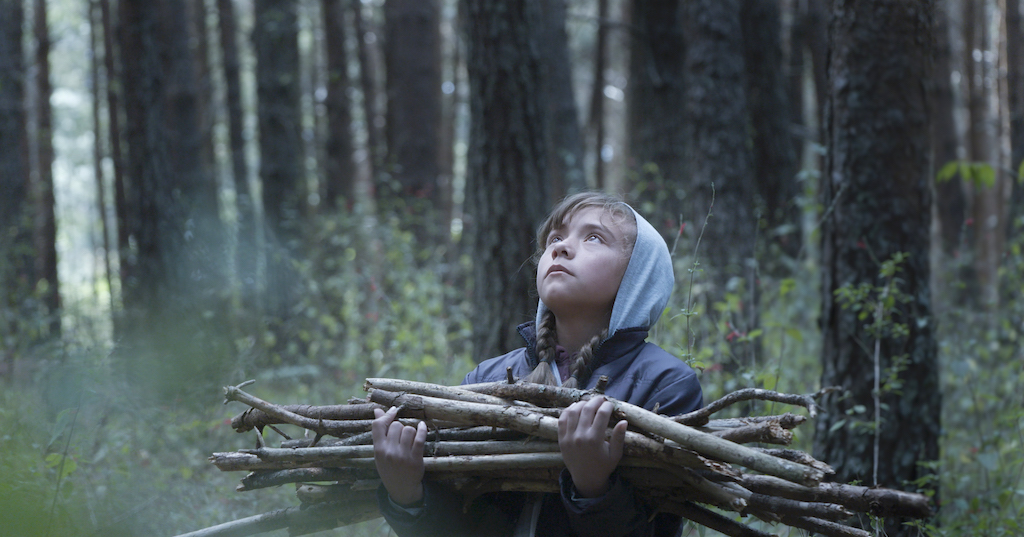 Huezo’s film is a handsomely crafted series of vignettes focusing on Luz Ma and two other girls. The young teenager Monse is responsible for looking after her bedridden grandmother, a job she does with gentle kindness. One of the most moving scenes shows her trying out different pairs of glasses on her ailing gran, who shows little gratitude for the loving care.
Monse is a keen bareback rider and plans to enter the local horse race. When her mother bans her from taking part, her disappointment is palpable. And it’s probably the last straw. She confides in her friend, Bere, that she wants to join the army – to earn her living rather than “wait for someone to provide for me” – before disappearing along with only her sneakers and a few clothes.
Sarahí (pictured above) is the most delightful of the three. Just five or six years old, she is clearly very bright and a born teacher. We see her instructing her dolls about extinction, then explaining to two tiny tots the Mexican Revolution and the importance of having your own land to farm. “Do you want to be the slaves of the rich?” she asks them. And well she might; one of the most heart-breaking scenes is of Sarahí, her mother, and a bunch of other kids trudging round a bed of mud and straw – mixing up the slimy brew with their Wellingtons to make bricks. For seven hours hard labour, they earn 250 pesos (roughly £10.55).
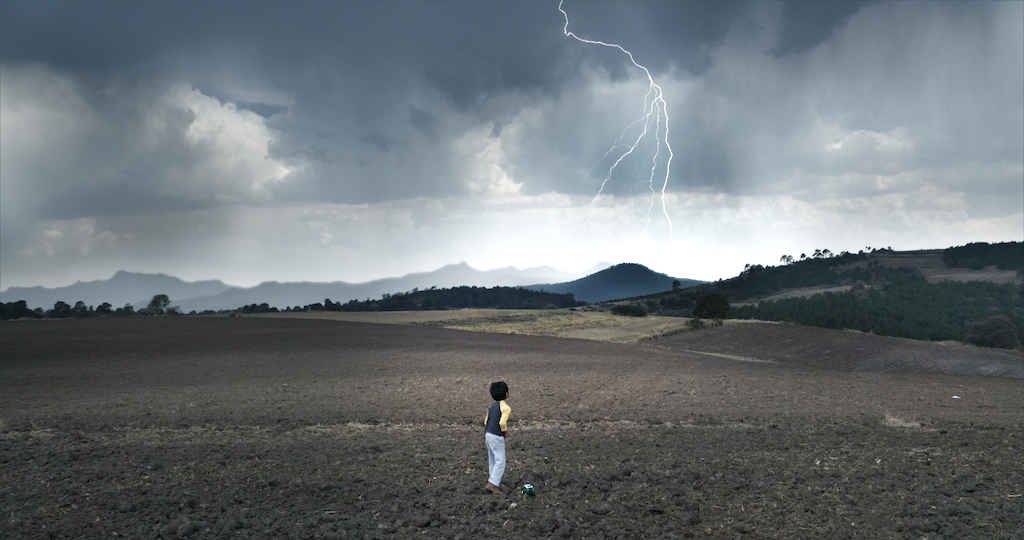 By concentrating on the girls, Huezo is able to highlight the contrast between their aspirations and real-life prospects. One’s heart goes out to Sarahí, for instance, when it becomes clear that her hopes of going to high school might be dashed, in which case a life of drudgery would await this talented child. (Pictured above: Tono)
But Huezo’s method also has its drawbacks. The girls come from three different families but you wouldn’t know it, since no background info is provided by way of voice-over or contextualising shots. Even after watching the film twice, I still thought Sarahí was Monse’s sister and I had no idea where they lived, how many siblings they had, or if their fathers were around. If you enjoy immersion in the world of childhood, you may not mind this confusion, but for those wanting to understand the girls’ circumstances in the wider context of village life, it is frustrating.
As a series of beautifully observed scenes of childhood,The Echo is unsurpassed and cameraman Ernesto Pardo’s shots of landscapes and weather are glorious. But as an objective look at life in a Mexican village, the film remains frustratingly incoherent.