

Julie Dash’s remarkable 1991 film tells the story of the Peazant family, the descendants of freed slaves who live on the Georgia Sea Islands, an isolated community on the South-Eastern seaboard of the USA, more in touch with African traditions than other black Americans.
The three generations depicted in the film are at a crossroads: the younger Peazants are about to move to the North, leaving the elders behind in the South. Th film's dialogue is in Gullah, a vivid and poetic patois reminiscent of street Jamaican. Dash and her cinematographer, her then husband Arthur Jafa, have achieved a dreamlike visual style of great aesthetic beauty. The pace and editing of the film, which slides gently through different layers of narrative, including the voice-over of an unborn child, creates an elegiac mood, as well as evoking something of the less time-bound perspective of the traditional African mind. In this world, the souls of the ancestors are present, provide guidance and ground for the living.
 This was the first widely released American film to have been directed by an African-American woman. Although she is renowned for her activism, Dash is never cliché-bound. The women in the film come across more strongly than the men: from the elder Nana (Cora Lee Day), rich in the wisdom of herbs and potions, and steeped in the spirit-based beliefs of Africa, through the passion and innocence of Eula (Alva Rogers), and on to the world-weariness of Yellow Mary (Barbara O Jones). The entire cast is totally convincing and bring to this almost magical realist tale a feeling of immediacy and veracity.
In the making of her most recent album Lemonade, Beyoncé spoke of being influenced by the film’s emphasis on the importance of African cultural roots – a tradition-focused slant much more sophisticated than the "back to Africa", Afro-hairstyle fashion of the late 1960s. The film addresses, obliquely but no less powerfully, the legacy of slavery and lynching, in the context of an extended family which wrestles, passionately and intelligently, with their spiritual heritage, a legacy of beliefs, ways of relationship and connection with the past, that provide them with great pride – not just in spite of the wounds they have suffered over centuries, but perhaps also in part thanks to them.
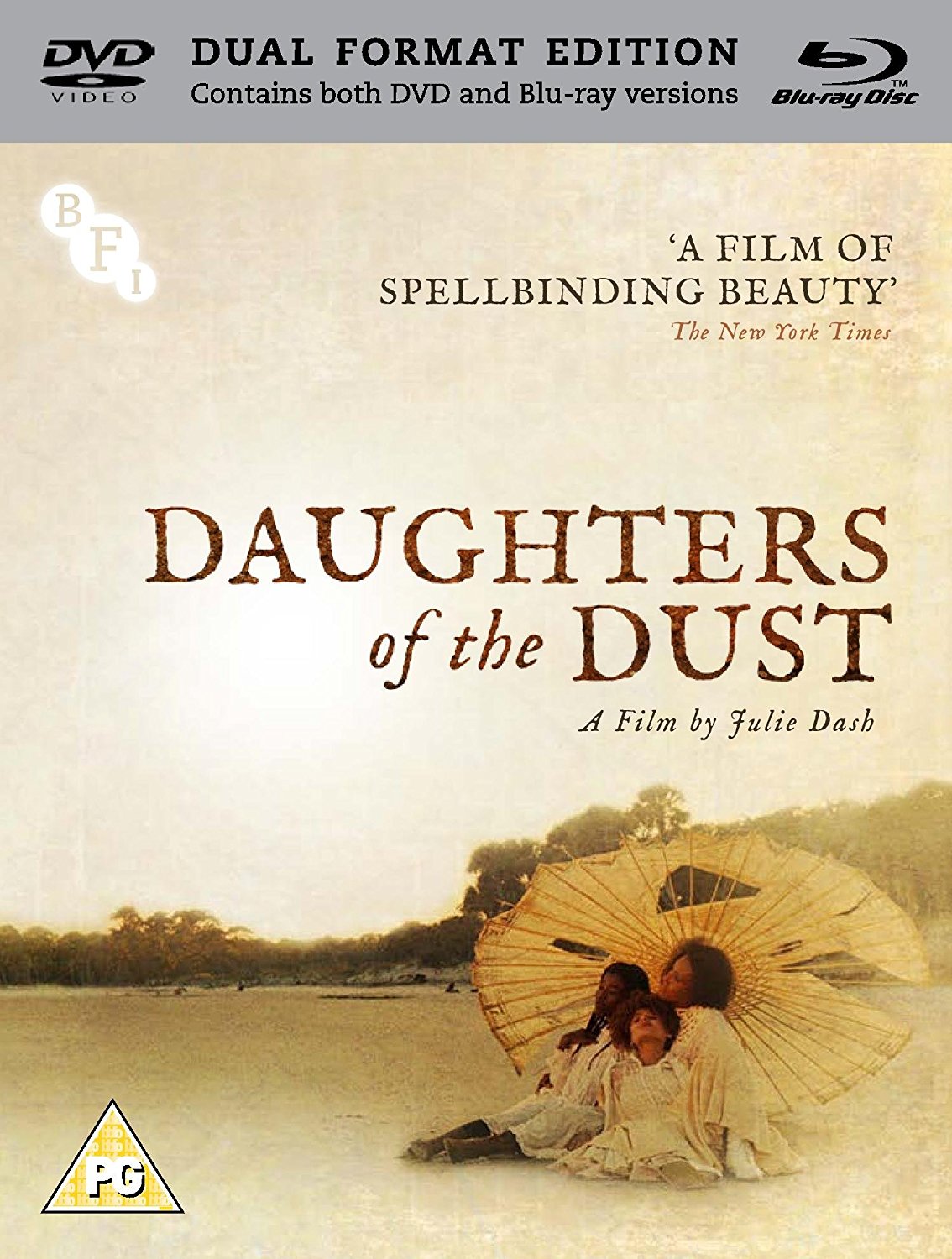
This BFI dual-format release of a newly restored print includes Dash's audio commentary to the film, a 72-minute interview with her from earlier this year, as well as one with cinematographer Jafa, and a Q&A with the director from the 2016 Chicago International Film Festival, moderated by playwright and actress Regina Taylor.
Such extras provide invaluable context to an extraordinary work. Dash’s film speaks of traditions that are as fundamentally American as any other, ties that connect African-Americans with their tragic history at the hands of white traders and slave-owners, as well as with their roots further back in a culture in which every form of life, from food and cooking to music and farming, expresses the life of the spirit. It has always partly been this intense spiritual quality in African-American life that has been most threatening to white culture and forms of Christianity intent on seeing the spirit as in some way superior to the senses and the sensual, and denying so vehemently the vitality of the human body and nature. It's true as well, as Beyoncé no doubt recognises, that much of the deep unease which runs through African-American culture today and that leads to violence and drug use, is in part caused by a general loss of connection to the ancestors that Daughters of the Dust so beautifully portrays.
Overleaf: watch the 2016 trailer for the restored Daughters of the Dust












Add comment